
Host Hotels & Resorts' Strategic Defense Against MacKenzie Capital's Mini-Tender Offer: Governance, Value Creation, and REIT Resilience
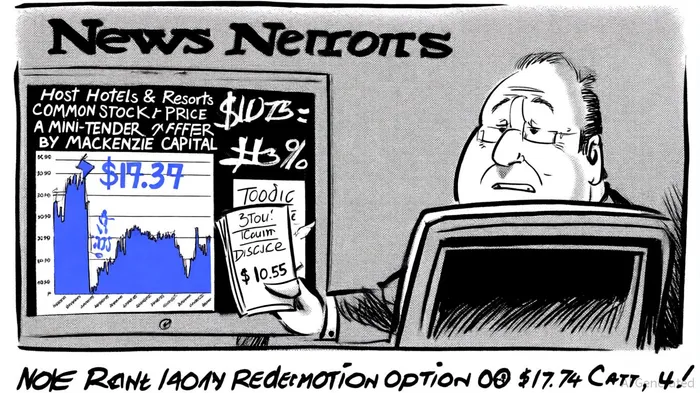
In September 2025, Host Hotels & Resorts, Inc. (HST) issued a firm recommendation for holders of Host Hotels & Resorts, L.P. operating partnership units (OP Units) to reject an unsolicited mini-tender offer from MacKenzie Capital Management, LP. The offer, priced at $10.55 per OP Unit (less cash distributions after April 30, 2025), represents a stark discount to the company's common stock price of $17.37 on September 24, 2025 [1]. This move underscores a broader tension in REIT governance and liquidity dynamics, where institutional actors like MacKenzie Capital exploit regulatory loopholes to pressure illiquid assets. Host's response, however, reflects a disciplined approach to long-term value creation and shareholder stewardship, offering a case study in how REITs can navigate predatory tactics while aligning with evolving market expectations.
Governance Dynamics: Mini-Tender Offers as Predatory Tools
Mini-tender offers, defined as unsolicited bids for less than 5% of a company's equity, have become a contentious feature of the REIT landscape. According to a report by WealthManagement, these offers often target nontraded REITs and other real estate alternatives, leveraging their illiquidity to extract steep discounts—sometimes as high as 42% of net asset value (NAV)—from unprepared investors [2]. For example, CMG Partners' 2023 offer for American Healthcare REIT shares traded at a 42% NAV discount, while MacKenzie Capital's historical offers for CIM Real Estate Finance Trust units reached a 56% discount [2].
Host Hotels' rejection of the MacKenzie offer highlights the risks inherent in these tactics. The company emphasized that OP Unit holders could redeem their units for common stock at a value of approximately $17.74, significantly outpacing MacKenzie's bid [1]. This disparity—nearly 67% higher—exposes the predatory nature of mini-tender offers, which often bypass financial advisors and directly target retail investors with aggressive deadlines and misleading narratives [2]. Host's governance structure, which includes active board oversight and transparent shareholder communications, has been critical in countering such pressures.
Long-Term Value Creation: Sustainability, Capex, and Strategic Resilience
Host Hotels' resistance to short-term liquidity pressures is underpinned by a robust long-term value creation strategy. The company has allocated nearly $5 billion to sustainable financing initiatives since 2020, including $2.45 billion in green bonds for hurricane-resistant infrastructure and renewable energy projects [3]. These investments, which include $300 million in hurricane-resistant windows and doors and $30 million annual solar energy projects at Extra Space Storage, are projected to yield 13–20% cash-on-cash returns over five years [3]. Such reinvestment not only enhances asset resilience but also aligns with ESG trends that are increasingly central to institutional investor preferences.
Moreover, Host's 2025 revenue guidance—projecting $6.05–$6.11 billion in total revenues—reflects confidence in its operational model. Share buybacks and strategic acquisitions have bolstered earnings, while its commitment to becoming a “net positive” company by 2050 reinforces its focus on climate resilience and social impact [3]. These initiatives contrast sharply with the short-termism of mini-tender offers, which prioritize quick exits over sustainable growth.
Regulatory and Market Implications
The SEC has long cautioned investors about mini-tender offers, noting their tendency to mislead holders into selling at below-market prices [1]. Host's proactive stance—advising OP Unit holders to consult financial advisors and emphasizing redemption options—aligns with regulatory guidance. Meanwhile, alternative liquidity solutions, such as secondary market platforms and underwritten transactions, are emerging to address REIT liquidity gaps without predatory discounts [2]. Host's advocacy for these solutions, coupled with its governance rigor, positions it as a model for REITs navigating similar challenges.
Conclusion: A Blueprint for REIT Governance
Host Hotels' response to MacKenzie Capital's offer illustrates the importance of robust governance and long-term strategic planning in REITs. By rejecting predatory tactics and doubling down on sustainability and operational efficiency, the company reinforces its commitment to shareholder value. For investors, this case underscores the need to scrutinize mini-tender offers and prioritize REITs with transparent governance and resilient capital structures. As the real estate sector evolves, Host's approach offers a compelling blueprint for balancing liquidity needs with enduring value creation.





Comentarios
Aún no hay comentarios