
HORNBACH's Strategic Position in the German Home Improvement Sector Amid Capital Market Momentum
The German home improvement sector, a cornerstone of the European DIY market, has seen robust demand driven by aging housing stock and sustainability-driven renovation trends. Within this landscape, HORNBACH Holding AG and Co KGaA (XTER:HBH) has emerged as a standout performer, leveraging capital-efficient growth and market accessibility strategies to solidify its leadership. As of November 2025, the company's financial resilience, strategic expansion, and evolving investor sentiment underscore its strategic positioning in a competitive sector.
Financial Performance and Strategic Resilience
HORNBACH's first-half fiscal year 2025/26 results highlight its operational strength. Consolidated net sales rose by 4.4% to EUR 3,599.1 million, driven by a successful spring season and increased customer footfall. The HORNBACH Baumarkt AG subgroup, the company's core business, saw a 4.7% sales increase to EUR 3,403.6 million, with like-for-like growth of 3.6%. Adjusted EBIT for the group improved by 2.5% to EUR 272.2 million, reflecting a 7.6% margin, despite inflation-related personnel costs in Q2.
The company's full-year guidance remains intact, with expectations to match or exceed EUR 6,200 million in sales and align adjusted EBIT with the previous year's EUR 269.5 million. This stability is underpinned by a disciplined capital allocation strategy. For 2025, HORNBACH has allocated EUR 160–180 million in capital expenditures (CapEx), with EUR 59.0 million already spent in the first half of 2025/26-double the EUR 27.9 million from the same period in 2024/25. This increase is attributed to preparations for three new DIY megastores planned for the latter half of the fiscal year.
Capital-Efficient Growth and Market Accessibility
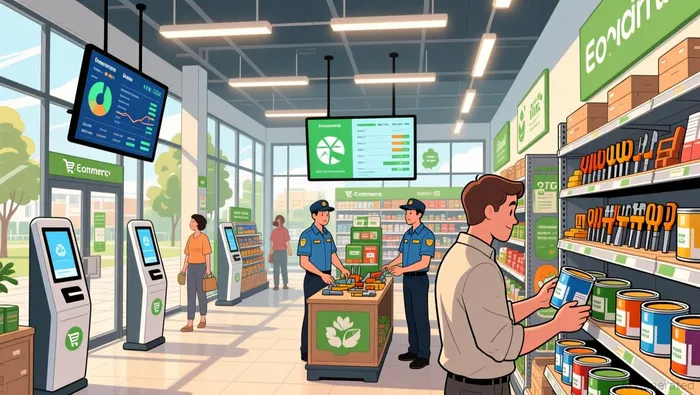
HORNBACH's capital-efficient growth model balances physical expansion with digital innovation. The company's e-commerce segment, which contributed 13.1% of total sales in the first half of 2025/26, has become a critical driver of market accessibility according to Q2 2025/26 results. By expanding its online click-and-collect services in early 2025, HORNBACH has created a seamless omnichannel experience, maintaining its reputation for low pricing in core categories. This digital-first approach aligns with broader industry trends, as 42% of German consumers now prioritize online research before in-store purchases.
Simultaneously, HORNBACH is expanding its physical footprint. New stores in Bucharest, Eisenstadt, and Timisoara-part of its European growth strategy-have bolstered its international sales share to 52.7% in the subgroup. This geographic diversification mitigates regional economic risks while tapping into high-growth markets. The company's equity ratio of 46.8% in Q3 2025 further reinforces its financial flexibility, enabling continued investment without overleveraging.
Investor Sentiment and Market Dynamics
Post-event investor sentiment has been mixed but ultimately supportive of HORNBACH's long-term strategy. Following the Q1 2025/26 earnings report, shares surged 7.36% to €97.70, reflecting optimism over a 10.4% rise in adjusted EBIT and 11.1% e-commerce growth. However, Q2 saw a 4.94% pre-market decline, driven by inflationary pressures and cautious macroeconomic forecasts. By year-end 2025, shares had retreated to €92.20, a 5.5% drop, as mixed business reports clouded short-term outlooks.
Analysts, however, remain bullish. The company's reaffirmed full-year guidance and strategic discipline have attracted positive ratings, with several firms upgrading their price targets post-Q1 according to earnings call commentary. Market commentary emphasizes HORNBACH's ability to navigate macroeconomic headwinds, citing its 11.4% year-over-year EBIT growth in FY24/25 and expanding market share in Germany, the Netherlands, and Czechia. The combination of physical and digital expansion, coupled with a focus on budget-friendly and sustainable solutions, positions HORNBACH to capitalize on the €12.5 billion German home improvement market.
Conclusion
HORNBACH's strategic position in the German home improvement sector is defined by its ability to balance capital efficiency with market accessibility. By investing in e-commerce, expanding its store network, and prioritizing sustainability, the company is addressing both immediate consumer needs and long-term industry trends. While investor sentiment has fluctuated in response to macroeconomic uncertainties, HORNBACH's operational resilience and disciplined capital allocation suggest a strong trajectory for 2025/26. For investors, the company's dual focus on growth and efficiency makes it a compelling case study in navigating a dynamic sector.







Comentarios
Aún no hay comentarios