
Horizon Aircraft's Strategic Partnership with Pratt & Whitney: A Catalyst for Aerospace Innovation and Investor Opportunity
The aerospace industry is on the cusp of a transformative era, driven by the convergence of electric propulsion, sustainable energy systems, and advanced manufacturing. At the forefront of this shift is Horizon Aircraft, a Canadian developer of electric vertical takeoff and landing (eVTOL) aircraft, which has recently announced a strategic partnership with Pratt & Whitney Canada. This collaboration, centered on integrating the PT6A engine into Horizon's Cavorite X7 hybrid eVTOL, signals a bold step toward redefining urban and regional air mobility while offering compelling opportunities for investors.
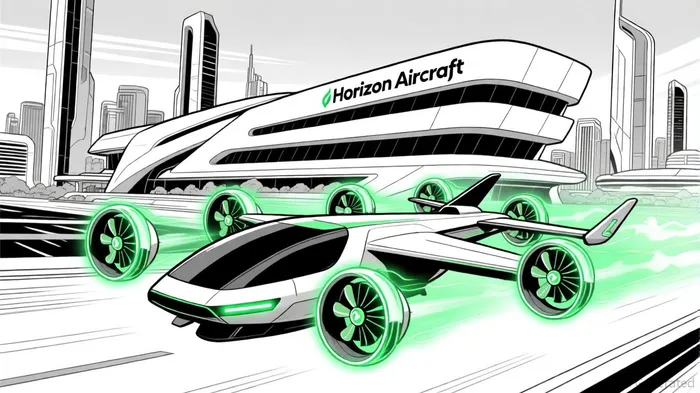
A Strategic Alliance for Hybrid Innovation
Horizon's decision to adopt the PT6A engine-a proven powerplant with over six decades of operational history-highlights its commitment to balancing innovation with reliability. According to a Pr-Inside report, the PT6A's integration into the Cavorite X7's hybrid architecture will enable the aircraft to reduce hydrocarbon emissions by up to 30% compared to conventional aircraft, while maintaining the speed and range necessary for long-haul missions such as medical evacuation and disaster relief. This hybrid approach, which combines the PT6A's gas turbine with electric propulsion, addresses a critical limitation of all-electric eVTOLs, as noted in a FinancialContent article.
The partnership also underscores the growing importance of hybrid systems in the eVTOL sector. While pure-electric designs dominate early-stage development, Horizon's approach reflects a pragmatic response to current technological constraints. By leveraging the PT6A's reliability and the scalability of its HOVR Wing technology, Horizon aims to deliver a versatile platform capable of operating in diverse environments, from urban air taxis to remote logistics.
Technical Progress and Market Positioning
Horizon's technical roadmap further strengthens its competitive position. As detailed in a September 2025 update from EVTOL Buzz, the company has completed the architectural design of a full-scale Cavorite X7 demonstrator and begun assembly, with initial flight testing slated for mid-2027. A milestone achieved in May 2025-a fan-in-wing forward transition flight using a 50%-scale prototype-demonstrated the viability of its 14-ducted-fan wing design, which allows the aircraft to transition from vertical takeoff to fixed-wing efficiency, as reported by AINonline. This innovation not only enhances performance but also aligns with regulatory priorities for safety and operational flexibility.
The company's decision to scale the Cavorite X7 from five to seven seats, based on customer feedback and testing results, further illustrates its market-driven approach, as reported by Urban Air Mobility News. With a projected maximum speed of 250 mph and a range exceeding 500 miles, the Cavorite X7 is positioned to serve both commercial and government markets, including critical infrastructure and emergency services.
Investor Implications and Risks
For investors, Horizon's partnership with Pratt & Whitney represents more than a technological milestone-it signals a strategic alignment with a legacy aerospace player, reducing the risk profile of its hybrid eVTOL development. Pratt & Whitney's PT6A engine, used in over 15,000 aircraft worldwide, provides Horizon with a tested, scalable solution, while the collaboration offers Pratt & Whitney a foothold in the emerging eVTOL market. This symbiosis could accelerate regulatory certification, as the PT6A's compliance with existing aviation standards may streamline the Cavorite X7's approval process under Instrument Flight Rules (IFR) and Flight Into Known Icing (FIKI) standards, as the EVTOL Buzz update noted.
However, challenges remain. The eVTOL sector is highly competitive, with companies like Joby AviationJOBY-- and Archer AviationACHR-- advancing their own electric and hybrid designs. Additionally, Horizon's reliance on hybrid technology may face scrutiny from investors prioritizing fully electric solutions. Yet, Horizon's focus on mission-critical applications-where range and payload capacity are paramount-positions it to capture niche markets before broader adoption of eVTOLs.
Conclusion: A Win-Win for Innovation and Investment
Horizon Aircraft's partnership with Pratt & Whitney Canada is a masterstroke in aerospace innovation, combining the strengths of a legacy engine with cutting-edge hybrid design. For investors, the Cavorite X7's technical progress, regulatory alignment, and market versatility present a compelling case for long-term growth. While risks such as competition and certification delays persist, Horizon's strategic focus on hybrid propulsion and mission-critical applications offers a differentiated path to success. As the eVTOL industry matures, companies that bridge the gap between traditional aviation and sustainable innovation-like Horizon-are likely to lead the charge.





Comentarios
Aún no hay comentarios