
Hongli Group Inc.'s Regulatory Compliance and Its Implications for Long-Term Investor Confidence
Hongli Group Inc.'s Regulatory Compliance and Its Implications for Long-Term Investor Confidence
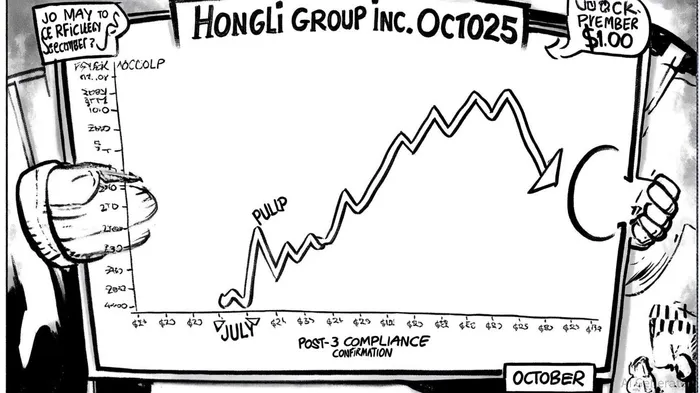
In the volatile landscape of public markets, regulatory compliance is more than a checkbox-it is a barometer of corporate governance strength and operational resilience. For HongliHLP-- Group Inc. (Nasdaq: HLP), the recent resolution of its Nasdaq bid price compliance issue offers a compelling case study in how strategic governance reforms and operational adjustments can restore investor confidence.
The Compliance Challenge and Its Resolution
Hongli Group Inc. faced a critical juncture in July 2025 when Nasdaq notified the company that its stock had fallen below the $1.00 minimum bid price requirement for 30 consecutive business days, from May 27 to July 9, according to a GlobeNewswire release. This triggered a 180-day compliance period, with a deadline of January 6, 2026, to rectify the issue. However, the company demonstrated remarkable agility by regaining compliance ahead of schedule. By October 3, 2025, Nasdaq confirmed that HLP's shares had traded at or above $1.00 for 12 consecutive business days, from September 16 to October 1, as reported in a QuiverQuant report. This achievement not only averted the threat of delisting but also signaled the company's ability to stabilize its market position.
Governance Reforms: A Catalyst for Compliance
The compliance turnaround was underpinned by significant corporate governance reforms. In July 2025, Hongli Group Inc. experienced a leadership shakeup when two board members, Mr. Qian Xu and Mr. Yizhao Zhang, resigned from the board and its committees due to personal reasons, according to a MarketScreener notice. While such departures could have disrupted oversight, the company swiftly addressed the vacuum by appointing two new directors: Mr. Chuang Chen, a certified public accountant with expertise in auditing and public offerings, and Mr. Junwei Shao, a digital cloud services professional, as reported by The Globe and Mail. These appointments were strategically designed to bolster financial oversight and strategic direction, reinforcing the board's capacity to navigate regulatory challenges.
Mr. Chen's role as chair of the audit committee, in particular, underscores the company's commitment to strengthening internal controls-a critical factor in maintaining investor trust. As stated by a report from The Globe and Mail, the new directors were selected to "enhance governance and operational oversight," aligning with the broader goal of ensuring long-term compliance with Nasdaq standards.
Operational Resilience and Investor Confidence
Beyond governance, Hongli's operational performance in 2025 also played a pivotal role in its compliance success. The company reported a net income of $0.99 million in the first half of 2025, driven by increased demand in machinery and equipment sectors and improved cost management, according to a Panabee report. Despite liquidity challenges-such as a 52% drop in working capital due to reclassified loans-management expressed confidence in refinancing obligations, further reassuring stakeholders of its financial stability.
The interplay between governance and operational resilience is evident in Hongli's ability to balance short-term compliance with long-term strategic goals. By addressing liquidity risks and optimizing cost structures, the company created the financial flexibility needed to sustain its stock price above the Nasdaq threshold. This dual focus on governance and operations has likely mitigated concerns about recurring compliance issues, as noted by analysts, who highlighted the company's "proactive approach to regulatory adherence" in a StockTitan article.
Implications for Long-Term Investor Confidence
For investors, Hongli Group Inc.'s compliance journey offers several key takeaways. First, the company's swift resolution of the bid price issue demonstrates its commitment to maintaining market standards, a trait often associated with resilient governance. Second, the board restructuring and strategic appointments signal a proactive approach to risk management, reducing the likelihood of future governance-related setbacks. Finally, the operational improvements-such as cost optimization and sector-specific demand growth-underscore the company's ability to adapt to macroeconomic pressures.
However, challenges remain. While the immediate compliance risk has been addressed, Hongli must continue to maintain a bid price above $1.00 to avoid future scrutiny. Additionally, the recent board changes necessitate close monitoring to ensure that the new leadership effectively executes long-term strategies.
Conclusion
Hongli Group Inc.'s successful navigation of its Nasdaq compliance challenge highlights the symbiotic relationship between robust corporate governance and operational resilience. By addressing governance gaps, optimizing operations, and demonstrating regulatory agility, the company has laid a foundation for sustained investor confidence. For long-term investors, the resolution of this compliance issue-coupled with strategic leadership changes-presents a compelling case for cautious optimism, provided the company continues to prioritize transparency and financial discipline.





Comentarios
Aún no hay comentarios