
Hongkong Land Holdings: Strategic Resilience in Hong Kong's Evolving Real Estate Landscape
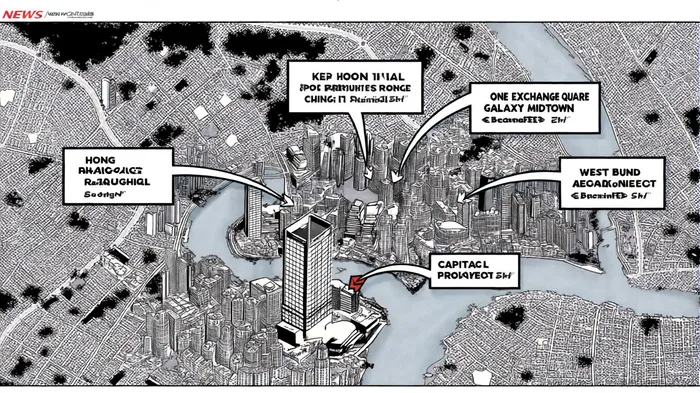
In an era marked by economic uncertainty and shifting urban dynamics, Hongkong Land Holdings Limited (0101.HK) has emerged as a case study in strategic recalibration. The company's Strategic Vision 2035—focused on high-end commercial assets in Asia's gateway cities and a $10 billion capital recycling target—positions it to navigate Hong Kong's evolving real estate market while capitalizing on long-term growth opportunities[1]. Recent actions, including the sale of parts of One Exchange Square to the Hong Kong Stock Exchange for HK$6.3 billion ($810 million) and a $200 million share buyback program, underscore its commitment to optimizing capital efficiency and enhancing shareholder value[1][2].
Strategic Positioning and Capital Recycling
Hongkong Land's capital recycling efforts have accelerated, with the company achieving 30–33% of its $4 billion 2027 target through asset disposals and build-to-sell completions[1]. This aligns with a broader industry trend of prioritizing liquidity and flexibility in response to Hong Kong's sluggish office rental market and the ongoing renovation of the LANDMARK retail portfolio, which has reduced retail income by 20%[3]. By divesting non-core assets, the company is not only strengthening its balance sheet but also freeing capital to reinvest in premium developments such as the West Bund project in Shanghai and Galaxy Midtown in Hong Kong[4].
According to a report by DBS Group Research, the company's net gearing of 16% and $3.2 billion in committed liquidity provide a robust buffer against market volatility[3]. This financial discipline is critical in a context where Hong Kong's Central office portfolio faces negative rental reversions and renovation-driven disruptions. Yet, the company has maintained its full-year 2025 underlying earnings guidance, signaling confidence in its ability to offset short-term headwinds through operational efficiency and strategic pivots[1].
Market Dynamics and Regional Diversification
Hong Kong's real estate market remains a mixed landscape. While the Central office portfolio has seen improved leasing momentum—with physical and committed vacancy rates at 8.3% and 7.3%, respectively—the retail sector lags due to renovation cycles[1]. In contrast, the Singapore office market has emerged as a bright spot, with tight supply and high demand driving 3% year-on-year rent growth[3]. This regional diversification mitigates Hong Kong-specific risks and aligns with the company's focus on “ultra-premium integrated commercial assets” in key Asian cities[4].
The company's decision to cease new investments in the build-to-sell segment further reflects its prioritization of capital returns. By completing existing projects in mainland China and Singapore, Hongkong Land is shifting toward a model that emphasizes asset quality over volume, a strategy that resonates with global real estate trends toward sustainability and long-term value creation[1].
Long-Term Growth Potential
Looking ahead, Hongkong Land's success will hinge on its ability to execute its Strategic Vision 2035 while adapting to macroeconomic shifts. The company's $10 billion capital recycling target over a decade is not merely a liquidity play but a strategic lever to fund high-impact developments in cities like Shanghai and Hong Kong. For instance, the West Bund project—a mixed-use development in Shanghai—positions the company to capitalize on China's urbanization wave and the growing demand for premium commercial spaces[4].
However, challenges persist. Hong Kong's office market remains vulnerable to global economic cycles, and the renovation of the LANDMARK retail portfolio could weigh on short-term earnings. Yet, the company's proactive approach—selling assets to fund buybacks and prioritizing premium developments—suggests a long-term orientation that transcends cyclical fluctuations.
Conclusion
Hongkong Land Holdings' strategic pivot reflects a nuanced understanding of Hong Kong's real estate dynamics. By recycling capital, strengthening liquidity, and focusing on high-value projects, the company is positioning itself to thrive in a post-pandemic world where flexibility and quality are paramount. While near-term challenges in Hong Kong's office and retail sectors are undeniable, the company's regional diversification and disciplined execution provide a solid foundation for long-term growth. For investors, the key takeaway is clear: strategic resilience, not short-term speculation, will define success in this evolving market.







Comentarios
Aún no hay comentarios