
Hong Kong-Shenzhen FinTech Collaboration: A Strategic Catalyst for Green Blockchain Assets and Cross-Border Innovation
A Framework for Collaboration: Policy and Infrastructure
In 2025, Hong Kong and Shenzhen jointly launched the Action Plan for Jointly Building Hong Kong-Shenzhen Global Fintech Hub (2025–2027), a strategic roadmap targeting the creation of over 20 financial application scenarios through a cross-boundary data validation platform by 2027. The plan emphasizes six key initiatives, including advancing AI-driven financial services and supporting original technological R&D, which collectively aim to lower barriers for small and medium-sized institutions. This policy alignment is critical for fostering a shared ecosystem where blockchain-based green assets can thrive.
Hong Kong's regulatory environment has also evolved to support these ambitions. The removal of track record requirements for digital asset listings and the facilitation of cross-border liquidity sharing have created a fertile ground for innovation. Meanwhile, Shenzhen's role as a global patent leader-accounting for 20% of global patent applications-ensures a steady pipeline of cutting-edge solutions for green fintech.
Blockchain-Based Green Assets: From Bonds to Tokenization
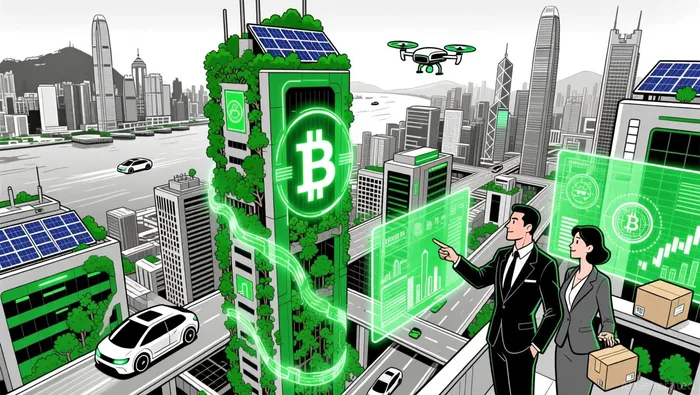
A cornerstone of the collaboration is the development of blockchain-based green asset platforms. Hong Kong has already issued $870 million in tokenized green bonds in 2023 and 2024, with plans to launch a third government-backed blockchain-based green bond in 2025. These bonds, denominated in USD, EUR, offshore yuan, and HKD, are settled entirely on blockchain infrastructure provided by HSBC. The proceeds are earmarked for climate-focused projects, aligning with global ESG (Environmental, Social, and Governance) trends.
Corporate participation is equally robust. State-backed entities like Shenzhen Futian Investment Holdings have issued six tokenized bonds in Hong Kong since 2023, raising $1 billion collectively. These initiatives underscore the growing demand for blockchain-based debt instruments, which offer transparency, efficiency, and reduced counterparty risk.
Early-Stage Opportunities: Startups and Venture Capital
The Hong Kong-Shenzhen corridor has become a magnet for venture capital, with Shenzhen-Hong Kong-Guangzhou securing the top spot in the 2025 WIPO Global Innovation Index. This success is driven by aggressive VC activity, including a $250 million funding round for MiniMax, a Shenzhen-based AI firm backed by Tencent. For green fintech, startups like SOLOWIN HOLDINGS exemplify the region's potential. The company, which operates in both traditional and virtual asset financial services, has partnered with Web3 players such as OSL and Zodia Custody to explore sustainable growth opportunities. Its participation in the Hong Kong Monetary Authority's (HKMA) Project Ensemble Sandbox-testing tokenization of currencies and assets-highlights its role in shaping the future of fixed-income markets.
Hong Kong's swift licensing process for crypto exchanges has further catalyzed innovation. Four new exchanges-HKbitEX, Accumulus, DFX Labs, and EX.IO-were approved under this framework, signaling the city's commitment to becoming a global crypto hub.
Strategic Investment Themes
- Green Bond Infrastructure: Investors should prioritize platforms enabling tokenized green bonds, such as HSBC's blockchain infrastructure. These projects benefit from both regulatory tailwinds and institutional demand.
- Cross-Border Data Platforms: The Shenzhen-Hong Kong cross-boundary data validation platform is a critical enabler for fintech scenarios, offering scalable solutions for asset tokenization and ESG reporting.
- AI-Driven Fintech: Startups integrating AI into green finance, like SOLOWIN HOLDINGS, are well-positioned to capitalize on the region's R&D incentives and AI application targets as per the Action Plan.
- Regulatory Arbitrage: Hong Kong's evolving digital asset policy, including a stablecoin framework set to take effect in August 2025, creates opportunities for firms navigating regulatory clarity.
Conclusion: A Hub for the Future
The Hong Kong-Shenzhen FinTech collaboration is not merely a regional initiative but a global catalyst for green blockchain assets. By combining Shenzhen's technological prowess with Hong Kong's financial infrastructure, the region is creating a blueprint for sustainable finance. For investors, the focus should be on early-stage ventures and institutional-grade platforms that align with the collaboration's strategic goals. As the Action Plan unfolds, the next 24–36 months will likely see a surge in cross-border liquidity, tokenized asset adoption, and ESG-driven innovation-making this corridor a must-watch for forward-thinking capital.





Comentarios
Aún no hay comentarios