
Hong Kong Interest Rate Stability and Its Impact on Financial Markets
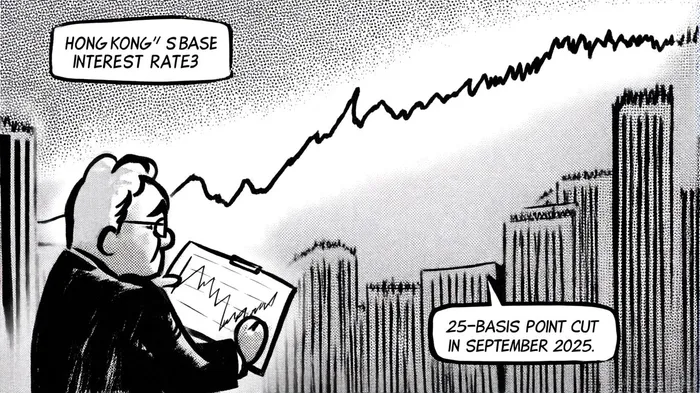
In September 2025, the Hong Kong Monetary Authority (HKMA) cut its base interest rate by 25 basis points to 4.50%, aligning with the U.S. Federal Reserve's earlier rate reduction[1]. This marked the first rate cut since December 2024 and signaled a shift in monetary policy amid a low-yield environment. The decision, as noted by HKMA Chief Executive Eddie Yue, aims to stimulate the property market and broader economic activity while maintaining financial stability[1]. However, the move also underscores the challenges posed by global monetary policy divergence and the uncertainty of future U.S. rate cuts under a potential Donald Trump administration[3].
Strategic Asset Allocation in a Low-Yield Environment
Hong Kong's low-yield environment has prompted investors to rethink traditional asset allocation strategies. The HKMA's Exchange Fund employs a two-tier approach: strategic asset allocation (SAA) for long-term stability and tactical asset allocation (TAA) for short-term adjustments[1]. This framework allows for flexibility in navigating volatile capital flows, a concern highlighted by Yue as international monetary policies diverge[3].
In this context, HKD time deposits have emerged as a critical tool for liquidity management and risk mitigation[2]. These instruments, offering modest yields, serve as a buffer against market uncertainties while aligning with the region's conservative investment culture. Meanwhile, private debt and real estate debt are gaining traction for their yield potential and relative stability compared to traditional fixed-income assets[3].
The insurance sector further illustrates this shift. Hong Kong's newly implemented Risk-based Capital (RBC) regime, effective July 2024, emphasizes tailored capital requirements and robust risk management[2]. By aligning capital with insurers' risk profiles, the regime encourages efficient capital utilization—a critical advantage in a low-yield landscape.
Global Comparisons and Regional Opportunities
Globally, low-yield environments have driven increased interest in alternative investments. UBSUBS-- reports that institutional investors are turning to private equity, hedge funds, and private credit to diversify portfolios and capture uncorrelated returns[4]. In Hong Kong, this trend is amplified by the region's proximity to high-growth Asian markets and its role as a gateway to China.
J.P. Morgan's 3Q 2025 asset allocation views reflect a modestly pro-risk stance, with overweights in U.S. tech, Japan, and emerging market equities[3]. For Hong Kong, this suggests opportunities in sectors like AI-driven ventures and industrial real estate, where demand for logistics infrastructure is rising[4]. However, investors must balance these opportunities with caution, as stretched valuations and geopolitical risks—such as U.S. trade policy shifts—remain significant headwinds[3].
The Property Market: A Case Study in Resilience
Hong Kong's property market, long a barometer of economic sentiment, is showing tentative signs of recovery. Lower mortgage rates and the removal of cooling measures have spurred transaction volumes, with a 40% year-on-year increase in Q1 2024[4]. Yet, challenges persist: home prices fell 6.8% in 2024, and high vacancy rates linger[2]. The government's “starter homes” initiative and land supply innovations in the Northern Metropolis aim to address these imbalances[4]. For investors, the luxury segment remains a bright spot, with demand driven by global capital seeking safe havens[4].
Conclusion: Balancing Caution and Opportunity
Hong Kong's interest rate stability, while providing short-term relief, operates within a broader context of global uncertainty. Strategic asset allocation must prioritize diversification, liquidity, and risk-adjusted returns. As Yue emphasized, the pace and extent of U.S. rate cuts will remain pivotal, requiring investors to remain agile[1]. For now, the focus on alternatives, regional growth drivers, and regulatory adaptability offers a roadmap for navigating the low-yield environment.







Comentarios
Aún no hay comentarios