
Hong Kong's Commercial Real Estate: A Strategic Haven Amid China's REIT-Driven Revival
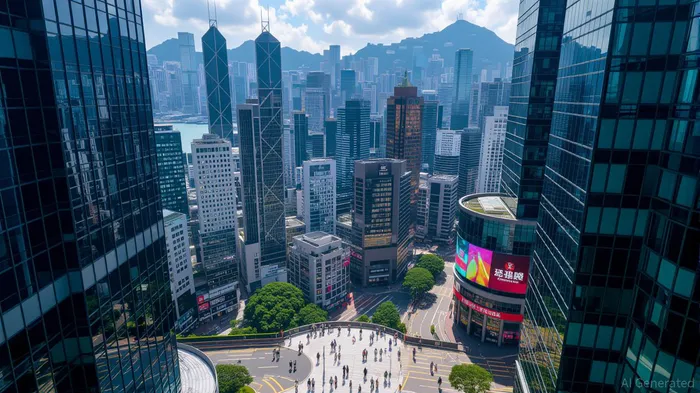
The global real estate landscape has been reshaped by China's prolonged property slump, yet Hong Kong's commercial real estate market has shown unexpected resilience. While mainland developers grapple with liquidity crises and defaults, Hong Kong's commercial sector—particularly its office and retail assets—has begun to stabilize, supported by declining interest rates, a robust IPO pipeline, and the transformative momentum of mainland China's REIT expansion. For investors seeking yield and long-term value, the interplay of these factors presents a compelling case for capitalizing on REIT-driven value unlocking in Hong Kong's commercial real estate.
Resilience in a Downturn: Office and Retail Stabilization
Hong Kong's commercial real estate market has navigated 2025's headwinds with a mix of caution and optimism. According to CBRE's H1 2025 report, the Grade A office market saw a modest recovery in net absorption in Q2, with core submarkets like Greater Central posting a 155,400 sq. ft. gain—the strongest half-year performance since 2015. While vacancy rates remain elevated at 17.4%, the decline in borrowing costs (HIBOR fell from 3.73% to 0.72% in H1 2025) has spurred refinancing activity and stabilized demand. Retail, too, has shown signs of life: vacancy rates in core districts dropped to 7.1%, and F&B leasing hit a 14-year high of 134,000 sq. ft. These trends suggest that Hong Kong's commercial assets, particularly in prime locations, retain their appeal despite broader economic uncertainties.
Mainland REIT Expansion: A Catalyst for Value Unlocking
The mainland China REIT (C-REIT) market has emerged as a game-changer. By the end of 2024, its market value surged 85% year-on-year, surpassing Hong Kong and becoming one of Asia's top three REIT markets. This growth, driven by 29 new REIT issuances in 2024 (including 19 real estate-backed), has created a ripple effect in Hong Kong. The inclusion of REITs861104-- in the Shanghai-Hong Kong Stock Connect program in April 2024 has opened a direct channel for mainland investors to access Hong Kong's high-quality commercial assets. Link REIT, Asia's largest REIT by market cap, exemplifies this trend. Its diversified portfolio—spanning Hong Kong, Singapore, and mainland China—has attracted cross-border capital, with mainland investors now accounting for a significant portion of its trading volume.
The synergy between Hong Kong's stable asset quality and mainland REIT demand is particularly evident in mall securitizations. Projects like Bauhinia ILBS 2 Limited, a HK$423.3 million infrastructure loan-backed securities issuance by the Hong Kong Mortgage Corporation, highlight the city's role as a financing hub. These securitizations, rated investment-grade and listed on the Hong Kong Stock Exchange, offer diversified exposure to global infrastructure and real estate assets, attracting both institutional and retail investors.
Strategic Entry Points: Restructuring and Securitization Opportunities
Hong Kong's commercial real estate is undergoing a quiet renaissance through restructuring and mall securitizations. The city's high vacancy rates and weak retail performance have prompted developers to offload assets, creating opportunities for value-driven investors. For instance, McDonald'sMCD-- is selling eight prime retail properties in Tsim Sha Tsui and Causeway Bay, while Lai Sun Development seeks to divest its 50% stake in the CCB Tower. These transactions are likely to attract mainland state-backed firms, which have the capital and political incentives to stabilize the market.
The mainland's C-REIT boom further amplifies these opportunities. With 64 public infrastructure REITs listed in China by March 2025, investors are increasingly seeking high-yield, liquid assets. Hong Kong's mall securitizations, such as those managed by Link REIT and Fortune REIT, align perfectly with this demand. These REITs offer exposure to premium retail and office assets, including the Langham Place complex in Mong Kok and Jurong Point mall in Singapore, while benefiting from the city's regulatory clarity and financial infrastructure.
Investment Advice: Balancing Risk and Reward
For investors, the key lies in leveraging Hong Kong's unique position at the intersection of low interbank rates, REIT-driven liquidity, and mainland capital flows. Here are three strategic considerations:
1. Focus on Core Assets: Prioritize REITs and properties in prime submarkets like Greater Central and Tsim Sha Tsui, where occupancy rates and rental stability are improving.
2. Monitor REIT Connect Activity: Track cross-border trading volumes and investor sentiment in Stock Connect-listed REITs, as these metrics will signal market confidence.
3. Engage in Restructuring Opportunities: Target distressed assets with strong redevelopment potential, particularly in the retail sector, where tenant reshuffling and mall securitizations are gaining traction.
Conclusion: A New Era for Hong Kong Real Estate
Hong Kong's commercial real estate market is no longer a passive observer in China's property downturn—it is an active participant in the region's REIT-driven transformation. The city's stable asset quality, coupled with the mainland's surging demand for securitized real estate, creates a fertile ground for investors seeking yield and long-term value. As the HIBOR continues to decline and cross-border capital flows accelerate, the time to act is now. For those willing to navigate the complexities of restructuring and securitization, Hong Kong offers a rare combination of resilience, liquidity, and strategic alignment with Asia's evolving real estate landscape.





Comentarios
Aún no hay comentarios