
Hong Kong's Bold Move: Free Trade Pacts to Counter US Tariffs
Generado por agente de IAWesley Park
lunes, 7 de abril de 2025, 11:26 pm ET2 min de lectura
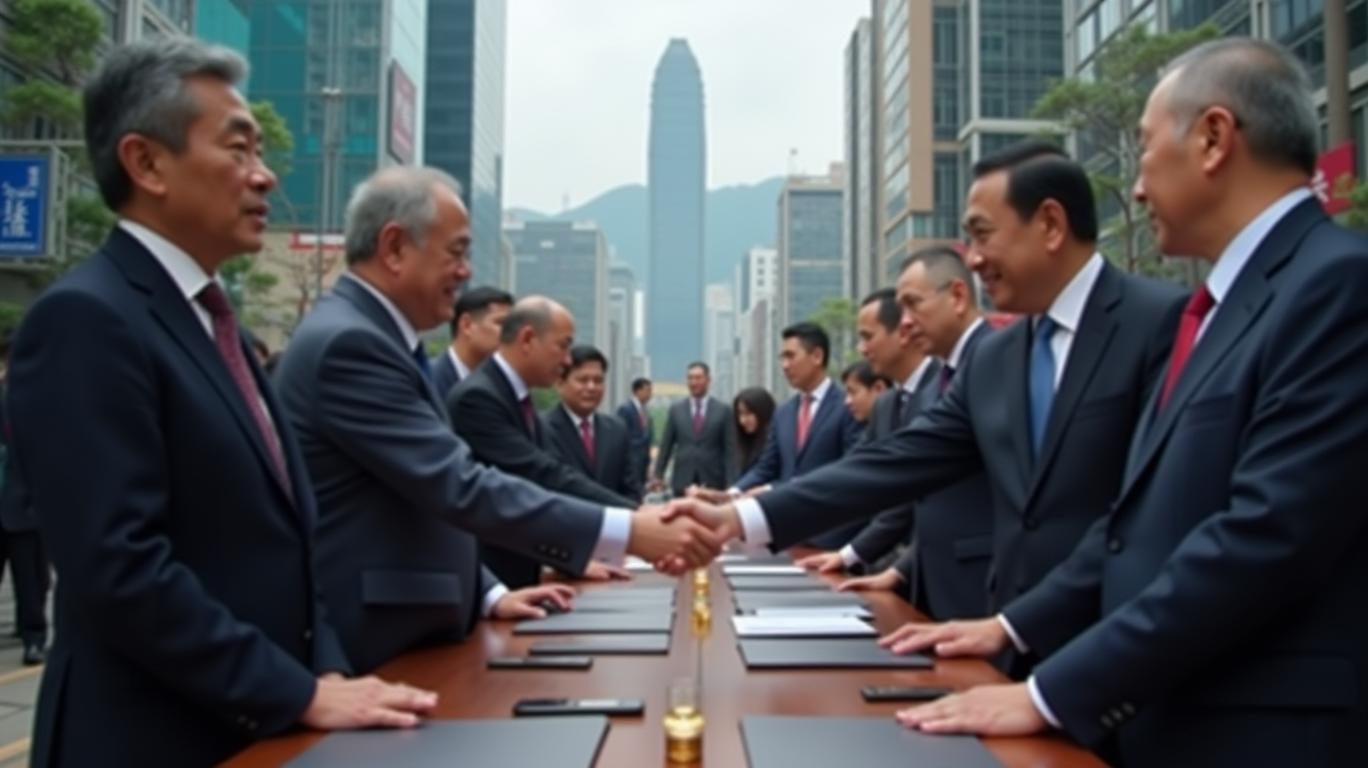
Ladies and gentlemen, buckleBKE-- up! Hong Kong is making a bold move to counter the "ruthless" US tariffs by signing more free trade agreements. This is a game-changer, folks! The city is not just sitting back and taking the hit; it's fighting back with a strategy that could revolutionize its economy. Let's dive in and see what this means for Hong Kong and the global market.
Why Free Trade Agreements Matter
First things first, why are free trade agreements (FTAs) such a big deal? Well, they open up markets, reduce tariffs, and make it easier for businesses to trade across borders. For Hong Kong, this means diversifying its export markets and reducing its reliance on the US. With the US imposing tariffs left and right, Hong Kong needs to find new partners to keep its economy humming.
The US Tariff Threat
Let's talk about the elephant in the room: the US tariffs. The US has been slapping tariffs on Chinese goods, and Hong Kong, being a major re-export hub, is feeling the pinch. The Hang Seng Index took a 13% hit in the latest tariff dispute, and that's just the beginning. The US has threatened an additional 50% tariff on Chinese imports, and if China retaliates, Hong Kong could be caught in the crossfire.
Diversifying Export Markets
So, what's Hong Kong doing about it? It's signing FTAs with non-US partners like the EU, Japan, and ASEAN countries. This will redirect trade flows and reduce the impact of US tariffs. For example, an FTA with the EU could open doors for Hong Kong's financial and professional services sectors, which account for 43.5% of employment. And let's not forget about the Greater Bay Area (GBA) integration. The "Twin Cities, Three Circles" concept and the Shenzhen-Hong Kong I&TCINT-- Cooperation Zone could be formalized via FTAs, enabling smoother access to the GBA's $597.45 billion PPP GDP.
Boosting Key Sectors
Hong Kong's economy is dominated by financial and business services, which make up 93.5% of its GDP. FTAs with advanced economies like the EU and Singapore, which include provisions for financial services liberalization and cross-border data flows, would enhance competitiveness. And let's not forget about the technology and innovation sector. Hong Kong's I&T sector has seen double-digit GDP growth, and FTAs with tech-driven partners like Taiwan and South Korea could facilitate IP protection and R&D collaboration.
Strengthening Regional Integration
The GBA is a key pillar of Hong Kong's diversification strategy. Half of Hong Kong entrepreneurs cited institutional system differences with Mainland China as a challenge. But with regulatory harmonization under the "Twin Cities, Three Circles" framework, cross-border flows could be streamlined. This would support trade-related services, which benefit from continued growth in goods trade.
The Risks and Challenges
Now, let's talk about the risks. Geopolitical tensions and US retaliation could undermine Hong Kong's efforts. The complexity of managing multiple FTAs and regulatory fragmentation in the GBA are also challenges. And let's not forget about the overreliance on traditional sectors and global trade uncertainty.
Addressing the Risks
So, how can Hong Kong address these risks? By prioritizing high-quality FTAs with strategic partners, accelerating GBA integration, boosting innovation and commercialization, enhancing diplomatic and policy coordination, and diversifying trade partners and sectors. This multi-pronged approach could mitigate risks and position Hong Kong as a resilient trade hub.
The Bottom Line
Ladies and gentlemen, Hong Kong's strategy to counter US tariffs through FTAs is a bold move. It's not without risks, but with the right approach, it could revolutionize the city's economy. So, stay tuned, folks! This is one story you won't want to miss.



Divulgación editorial y transparencia de la IA: Ainvest News utiliza tecnología avanzada de Modelos de Lenguaje Largo (LLM) para sintetizar y analizar datos de mercado en tiempo real. Para garantizar los más altos estándares de integridad, cada artículo se somete a un riguroso proceso de verificación con participación humana.
Mientras la IA asiste en el procesamiento de datos y la redacción inicial, un miembro editorial profesional de Ainvest revisa, verifica y aprueba de forma independiente todo el contenido para garantizar su precisión y cumplimiento con los estándares editoriales de Ainvest Fintech Inc. Esta supervisión humana está diseñada para mitigar las alucinaciones de la IA y garantizar el contexto financiero.
Advertencia sobre inversiones: Este contenido se proporciona únicamente con fines informativos y no constituye asesoramiento profesional de inversión, legal o financiero. Los mercados conllevan riesgos inherentes. Se recomienda a los usuarios que realicen una investigación independiente o consulten a un asesor financiero certificado antes de tomar cualquier decisión. Ainvest Fintech Inc. se exime de toda responsabilidad por las acciones tomadas con base en esta información. ¿Encontró un error? Reportar un problema




Comentarios
Aún no hay comentarios