
Hong Kong's Biotech Market Infrastructure: How Hang Seng Index Futures Could Catalyze Institutional and Speculative Momentum
The launch of the Hang Seng Biotech Index Futures on 28 November 2025 marks a pivotal moment for Hong Kong's capital markets, offering a targeted tool for managing risk in one of the city's fastest-growing sectors. Based on the Hang Seng Biotech Index, which tracks the 30 largest biotech, pharmaceutical, and medical device companies listed in Hong Kong and eligible for Stock Connect, the futures contract introduces a $50-per-index-point multiplier and a flexible contract month structure, according to an HKEX news release. This innovation aligns with Hong Kong's broader strategy to solidify its role as Asia's premier derivatives hub, while addressing the unique volatility of a sector driven by regulatory shifts, clinical trial outcomes, and public health dynamics, as a GMT8Press report notes.
Institutional Flows: Precision Hedging in a High-Volatility Sector
Institutional investors have long sought tools to navigate the biotech sector's inherent risks. The Hang Seng Biotech Index Futures provide a solution by enabling precise hedging against sector-specific downturns. For example, during the U.S. biotech sector's 2022–2023 slump-when the S&P Biotechnology Select Industry Index fell over 50%-sector-specific futures allowed investors to offset losses from small-cap biotech collapses, as a McKinsey analysis showed. A similar dynamic could unfold in Hong Kong, where the ChinaAMC Hang Seng Hong Kong Biotech Index ETF has already demonstrated the sector's susceptibility to regulatory scrutiny and R&D uncertainties, as the ChinaAMC ETF shows.
The futures' structure also supports block trading and relative value strategies, allowing institutions to transfer liquidity from ETFs or stock baskets into futures contracts, as an Institutional Investor piece explains. This efficiency is critical in a market where firms like CG Oncology and Kyverna Therapeutics have recently raised hundreds of millions through IPOs, signaling renewed institutional confidence, according to a Labiotech report. By offering granular exposure, the futures may attract global asset managers seeking to diversify their biotech portfolios beyond U.S.-centric benchmarks like the NASDAQ Biotech Index.
Speculative Momentum: A Double-Edged Sword
While hedging remains a core use case, the Hang Seng Biotech Index Futures could also amplify speculative momentum-a trend observed in comparable markets. The NASDAQ Biotech Index, for instance, saw a surge in retail and algorithmic trading during 2025, with stocks like Alector and Black Diamond Therapeutics entering the top 10th percentile of momentum-ranked securities, as a Benzinga report documented. In Hong Kong, the futures may catalyze similar activity, particularly among speculative investors betting on breakthroughs in mRNA vaccines or AI-driven drug discovery.
However, this momentum carries risks. The NASDAQ Biotech Index's 2022–2023 decline highlighted how small-cap overweights in sector indices can exacerbate volatility, according to a Nasdaq article. The Hang Seng Biotech Index, which includes pre-revenue firms and those reliant on clinical trial approvals, faces analogous challenges, per the FT Markets summary. Speculative inflows could thus create sharp price swings, particularly if regulatory delays or failed trials trigger sector-wide sell-offs.
Market Implications: Reinforcing Hong Kong's Derivatives Ecosystem
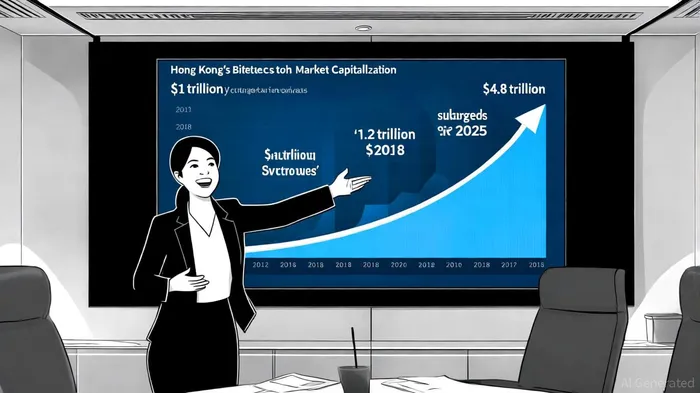
The futures' launch complements HKEX's existing biotech offerings, including the ChinaAMC ETF and equity index derivatives, while addressing a gap in risk management tools for a sector now representing 400% of its 2018 market capitalization, according to an EY report. By attracting both institutional and speculative capital, the futures may accelerate Hong Kong's transition from a traditional commodities and equity hub to a center for innovation-driven derivatives.
Critically, the product's success hinges on liquidity. Early adoption by global hedge funds and asset managers-evidenced by the $6 billion equity capital raise in U.S. biotech in January 2025, according to an Interactive Advisors analysis-suggests strong demand for sector-specific instruments. If the Hang Seng Biotech Index Futures replicate the NASDAQ Biotech Index Futures' trading volumes, they could become a cornerstone of Hong Kong's post-pandemic financial infrastructure.
Conclusion
The Hang Seng Biotech Index Futures represent more than a financial product-they are a strategic lever for Hong Kong to capture a larger share of the global biotech investment landscape. By offering precision hedging tools and amplifying speculative momentum, the futures could attract both risk-averse institutions and momentum-driven traders. Yet, their success will depend on navigating the sector's volatility and ensuring sufficient liquidity. As the 28 November launch date approaches, the market will watch closely to see if Hong Kong can replicate the NASDAQ Biotech Index's trajectory-or forge a new path in Asia's biotech boom.







Comentarios
Aún no hay comentarios