
Hong Kong Banks Launch 24/7 Tokenized Deposit System with Ant Group
Standard Chartered BankBANK-- has launched a blockchain-based tokenized deposit solution in Hong Kong for Ant International, enabling real-time transfers in multiple currencies. The initiative is part of the Hong Kong Monetary Authority's (HKMA) "Project Ensemble," a broader effort to advance distributed ledger technology in the region. Ant International, a global fintech firm, is the first to adopt the solution, using it on its Whale platform to enhance liquidity management and treasury operations. This marks a key step in Hong Kong's push to develop real-world use cases for blockchain in financial services.
The new tokenized deposits system allows for 24/7 real-time transfers in Hong Kong dollars (HKD), offshore renminbi (CNH), and US dollars (USD). Unlike stablecoins, these deposits represent real bank balances stored digitally on a blockchain, providing immediate access while maintaining regulatory compliance. 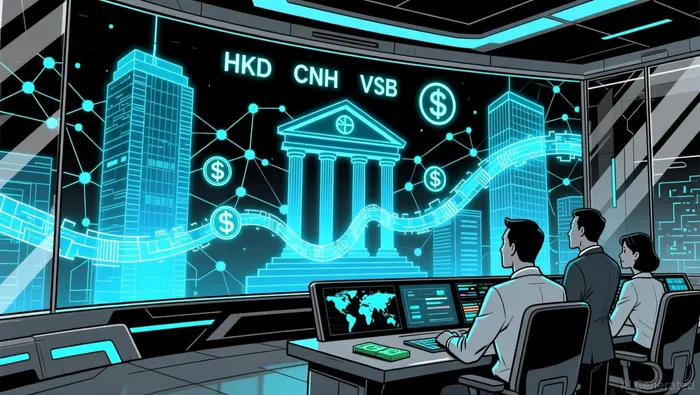 The solution aims to streamline cross-border transactions and reduce settlement times, which is particularly beneficial for multinational corporations requiring constant liquidity. Ant International's adoption of the system highlights the growing importance of blockchain in corporate finance.
By deploying this technology, Standard Chartered and Ant International aim to set a blueprint for how traditional banks can integrate with modern blockchain networks. Mahesh Kini noted the increasing demand for real-time treasury management among institutions. The project builds on prior initiatives like Singapore's Project Guardian, which explored digitization in financial markets. Both companies are actively involved in shaping industry standards for tokenization through the EnsembleTX group according to industry reports. The collaboration reflects a broader industry shift toward digital asset adoption.
Implications for Financial Institutions and Regulators
The tokenized deposit solution is part of a broader regulatory experiment led by the HKMA. Project Ensemble seeks to establish governance frameworks and interoperability standards for tokenization across wholesale banking. Standard Chartered has been an active participant in this effort since May 2024, helping to test tokenization use cases and develop scalable settlement scenarios. The goal is to create a robust ecosystem for tokenized assets that aligns with global regulatory expectations according to industry analysis.
For financial institutions, the adoption of tokenized deposits represents a strategic move to modernize treasury operations. By reducing settlement times and increasing transparency, banks can help clients manage liquidity more efficiently. Kelvin Li emphasized how the new system enhances access to working capital for the company's global operations. As more firms explore tokenized assets, the demand for institutional-grade blockchain solutions is likely to grow.
The Broader Market Context
Hong Kong is emerging as a key hub for blockchain innovation in financial services. The HKMA has announced plans to trial the issuance of tokenized bills and expand settlement capabilities using digital assets. In October 2025, the regulator launched an initiative to enable settlements in tokenized bank liabilities and well-regulated stablecoins according to regulatory announcements. These steps reflect a broader global trend, with regulators like the U.S. Office of the Comptroller of the Currency (OCC) also exploring tokenized assets and stablecoins as reported by industry analysts.
The success of Project Ensemble could influence how other markets approach asset tokenization. JPMorgan has recently launched an Ethereum-based money market fund, signaling growing institutional interest in blockchain-based financial products. Meanwhile, Ondo Finance plans to offer tokenized stocks and ETFs on the SolanaSOL-- blockchain, further expanding the range of digital financial assets. Hong Kong's efforts position it as a leader in this emerging market.
What This Means for Investors and Corporations
For investors and corporations, the rise of tokenized deposits signals a shift toward faster and more flexible financial infrastructure. Companies with global operations can benefit from real-time cross-border settlements, reducing the need for intermediaries and minimizing capital lock-up. The technology also opens the door to more sophisticated financial products, such as tokenized bonds and structured deposits as noted by financial analysts.
However, widespread adoption will depend on regulatory clarity and interoperability between different blockchain platforms. While the current system supports transfers within a single bank, interbank settlements still rely on traditional real-time gross settlement (RTGS) systems. As more institutions join Project Ensemble and testTST-- new use cases, the infrastructure for tokenized assets is expected to evolve rapidly. Investors should monitor developments in Hong Kong and other financial centers to assess the long-term impact of asset tokenization.






Comentarios
Aún no hay comentarios