
The Honeymoon Is Over for Space Investors
The space industry’s golden age of unbridled optimism is fading. What began as a high-stakes, high-reward frontierULCC-- for investors—fueled by SpaceX’s Starlink, Blue Origin’s New Glenn, and China’s lunar ambitions—is now facing a reckoning. Over-supply, regulatory hurdles, and a brutal reality check for startups are turning the sector into a test of endurance rather than a sprint for glory.
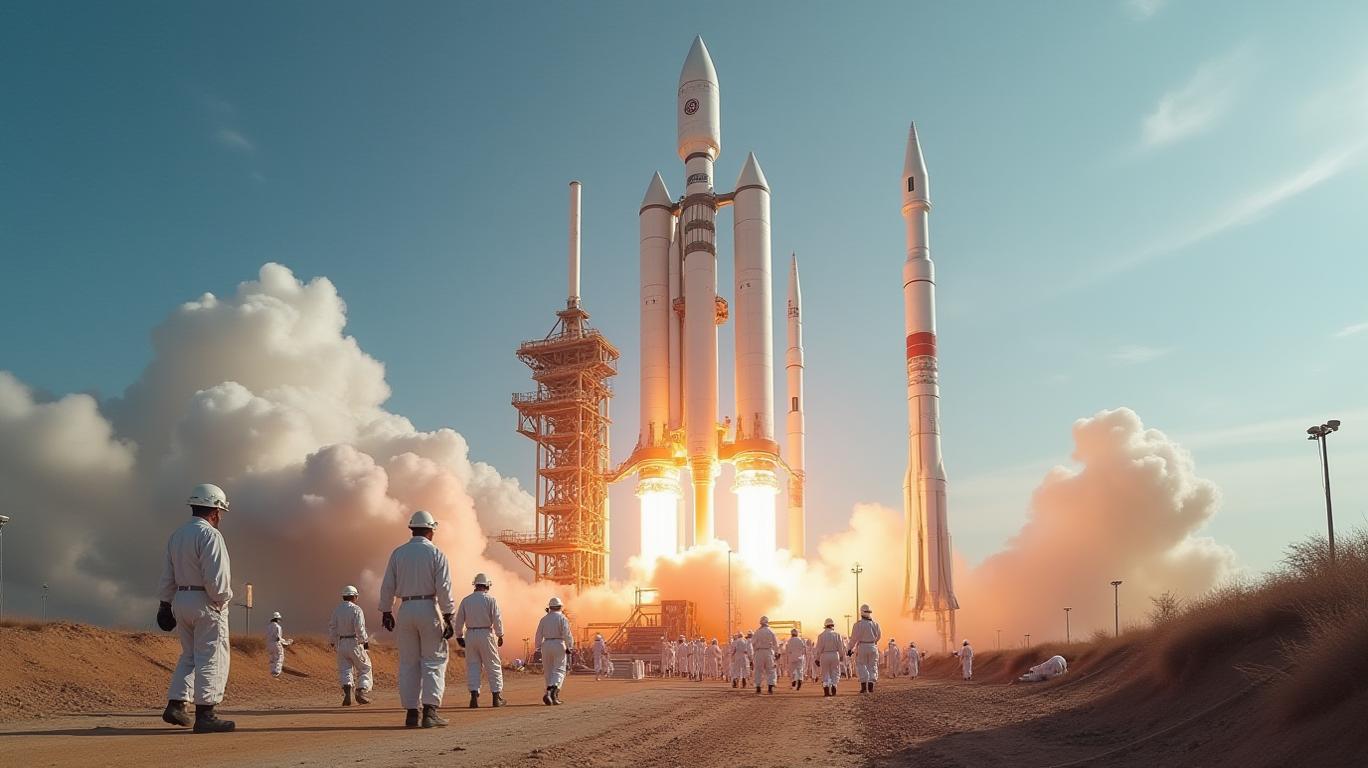
The Over-Supply Crisis: A Race to the Bottom
The most immediate threat is an unprecedented surge in launch capacity. Over 20 entities are targeting maiden orbital launches in 2025, including Blue Origin’s New Glenn, China’s Gravity-2, and India’s Vikram-1. Yet history is a harsh judge: no new rocket has ever successfully reached orbit on its first attempt. This year’s failures—such as SpaceX’s two consecutive Starship upper-stage malfunctions—highlight the technical and financial risks. Even if half these startups survive, the market could face a glut of capacity exceeding demand, especially as SpaceX’s Falcon 9 dominates with 144 launches in 2025 alone, fueled by Starlink’s insatiable appetite for satellites.
The Venture Capital Divide: Winners and Losers
The venture capital landscape is fracturing. Established firms like Redwire and Voyager Space are focusing on mid-market exits, while inexperienced funds are pouring capital into unproven startups. This bifurcation mirrors the broader industry: only ~20 of 183 tracked launch startups are projected to survive, with many pivoting to defense contracts or niche markets. The 3.6% of global venture capital allocated to space in Q2 2025—a distant third behind AI and robotics—reflects investor caution. As one SpaceFund analyst noted, “The sector is no longer about moonshots; it’s about moonlit balance sheets.”
Regulatory Crossroads: Opportunity or Overreach?
The U.S. government is both a savior and a stumbling block. The FAA’s Part 450 reforms aim to streamline regulations, while the Space Force’s expansion under Trump’s administration could boost military contracts. Yet compliance costs loom large: SpaceX’s Florida launches now face environmental assessments that could delay projects. Meanwhile, China’s aggressive lunar plans and asteroid missions—including seven maiden launches in 2025—are forcing global competitors to adapt or risk obsolescence.
The Geopolitical Wildcard: China’s Ascent
Beijing’s Tianwen-2 asteroid sample return mission and its push for lunar colonies underscore its ambition to dominate deep space. This isn’t just about science; it’s a strategic play for resource rights and technological primacy. U.S. startups now face not just SpaceX but a rival superpower investing heavily in space—a stark contrast to the industry’s earlier days of U.S.-centric hype.
The Bottom Line: A New Era of Pragmatism
The space sector is maturing, but not without growing pains. Investors must now ask tough questions: Can startups survive against SpaceX’s $300 million-per-launch pricing? Will the ARK Space ETF, up 12% in 2025, sustain momentum if maiden launches fail? And how will the FAA’s reforms balance safety with speed?
The numbers tell the story: 20+ rockets, 10% market share for launch, and a 90% attrition rate for startups paint a stark picture. The era of easy exits is over. The winners will be those with scalable business models, like satellite connectivity firms (e.g., Skylo) or AI-driven space domain awareness startups, not just rocket builders. For investors, the final frontier is now a question of survival of the fittest, not the first.
In conclusion, space investing has entered a phase of selective rigor. While global interest remains—driven by $15 billion in 2025 venture funding and government contracts—the industry’s honeymoon is over. The next decade will be defined not by the number of rockets launched, but by the resilience of those who build them.







Comentarios
Aún no hay comentarios