
Honda's Strategic Pivots in the EV Era: Assessing Growth Catalysts and Long-Term Value Creation
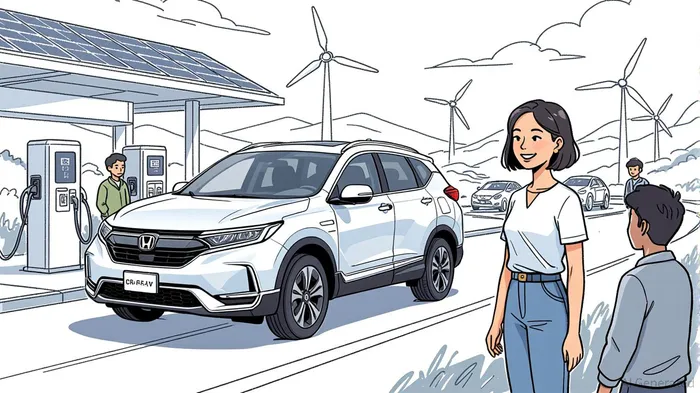
In the rapidly evolving automotive landscape, Honda MotorHMC-- Co. Ltd. (HDM.BE) has embarked on a recalibration of its electric vehicle (EV) and hydrogen strategies, navigating a market marked by shifting consumer preferences, regulatory uncertainties, and infrastructural challenges. As the global EV market grapples with a slowdown in adoption, Honda’s strategic pivots—ranging from R&D reallocations to product diversification—offer a compelling case study for investors evaluating long-term value creation in the transition to sustainable mobility.
R&D Reallocation: From Aggressive EVs to Hybrid-Centric Innovation
Honda’s R&D strategy has undergone a notable shift. The company announced a reduction of 3 trillion yen in EV-related investments by fiscal year 2031, trimming its total electrification budget to 7 trillion yen from the initially planned 10 trillion yen [1]. This adjustment reflects a pragmatic response to a maturing EV market, where overinvestment risks outpacing demand. Instead of abandoning electrification, HondaHMC-- is doubling down on hybrid electric vehicles (HEVs) as a transitional bridge. By 2030, the company aims to sell 2.2 million HEVs, leveraging its e:HEV platform’s efficiency gains and cost reductions—targeting a 50% cost cut compared to 2018 models [1].
Parallel to this, Honda is advancing hydrogen technology. The launch of the CR-V e:FCEV in 2025—a plug-in hybrid hydrogen vehicle—demonstrates its commitment to diversifying electrification pathways. The vehicle’s hydrogen fuel cell module, with a 150 kW output and halved production costs, underscores Honda’s focus on scalability and durability [2]. However, the company’s decision to end its 15-year partnership with General MotorsGM-- on fuel cell development signals a shift toward self-reliance, prioritizing proprietary innovation over collaborative ventures [3].
Product Diversification: Balancing EVs, Hybrids, and Hydrogen
Honda’s product strategy is increasingly segmented to address distinct market needs. In North America and Japan, the company is integrating next-generation ADAS systems into EV and HEV models, enhancing their competitiveness against pure EVs from TeslaTSLA-- and Chinese automakers [1]. For instance, the 2025 Acura RSX EV, set to debut at Honda’s Ohio-based EV Hub, will be produced alongside the CR-V e:FCEV, reflecting a dual-track approach to electrification [4].
In emerging markets, Honda is expanding its electric motorcycle portfolio, targeting over 10 new models by 2025. Battery-swapping initiatives in India and Southeast Asia, powered by the Honda Mobile Power Pack e: (MPP), aim to circumvent charging infrastructure gaps [5]. Meanwhile, the company’s motorcycle business remains a growth engine, with 9.9 million units sold in the first half of 2025—a 3% increase year-over-year [6]. This resilience contrasts with its struggles in the passenger car segment, where sales in Thailand, a key market, fell 18.7% in H1 2025 [7].
Market Expansion: Navigating Regional Dynamics
Honda’s geographic strategy highlights both opportunities and vulnerabilities. In China, the e:NP2 EV, developed in collaboration with Momenta Global, is central to its ambition of achieving 100% EV sales by 2035. The model’s accessory ecosystem has also driven consumer engagement, suggesting a broader trend of EV personalization [8]. Conversely, in the U.S., Honda and Acura sold over 14,000 EVs in Q1 2025, but hybrids accounted for 22% of light-duty vehicle sales—a figure that outpaces EVs and plug-in hybrids [9].
Emerging markets, however, remain a mixed bag. While Honda’s motorcycle dominance in Latin America and Southeast Asia provides a buffer, its passenger car sales in Thailand—a critical hub—have declined sharply, reflecting broader industry headwinds. Analysts attribute this to trade tensions, infrastructure bottlenecks, and a global shift toward HEVs [10].
Financial Realities and Analyst Projections
Financially, Honda’s EV and hydrogen initiatives face profitability hurdles. High battery costs, limited hydrogen infrastructure, and the removal of federal incentives in the U.S. have constrained margins. However, the company’s focus on HEV cost reductions and production efficiency improvements—such as a $1 billion investment in its Ohio EV Hub—positions it to capitalize on near-term demand [11].
Analyst projections paint a cautiously optimistic picture. The global EV market is expected to grow at a 19% CAGR through 2030, reaching 36.6 million units annually [12]. For hydrogen, while fuel cell passenger cars face headwinds (sales fell from 15,000 in 2022 to 5,000 in 2024), the segment’s future hinges on heavy-duty applications. Honda’s hydrogen power generator, set for mass production in 2026, aligns with this trend, targeting industrial and commercial clients [2].
Conclusion: A Calculated Path to Carbon Neutrality
Honda’s strategic recalibration—prioritizing HEVs, advancing hydrogen, and refining R&D—reflects a nuanced approach to the EV transition. While the company’s EV ambitions have been tempered by market realities, its emphasis on hybrid technologies and hydrogen innovation positions it to navigate a fragmented electrification landscape. For investors, the key question is whether Honda can balance short-term profitability with long-term sustainability goals. With its Ohio EV Hub operational by late 2025 and hydrogen infrastructure expanding globally, Honda’s ability to adapt may yet prove its resilience in an era of rapid change.
Source:
[1] Summary of 2025 Honda Business Briefing [https://global.honda/en/newsroom/news/2025/c250520eng.html]
[2] Honda Advances Hydrogen Strategy with Production Launch of Fuel Cell Electric Vehicle in Ohio [https://hondanews.com/en-US/releases/honda-advances-hydrogen-strategy-with-production-launch-of-fuel-cell-electric-vehicle-in-ohio]
[3] Honda, General Motors Continue to Drift Apart, Ending Fuel Cell Partnership [https://headlight.news/2025/02/24/honda-general-motors-continue-to-drift-apart-ending-fuel-cell-partnership/]
[4] Honda EV Hub Prepares for New Level of Flexible Production in Reimagined Manufacturing Environment [https://hondanews.com/en-US/releases/honda-ev-hub-prepares-for-new-level-of-flexible-production-in-reimagined-manufacturing-environment]
[5] Motorcycle Business Strategy | Integrated Report [https://global.honda/en/sustainability/integratedreport/motorcycle-business-strategy/]
[6] Honda Motorcycles - Facts & Data 2025 [https://www.motorcyclesdata.com/2025/08/01/honda-motorcycles/]
[7] Thailand - New car sales in 2025 by OEM, model, vehicle [https://www.marklines.com/en/statistics/flash_sales/automotive-sales-in-thailand-by-month]
[8] Honda e:NP2 2025 Accessory Trends [https://www.accio.com/business/trend-in-honda-enp2-2025-accessories]
[9] Hybrid vehicle sales continue to rise as electric and plug-in [https://www.eia.gov/todayinenergy/detail.php?id=65384]
[10] Automotive Industry Outlook: Vehicle Forecasts and Analysis [https://www.spglobal.com/automotive-insights/en/theme/automotive-industry-forecast]
[11] Honda Cuts EV Sales, Investment Targets As It Shifts Focus [https://www.nasdaq.com/articles/honda-cuts-ev-sales-investment-targets-it-shifts-focus]
[12] Electric Vehicles - Global Strategic Business Report [https://www.researchandmarkets.com/reports/344052/electric_vehicles_global_strategic_business?srsltid=AfmBOopvIpw6znyCelXaiwnPWNLMKuJmdRnprxiLeSq61Qai9Op79kl_]







Comentarios
Aún no hay comentarios