
Honda's Production Shift: A Tariff-Driven Pivot to Indiana
Generado por agente de IAWesley Park
lunes, 3 de marzo de 2025, 3:32 am ET1 min de lectura
HMC--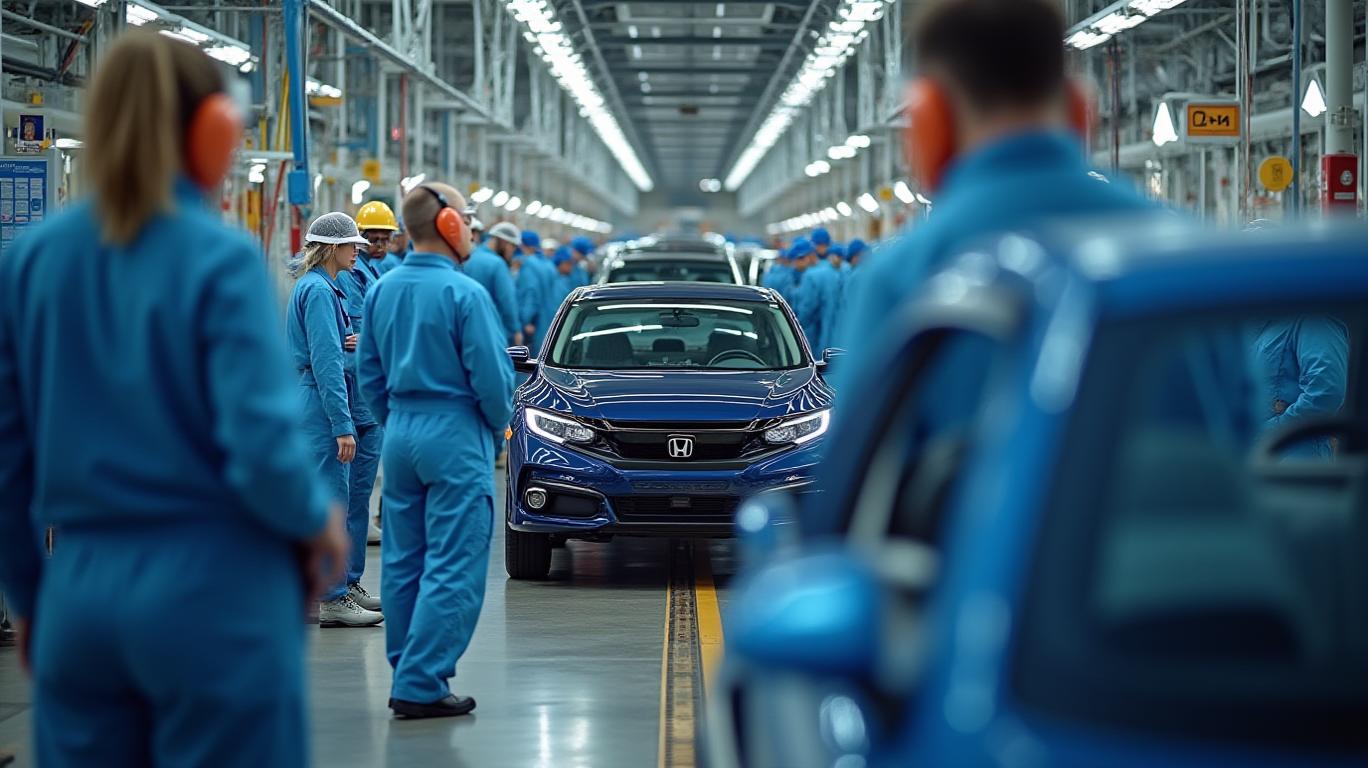
In an exclusive revelationREVB--, sources have confirmed that HondaHMC-- is set to produce the next generation of its popular Civic model in Indiana, rather than Mexico, due to the looming threat of U.S. tariffs. This strategic shift, driven by the Trump administration's trade policies, is poised to have significant implications for the automotive industry, consumer demand, and market share.
The decision to move production from Mexico to Indiana is a direct response to the Trump administration's proposed 25% tariffs on imports from Mexico. These tariffs, intended to pressure Mexico into addressing illegal immigration, have the potential to significantly increase production costs for automakers with operations in Mexico. In Honda's case, the higher labor and overhead costs in Indiana are expected to lead to a price increase for the new Civic.
The impact of this price increase on consumer demand and market share is uncertain, but it could lead to a decrease in sales for the new Civic. A study by the Center for Automotive Research found that a $1,000 price increase on a vehicle can result in a 20% decrease in sales. If the price increase is substantial, it could allow competitors like ToyotaTM-- (Corolla), Nissan (Sentra), or Hyundai (Elantra) to gain market share at Honda's expense.
However, there are factors that could help mitigate the impact on consumer demand and market share. The new Civic's increased versatility, sportier driving character, and Euro-inspired exterior design may appeal to a broader range of customers, potentially offsetting the impact of higher prices. Additionally, if Honda can successfully negotiate lower tariffs or other trade agreements, it could help reduce the impact of higher production costs on pricing.
In conclusion, Honda's decision to produce the next Civic in Indiana, rather than Mexico, is a strategic response to the threat of U.S. tariffs. While this shift may lead to higher prices and potential impacts on consumer demand and market share, the new Civic's appealing features and potential trade agreements could help offset these effects. Investors should monitor the situation closely, as the outcome of this production shift could have significant implications for the automotive industry and the broader economy.
REVB--
TM--
In an exclusive revelationREVB--, sources have confirmed that HondaHMC-- is set to produce the next generation of its popular Civic model in Indiana, rather than Mexico, due to the looming threat of U.S. tariffs. This strategic shift, driven by the Trump administration's trade policies, is poised to have significant implications for the automotive industry, consumer demand, and market share.
The decision to move production from Mexico to Indiana is a direct response to the Trump administration's proposed 25% tariffs on imports from Mexico. These tariffs, intended to pressure Mexico into addressing illegal immigration, have the potential to significantly increase production costs for automakers with operations in Mexico. In Honda's case, the higher labor and overhead costs in Indiana are expected to lead to a price increase for the new Civic.
The impact of this price increase on consumer demand and market share is uncertain, but it could lead to a decrease in sales for the new Civic. A study by the Center for Automotive Research found that a $1,000 price increase on a vehicle can result in a 20% decrease in sales. If the price increase is substantial, it could allow competitors like ToyotaTM-- (Corolla), Nissan (Sentra), or Hyundai (Elantra) to gain market share at Honda's expense.
However, there are factors that could help mitigate the impact on consumer demand and market share. The new Civic's increased versatility, sportier driving character, and Euro-inspired exterior design may appeal to a broader range of customers, potentially offsetting the impact of higher prices. Additionally, if Honda can successfully negotiate lower tariffs or other trade agreements, it could help reduce the impact of higher production costs on pricing.
In conclusion, Honda's decision to produce the next Civic in Indiana, rather than Mexico, is a strategic response to the threat of U.S. tariffs. While this shift may lead to higher prices and potential impacts on consumer demand and market share, the new Civic's appealing features and potential trade agreements could help offset these effects. Investors should monitor the situation closely, as the outcome of this production shift could have significant implications for the automotive industry and the broader economy.

Divulgación editorial y transparencia de la IA: Ainvest News utiliza tecnología avanzada de Modelos de Lenguaje Largo (LLM) para sintetizar y analizar datos de mercado en tiempo real. Para garantizar los más altos estándares de integridad, cada artículo se somete a un riguroso proceso de verificación con participación humana.
Mientras la IA asiste en el procesamiento de datos y la redacción inicial, un miembro editorial profesional de Ainvest revisa, verifica y aprueba de forma independiente todo el contenido para garantizar su precisión y cumplimiento con los estándares editoriales de Ainvest Fintech Inc. Esta supervisión humana está diseñada para mitigar las alucinaciones de la IA y garantizar el contexto financiero.
Advertencia sobre inversiones: Este contenido se proporciona únicamente con fines informativos y no constituye asesoramiento profesional de inversión, legal o financiero. Los mercados conllevan riesgos inherentes. Se recomienda a los usuarios que realicen una investigación independiente o consulten a un asesor financiero certificado antes de tomar cualquier decisión. Ainvest Fintech Inc. se exime de toda responsabilidad por las acciones tomadas con base en esta información. ¿Encontró un error? Reportar un problema




Comentarios
Aún no hay comentarios