
Honda and Nissan: A Merger for Survival in the EV Race
Generado por agente de IAWesley Park
lunes, 23 de diciembre de 2024, 5:39 am ET1 min de lectura
HMC--
In a bid to stay competitive in the rapidly evolving electric vehicle (EV) market, Japanese automakers Honda and Nissan have formally initiated merger talks, aiming to combine their operations by 2026. This strategic move comes as the auto industry undergoes a dramatic shift towards electrification, with Chinese rivals leading the charge.
The merger, if successful, would create a behemoth worth over $50 billion, with an annual output of 7.4 million vehicles. This would make it the world's third-largest automaker, trailing only Toyota and Volkswagen. The combined company would boast a formidable global presence, with the potential to challenge Chinese and European rivals.
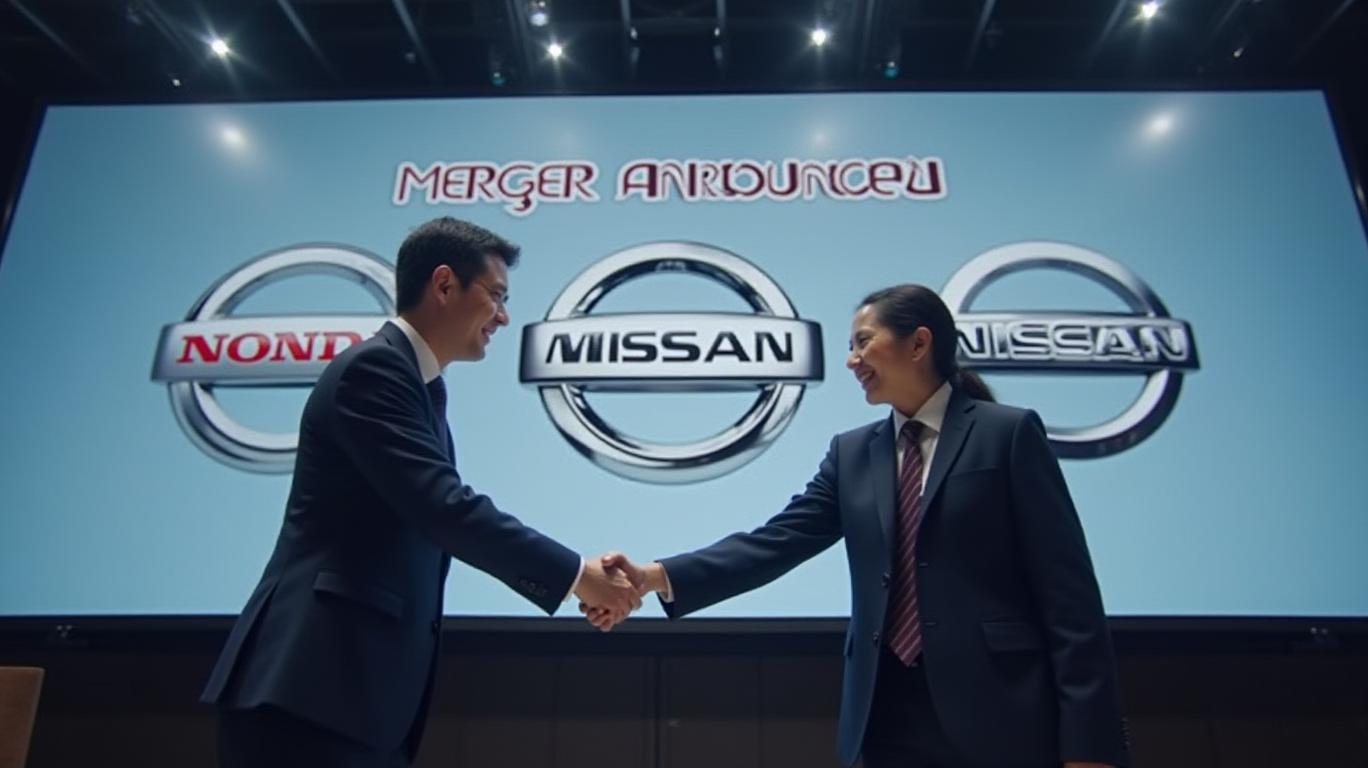
Honda, Japan's second-largest automaker, is seen as the ideal partner to rescue Nissan, which has struggled following the 2018 scandal involving its former chairman, Carlos Ghosn. By merging, the two companies can leverage their respective strengths in powertrains and EV technology to drive innovation and cost savings.
Nissan's expertise in EVs and hybrid powertrains can complement Honda's prowess in gasoline engines. By sharing technology and resources, they can accelerate EV development and reduce costs. For instance, Nissan's Leaf, the first mass-market EV, can benefit from Honda's powertrain know-how, while Honda can leverage Nissan's battery and hybrid technology.
The combined company, with an enlarged volume, can cut purchase costs and improve competitiveness in the global market. By sharing respective competitive edges and better utilizing manufacturing facilities and dealerships across the world, they can enhance efficiency and reduce expenses. This strategy will enable them to compete more effectively with Chinese carmakers, which currently lead in both technology and efficiency.
However, the merger faces challenges in integrating the distinct corporate cultures of Honda and Nissan. Honda's technology-centric culture, with strengths in powertrains, may clash with Nissan's faltering status. To balance this, Honda should leverage its strengths to bolster Nissan's EV and hybrid powertrain development, while Nissan can contribute its expertise in large SUVs and battery technology. A holding company structure could help maintain each brand's identity while fostering collaboration.
In conclusion, the merger of Honda and Nissan is a strategic move aimed at survival in the rapidly evolving EV market. By combining their strengths and leveraging their enlarged volume, the merged entity can challenge Chinese and European rivals. However, successful integration will require careful management and open communication to ensure a cohesive entity emerges. The future of the combined company will depend on its ability to adapt to the changing market landscape and capitalize on the synergies created by the merger.
MASS--
TM--
In a bid to stay competitive in the rapidly evolving electric vehicle (EV) market, Japanese automakers Honda and Nissan have formally initiated merger talks, aiming to combine their operations by 2026. This strategic move comes as the auto industry undergoes a dramatic shift towards electrification, with Chinese rivals leading the charge.
The merger, if successful, would create a behemoth worth over $50 billion, with an annual output of 7.4 million vehicles. This would make it the world's third-largest automaker, trailing only Toyota and Volkswagen. The combined company would boast a formidable global presence, with the potential to challenge Chinese and European rivals.
Honda, Japan's second-largest automaker, is seen as the ideal partner to rescue Nissan, which has struggled following the 2018 scandal involving its former chairman, Carlos Ghosn. By merging, the two companies can leverage their respective strengths in powertrains and EV technology to drive innovation and cost savings.
Nissan's expertise in EVs and hybrid powertrains can complement Honda's prowess in gasoline engines. By sharing technology and resources, they can accelerate EV development and reduce costs. For instance, Nissan's Leaf, the first mass-market EV, can benefit from Honda's powertrain know-how, while Honda can leverage Nissan's battery and hybrid technology.
The combined company, with an enlarged volume, can cut purchase costs and improve competitiveness in the global market. By sharing respective competitive edges and better utilizing manufacturing facilities and dealerships across the world, they can enhance efficiency and reduce expenses. This strategy will enable them to compete more effectively with Chinese carmakers, which currently lead in both technology and efficiency.
However, the merger faces challenges in integrating the distinct corporate cultures of Honda and Nissan. Honda's technology-centric culture, with strengths in powertrains, may clash with Nissan's faltering status. To balance this, Honda should leverage its strengths to bolster Nissan's EV and hybrid powertrain development, while Nissan can contribute its expertise in large SUVs and battery technology. A holding company structure could help maintain each brand's identity while fostering collaboration.
In conclusion, the merger of Honda and Nissan is a strategic move aimed at survival in the rapidly evolving EV market. By combining their strengths and leveraging their enlarged volume, the merged entity can challenge Chinese and European rivals. However, successful integration will require careful management and open communication to ensure a cohesive entity emerges. The future of the combined company will depend on its ability to adapt to the changing market landscape and capitalize on the synergies created by the merger.

Divulgación editorial y transparencia de la IA: Ainvest News utiliza tecnología avanzada de Modelos de Lenguaje Largo (LLM) para sintetizar y analizar datos de mercado en tiempo real. Para garantizar los más altos estándares de integridad, cada artículo se somete a un riguroso proceso de verificación con participación humana.
Mientras la IA asiste en el procesamiento de datos y la redacción inicial, un miembro editorial profesional de Ainvest revisa, verifica y aprueba de forma independiente todo el contenido para garantizar su precisión y cumplimiento con los estándares editoriales de Ainvest Fintech Inc. Esta supervisión humana está diseñada para mitigar las alucinaciones de la IA y garantizar el contexto financiero.
Advertencia sobre inversiones: Este contenido se proporciona únicamente con fines informativos y no constituye asesoramiento profesional de inversión, legal o financiero. Los mercados conllevan riesgos inherentes. Se recomienda a los usuarios que realicen una investigación independiente o consulten a un asesor financiero certificado antes de tomar cualquier decisión. Ainvest Fintech Inc. se exime de toda responsabilidad por las acciones tomadas con base en esta información. ¿Encontró un error? Reportar un problema


SOBRE NOSOTROS
Nuestra historiaAutores de noticiasBase de conocimientosPolítica de privacidadTérmino de usoDescargo de responsabilidad de corretaje de tercerosTérminos de uso de AIMEDivulgaciones de riesgos de AInvest AICarrerasCONTÁCTENOS
Email: support@ainvest.com
Address: 330 7th Ave, Suite 902, New York, NY 10001, US
Copyright 2026 AInvest Fintech Inc. All rights reserved.


Comentarios
Aún no hay comentarios