
Home Depot's Q4 Beat Fails to Lift Stock Amidst Macroeconomic Headwinds
Generado por agente de IAWesley Park
miércoles, 26 de febrero de 2025, 11:44 am ET2 min de lectura
HD--
Home Depot, the world's largest home improvement retailer, reported a strong fourth quarter, beating analyst estimates on both sales and earnings. However, the company's stock failed to rally, as investors focused on the disappointing guidance for fiscal 2025. The lackluster outlook reflects the ongoing challenges in the macroeconomic environment and elevated interest rates, which continue to weigh on consumer spending and the housing market.
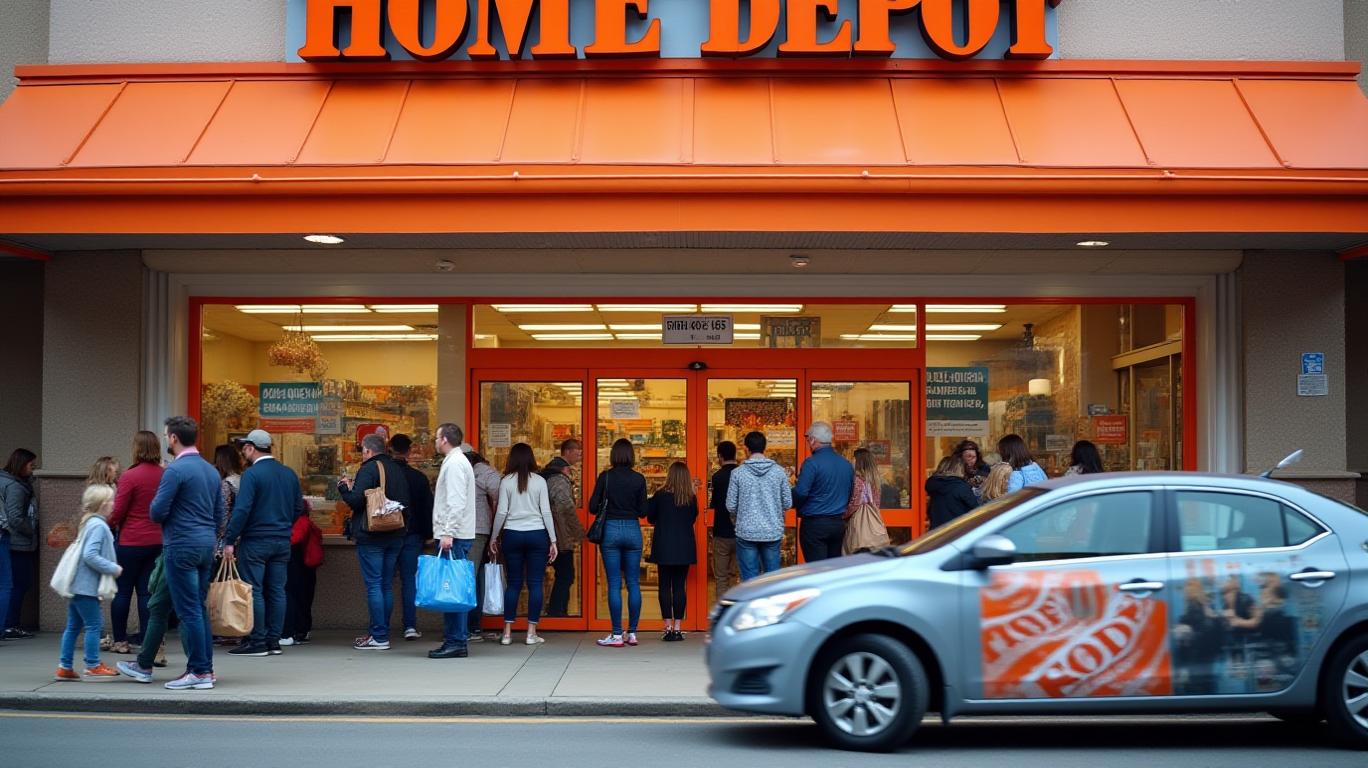
Q4 Beat and Guidance
Home Depot's Q4 2024 results were impressive, with sales of $39.7 billion, up 14.1% year-over-year (YoY), and adjusted earnings per share (EPS) of $3.13, up 9.4% YoY. Comparable sales increased 0.8% YoY, marking the first positive quarter since 2022. Despite the strong performance, the company's stock fell following the earnings release, as investors focused on the disappointing guidance for fiscal 2025.
For the full year, Home DepotHD-- expects total sales growth of approximately 2.8%, comparable sales growth of approximately 1.0%, and an adjusted operating margin of approximately 13.4%. The company also expects diluted earnings-per-share to decline approximately 2% from $15.24 in fiscal 2024. These projections reflect the ongoing challenges in the macroeconomic environment and the elevated interest rate environment, which continue to impact consumer spending and the housing market.
Macroeconomic Headwinds
The disappointing guidance for fiscal 2025 reflects the ongoing challenges in the macroeconomic environment and the elevated interest rate environment. Home Depot's CEO, Ted Decker, acknowledged these headwinds in his remarks on the earnings call, stating that the company faced "uncertain macroeconomic conditions and a higher interest rate environment that impacted home improvement demand."
The current macroeconomic environment is characterized by high inflation, slowing economic growth, and elevated interest rates. These factors contribute to a challenging backdrop for consumer spending, particularly on discretionary items such as home improvement projects. Additionally, the elevated interest rate environment makes it more expensive for consumers to finance large home improvement projects, further dampening demand.

Elevated Interest Rates
The elevated interest rate environment is a significant headwind for Home Depot, as it makes it more expensive for consumers to finance large home improvement projects. This is particularly relevant for big-ticket items, such as kitchen and bathroom renovations, which are often financed through home equity loans or credit cards with high-interest rates.
The Federal Reserve has been raising interest rates to combat inflation, and the current federal funds rate is in the range of 4.5% to 4.75%. This is the highest level since 2007, and the impact on consumer spending is evident. According to a survey by the National Association of Realtors, 63% of consumers believe that the higher interest rates will have a negative impact on their ability to afford a home.
Conclusion
Home Depot's Q4 beat failed to lift the stock, as investors focused on the disappointing guidance for fiscal 2025. The lackluster outlook reflects the ongoing challenges in the macroeconomic environment and the elevated interest rate environment, which continue to weigh on consumer spending and the housing market. As the company navigates these headwinds, investors should monitor the progress of the macroeconomic recovery and the impact of interest rate changes on consumer spending.
Home Depot, the world's largest home improvement retailer, reported a strong fourth quarter, beating analyst estimates on both sales and earnings. However, the company's stock failed to rally, as investors focused on the disappointing guidance for fiscal 2025. The lackluster outlook reflects the ongoing challenges in the macroeconomic environment and elevated interest rates, which continue to weigh on consumer spending and the housing market.
Q4 Beat and Guidance
Home Depot's Q4 2024 results were impressive, with sales of $39.7 billion, up 14.1% year-over-year (YoY), and adjusted earnings per share (EPS) of $3.13, up 9.4% YoY. Comparable sales increased 0.8% YoY, marking the first positive quarter since 2022. Despite the strong performance, the company's stock fell following the earnings release, as investors focused on the disappointing guidance for fiscal 2025.
For the full year, Home DepotHD-- expects total sales growth of approximately 2.8%, comparable sales growth of approximately 1.0%, and an adjusted operating margin of approximately 13.4%. The company also expects diluted earnings-per-share to decline approximately 2% from $15.24 in fiscal 2024. These projections reflect the ongoing challenges in the macroeconomic environment and the elevated interest rate environment, which continue to impact consumer spending and the housing market.
Macroeconomic Headwinds
The disappointing guidance for fiscal 2025 reflects the ongoing challenges in the macroeconomic environment and the elevated interest rate environment. Home Depot's CEO, Ted Decker, acknowledged these headwinds in his remarks on the earnings call, stating that the company faced "uncertain macroeconomic conditions and a higher interest rate environment that impacted home improvement demand."
The current macroeconomic environment is characterized by high inflation, slowing economic growth, and elevated interest rates. These factors contribute to a challenging backdrop for consumer spending, particularly on discretionary items such as home improvement projects. Additionally, the elevated interest rate environment makes it more expensive for consumers to finance large home improvement projects, further dampening demand.
Elevated Interest Rates
The elevated interest rate environment is a significant headwind for Home Depot, as it makes it more expensive for consumers to finance large home improvement projects. This is particularly relevant for big-ticket items, such as kitchen and bathroom renovations, which are often financed through home equity loans or credit cards with high-interest rates.
The Federal Reserve has been raising interest rates to combat inflation, and the current federal funds rate is in the range of 4.5% to 4.75%. This is the highest level since 2007, and the impact on consumer spending is evident. According to a survey by the National Association of Realtors, 63% of consumers believe that the higher interest rates will have a negative impact on their ability to afford a home.
Conclusion
Home Depot's Q4 beat failed to lift the stock, as investors focused on the disappointing guidance for fiscal 2025. The lackluster outlook reflects the ongoing challenges in the macroeconomic environment and the elevated interest rate environment, which continue to weigh on consumer spending and the housing market. As the company navigates these headwinds, investors should monitor the progress of the macroeconomic recovery and the impact of interest rate changes on consumer spending.

Divulgación editorial y transparencia de la IA: Ainvest News utiliza tecnología avanzada de Modelos de Lenguaje Largo (LLM) para sintetizar y analizar datos de mercado en tiempo real. Para garantizar los más altos estándares de integridad, cada artículo se somete a un riguroso proceso de verificación con participación humana.
Mientras la IA asiste en el procesamiento de datos y la redacción inicial, un miembro editorial profesional de Ainvest revisa, verifica y aprueba de forma independiente todo el contenido para garantizar su precisión y cumplimiento con los estándares editoriales de Ainvest Fintech Inc. Esta supervisión humana está diseñada para mitigar las alucinaciones de la IA y garantizar el contexto financiero.
Advertencia sobre inversiones: Este contenido se proporciona únicamente con fines informativos y no constituye asesoramiento profesional de inversión, legal o financiero. Los mercados conllevan riesgos inherentes. Se recomienda a los usuarios que realicen una investigación independiente o consulten a un asesor financiero certificado antes de tomar cualquier decisión. Ainvest Fintech Inc. se exime de toda responsabilidad por las acciones tomadas con base en esta información. ¿Encontró un error? Reportar un problema


SOBRE NOSOTROS
Nuestra historiaAutores de noticiasBase de conocimientosPolítica de privacidadTérmino de usoDescargo de responsabilidad de corretaje de tercerosTérminos de uso de AIMEDivulgaciones de riesgos de AInvest AICarrerasCONTÁCTENOS
Email: support@ainvest.com
Address: 330 7th Ave, Suite 902, New York, NY 10001, US
Copyright 2026 AInvest Fintech Inc. All rights reserved.


Comentarios
Aún no hay comentarios