
Home Depot's Earnings Outlook in a Decarbonizing and Rate-Sensitive Market: Navigating Tariffs and Fed Easing
Earnings Misses and Guidance: A Mixed Bag
Home Depot's Q3 2025 results were a microcosm of its current challenges. The company narrowly missed both revenue and EPS expectations, with results of $45.28 billion vs. $45.43 billion estimated and $4.68 vs. $4.69 estimated. Its FY2025 guidance of $14.94 EPS also fell short of the $15.13 analyst consensus. While these numbers might raise eyebrows, they mask a broader narrative: Home Depot is investing heavily to future-proof its business.
The company's $2.30 quarterly dividend-yielding 2.5%-remains a draw for income-focused investors. But with interest rates still elevated, the real test lies in how well it balances capital allocation between dividend sustainability and strategic reinvestment.
Tariff Woes and Vertical Integration: A Game-Changer?
Tariffs on building materials have been a thorn in Home Depot's side. The effective tariff rate on core products like drywall and steel framing has surged to 18% from 2.4% in 2024. To combat this, the company pulled off a $5.5 billion acquisition of GMS Inc. in August 2025. This vertical integration move isn't just about cost control-it's about securing supply for its Pro segment, which accounts for a significant chunk of its revenue.
The GMS acquisition mirrors strategies used by retailers like Costco and Walmart, which have also leaned on vertical integration to buffer against supply chain volatility. For Home Depot, this means less exposure to price swings and more leverage in negotiations with suppliers. But the $2.2 billion in projected 2025 interest expenses-driven by its ballooning $53.383 billion debt load and its high debt levels-reminds us that this strategy isn't without risk.
Decarbonization: A Long-Term Play with Short-Term Costs
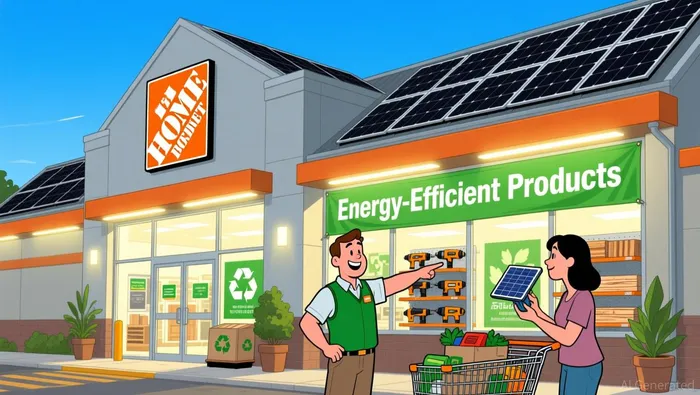
Home Depot's ESG initiatives are gaining traction, but they come with upfront costs. The company aims to reduce Scope 1 and 2 emissions by 92,000 metric tons annually and shift 85% of U.S. and Canadian outdoor power equipment sales to battery-powered models by 2028. These goals are ambitious, but they align with a world where sustainability isn't just a buzzword-it's a regulatory and consumer imperative.
However, decarbonization isn't free. The shift to battery-powered tools and energy-efficient products requires R&D and inventory overhauls. For now, these costs are likely dampening margins, but they position Home Depot to capitalize on a green economy where competitors lag.
Fed Easing: A Tailwind or a Mirage?
The Federal Reserve's 0.25% rate cut in 2025 could be a lifeline for Home Depot. Lower rates mean cheaper borrowing for mortgages and home equity lines of credit-key financing tools for big-ticket projects. CEO Ted Decker has noted that economic uncertainty has caused customers to delay renovations and easing rates could unlock pent-up demand.
The company's consumer financing programs are already showing signs of life. Big-ticket transactions above $1,000 rose 2.6% in Q2 2025 driven by categories like building materials. While Home Depot hasn't baked a remodeling recovery into its guidance, the Fed's pivot could force a rethink.
The Bottom Line: A Stock for the Patient
Home Depot's earnings outlook is a tug-of-war between near-term pressures and long-term resilience. The company's debt load and interest rate sensitivity are legitimate concerns, but its vertical integration, ESG focus, and potential Fed tailwinds create a compelling risk-rebalance.
For investors, the key is patience. Home Depot isn't a short-term play-it's a business betting on structural trends in home improvement, sustainability, and supply chain control. If the Fed continues to ease and consumer confidence rebounds, the stock could surprise to the upside. But if rates stick around or housing demand stagnates further, the dividend yield might be the only亮点.







Comentarios
Aún no hay comentarios