
Hologic's Panther Fusion GI Tests: A Catalyst for Growth in a Booming Market
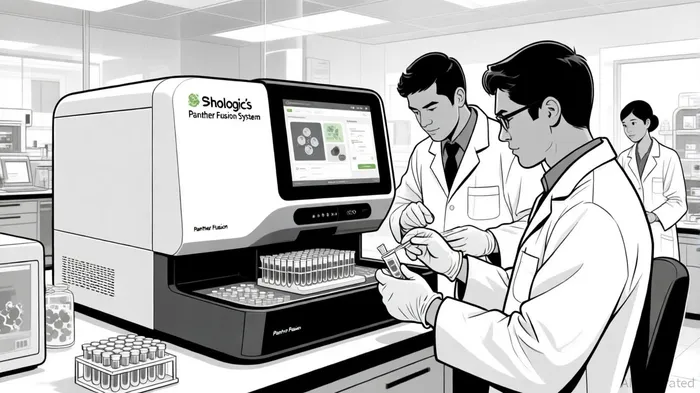
Hologic (HOLX) has recently secured a pivotal milestone in its diagnostic portfolio: FDA 510(k) clearance and CE marking for its Panther Fusion Gastrointestinal (GI) Bacterial and Expanded Bacterial Assays. These automated molecular tests, designed to detect pathogens like Salmonella, Campylobacter, E. coli (including O157), and others responsible for infectious gastroenteritis, mark the company's first foray into the GI diagnostics market, as reported by MPO Magazine. With nearly 200 million cases of infectious gastroenteritis annually in the U.S. alone, according to a Grand View Research report, the timing of this approval aligns with a growing demand for rapid, accurate diagnostic tools. For investors, the question is whether this regulatory win translates into sustained stock momentum and long-term market capture.
Catalyst-Driven Momentum: A Positive Start
The news sent HOLXHOLX-- shares up 1.3% to $67.91 shortly after the announcement, Zacks reported, reflecting optimism about the company's expanded diagnostic capabilities. Analysts have since reinforced this sentiment, with a "Hold" consensus from 17 Wall Street analysts, an average price target of $76.42 (13.78% upside from current levels), and a range spanning $68.00 to $94.00, according to MarketBeat. This suggests a cautious but constructive outlook, particularly as HologicHOLX-- leverages its Panther Fusion System-an add-on to its existing Panther platform-to streamline lab workflows and reduce time to diagnosis, per Yahoo Finance.
The stock's performance also benefits from broader trends in molecular diagnostics. The global molecular diagnostics market is projected to grow from $23 billion in 2025 to $42.6 billion by 2030, driven by PCR and next-gen sequencing (NGS) technologies, as GlobeNewswire forecasts. Hologic's Panther system, already a staple in women's health and respiratory diagnostics, now extends its reach into GI testing, a segment with clear growth potential.
Market Capture Potential: A $6.5 Billion Opportunity
The global GI diagnostics market, valued at $5.08 billion in 2024, is forecasted to reach $6.56 billion by 2030, with a CAGR of 4.3% (Grand View Research). Within this, the GI stool testing submarket-where molecular diagnostics play a rising role-is expected to grow at a faster 7.27% CAGR, reaching $1.11 billion by 2030, according to Mordor Intelligence. Hologic's Panther Fusion GI tests are well-positioned to capitalize on this growth, particularly given their automated, customizable mini-panel format. Labs can tailor testing to individual patient needs, reducing costs and improving efficiency-a critical advantage in an industry where speed and accuracy are paramount, as reported by MD+DI.
Moreover, the regulatory approvals under FDA and IVDR frameworks open access to both U.S. and European markets, where Hologic already has a strong presence. The company's emphasis on antimicrobial stewardship-enabling targeted antibiotic use through precise pathogen detection-further aligns with global healthcare priorities, as Medical Device Network noted. This could differentiate Hologic from competitors like Qiagen, which recently received approval for its QIAstat-Dx GI panel, according to iData Research, but lacks the same level of automation and integration.
Competitive Landscape: Innovation as a Barrier to Entry
While competitors such as Boston Scientific and Olympus dominate the endoscopic device segment, per Precision Business Insights, Hologic's molecular approach addresses a different but complementary need. Automated PCR-based testing offers non-invasive, high-throughput alternatives to traditional endoscopy, appealing to labs seeking to reduce procedural burdens. The Panther Fusion system's compatibility with Hologic's existing Panther platform also lowers adoption barriers, as labs can integrate the new assays without overhauling infrastructure, as described in a Monexa analysis.
However, challenges remain. The GI diagnostics market is highly competitive, with established players and emerging technologies vying for market share. For Hologic to succeed, it must demonstrate not only technical superiority but also cost-effectiveness and clinical utility. Early data suggests promise: the Panther Fusion system's rapid turnaround time (results in under an hour) and high sensitivity could drive adoption in hospital labs and reference testing facilities, GuruFocus reported.
Long-Term Outlook: A Strategic Expansion
Hologic's entry into GI diagnostics reflects a broader strategy to diversify its molecular testing portfolio. With the Panther system already handling over 100 million tests annually, the company is leveraging its automation expertise to enter adjacent markets. This approach mirrors successful expansions in women's health and viral load testing, where Hologic has maintained leadership through innovation and regulatory agility.
Looking ahead, the key risks include reimbursement challenges, particularly in the U.S., where payers may be slow to adopt new tests. However, the growing emphasis on value-based care and antimicrobial stewardship could accelerate reimbursement decisions. Additionally, Hologic's ability to secure partnerships with lab networks and healthcare providers will determine its market penetration.
Conclusion
Hologic's Panther Fusion GI tests represent a compelling catalyst for growth, combining regulatory momentum, market tailwinds, and a strong value proposition for labs. While the stock's 1.3% post-approval gain is modest, the long-term potential lies in capturing a significant share of a $6.5 billion market. For investors, the critical question is whether Hologic can scale this innovation effectively-transforming a niche product into a cornerstone of its diagnostic business. Given the company's track record and the expanding demand for molecular diagnostics, the answer appears increasingly likely to be yes.







Comentarios
Aún no hay comentarios