
Holiday Travel Economic Surge and Transportation Sector Opportunities: Navigating Record Travel, Fuel Prices, and Airfare Dynamics
Road Travel: A Boon for Carriers and Consumers
The decline in gas prices-now below $3 per gallon for the first time in four years-has catalyzed a shift toward road travel, with 109.5 million Americans opting for personal vehicles. This trend benefits trucking and logistics companies, as lower fuel costs reduce surcharges and improve profit margins. For instance, falling diesel prices could enable carriers like J.B. Hunt TransportJBHT-- to optimize networks and reinvest in efficiency. However, the trucking sector faces headwinds, including overcapacity and rising insurance costs, which have pressured operating ratios for truckload carriers in Q3 2025. Investors should monitor how companies balance fuel savings with broader cost pressures.
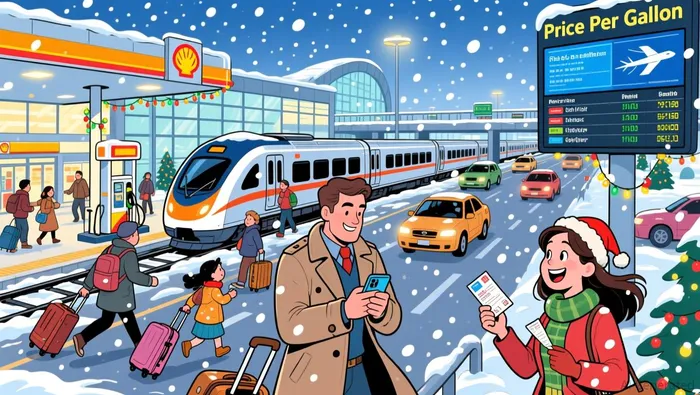
Air Travel: Record Volumes Amid Rising Costs
Domestic air travel is forecast to screen 8.03 million passengers during the holiday period, a 2.3% year-over-year increase. While jet fuel prices have dropped, reducing operating costs for airlines, airfares have risen by 3.2% in December 2025 due to premium demand and reduced competition. This creates a paradox: airlines benefit from lower fuel expenses but face margin compression from higher ticket prices. For example, carriers like DeltaDAL-- and American AirlinesAAL-- may see improved operating margins from fuel savings, but their profitability will depend on managing capacity constraints and geopolitical risks as outlined in industry reports. Investors should also consider the long-term implications of rising airfare costs on consumer travel budgets, which could shift demand toward more affordable alternatives like road trips.
Rail and Alternative Modes: Efficiency Gains and Niche Opportunities
Rail transportation has seen a 2.1% increase in producer prices year-over-year, reflecting its growing appeal as a fuel-efficient alternative. Lower diesel prices could further enhance rail's competitiveness, particularly for freight operators like Union Pacific or BNSF. Meanwhile, bus, train, and cruise travel are projected to grow by 9%, driven by post-pandemic rebounds and cost-conscious travelers. These modes offer diversification opportunities for investors seeking exposure to less volatile segments of the transportation sector.
Investment Implications: ETFs and Strategic Sectors
The interplay of falling fuel prices and rising airfares highlights the need for a diversified approach. For natural gas exposure, ETFs like the United States Natural Gas ETF (UNG) and Global X U.S. Natural Gas ETF (LNGX) could benefit from anticipated 2026 demand rebounds in the Asia-Pacific region. In the transportation sector, rail and trucking ETFs may outperform as fuel savings offset operational costs. Conversely, airlines face a mixed outlook, with potential for margin improvement tempered by airfare inflation and geopolitical risks.
Conclusion: Balancing Risks and Rewards
The 2025 holiday travel surge underscores the transportation sector's resilience and adaptability. While falling gas prices provide a tailwind for road and rail operators, rising airfares and operational costs necessitate careful risk management. Investors should prioritize companies and ETFs that leverage fuel efficiency gains while mitigating exposure to volatile airfare dynamics. As the sector navigates these shifts, strategic allocations to diversified transportation assets will be critical for capitalizing on the economic surge.





Comentarios
Aún no hay comentarios