
Holiday Pop-Up Businesses: A High-ROI Opportunity for Small Entrepreneurs in 2025
The holiday season has long been a critical period for retail innovation, and in 2025, pop-up businesses are emerging as a standout strategy for small entrepreneurs seeking high returns on investment (ROI). With 80% of retailers labeling their pop-up ventures as successful and 58% planning to replicate the model, these temporary retail experiences are proving to be both financially viable and strategically advantageous. For small businesses, the combination of low setup costs, high consumer engagement, and adaptability to shifting market trends makes pop-ups an attractive option. This analysis explores the cost-benefit dynamics and market positioning strategies that position holiday pop-up businesses as a compelling investment opportunity.
Market Viability: Low Costs, High Returns
The financial appeal of pop-up businesses lies in their ability to generate significant revenue with minimal upfront investment. According to 2025 data, 44% of pop-up shops cost less than $5,000 to set up, a fraction of the cost of traditional retail spaces. Despite these low costs, pop-ups deliver an average revenue boost of 35% for established retailers, with some niche businesses reporting even higher returns. For example, curated gift packages or essential items-aligned with 2025 consumer priorities of affordability and value-can command premium pricing while maintaining low overhead according to marketing insights.
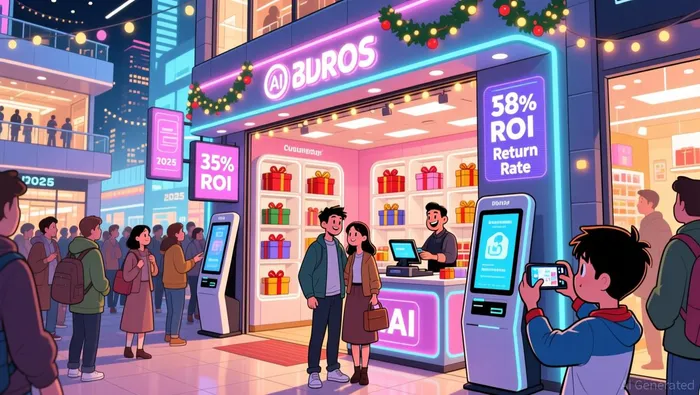 The ROI is further amplified by the urgency and exclusivity inherent in pop-up models. With 66% of retailers using pop-ups to raise brand awareness and 63% to introduce new products, these temporary shops create a sense of scarcity that drives immediate consumer action. A 2025 Adobe report projects total online holiday spending to reach $253.4 billion, with 56.1% of that revenue generated via mobile devices. Pop-up businesses that optimize for mobile platforms-such as through streamlined checkout processes or AI-driven personalization-can capture a significant share of this market.
Cost-Benefit Analysis: Balancing Risk and Reward
While the upfront costs of pop-ups are low, small entrepreneurs must carefully balance expenses against potential returns. A key consideration is the extended holiday shopping timeline, with 31% of consumers planning to shop from Cyber Monday to New Year's. This elongated window allows for staggered promotions, such as early-bird discounts or limited-time offers, which can maximize revenue without inflating costs. Additionally, 65% of shoppers anticipate deeper post-holiday discounts, making bundling strategies-such as gift sets or seasonal bundles-particularly effective.
AI-driven tools are also reshaping the cost-benefit equation. By leveraging AI for personalized recommendations and 24/7 customer support, pop-up businesses can reduce labor costs while enhancing conversion rates. In 2024, AI-driven strategies generated $200 billion in holiday sales, a 12% year-on-year increase. For 2025, AI traffic to retail sites is expected to surge by 515–520%, underscoring the importance of integrating these technologies to stay competitive.
Market Positioning: Aligning with Consumer Priorities
The 2024–2025 holiday season is defined by a shift toward value-driven spending. With 77% of consumers expecting tariffs to raise prices and 47% planning to cut back on gift purchases, pop-up businesses must emphasize affordability and practicality. This aligns with McKinsey's findings that gift cards and essential goods dominate spending, while discretionary categories see reduced interest. Entrepreneurs can capitalize on this trend by offering budget-friendly gift packages or essential items at premium pop-up locations, such as high-traffic malls or holiday markets.
Social media remains a cornerstone of market positioning. Platforms like Instagram, TikTok, and YouTube are pivotal for reaching Gen Z and millennial shoppers, with 35% and 26% of these demographics, respectively, planning to buy gifts directly through these channels. Pop-up businesses that integrate social media marketing-such as influencer partnerships or user-generated content-can amplify visibility without significant ad spend. For instance, sampling strategies have proven effective, with 80% of consumers purchasing products they wouldn't have otherwise after receiving a sample.
Strategies for Maximizing ROI
To thrive in the 2025 holiday market, small entrepreneurs should adopt the following strategies:
1. Omnichannel Integration: Combine in-person pop-up experiences with online sales channels. For example, offering curbside pickup or expedited shipping can cater to last-minute shoppers, with 37.8% of orders opting for this method in 2024.
2. Dynamic Pricing: Implement early-bird discounts or limited-time promotions to capitalize on the 38.4% of holiday spending planned for Cyber Week.
3. AI and Data-Driven Marketing: Use AI to analyze consumer behavior and tailor promotions. For instance, AI-driven traffic to retail sites is projected to grow by 515–520% during the 2025 holiday season.
4. Gift-Centric Offerings: Focus on curated gift packages or essential items, as 61% of consumers are willing to make special trips to pop-up shops aligned with their interests.
Conclusion
Holiday pop-up businesses represent a high-ROI venture for small entrepreneurs, combining low setup costs with the potential for significant revenue growth. By aligning with 2025 consumer priorities-such as affordability, omnichannel engagement, and AI-driven personalization-entrepreneurs can position their pop-ups as both financially viable and strategically relevant. As the market evolves, those who adapt to shifting trends while maintaining cost discipline will find themselves well-positioned to capitalize on the holiday season's unique opportunities.







Comentarios
Aún no hay comentarios