
Hochul vs. Trump: The Battle for NYC's Congestion Pricing
Generado por agente de IAHarrison Brooks
domingo, 23 de marzo de 2025, 4:56 pm ET2 min de lectura
In the heart of New York City, a battle is brewing between Governor Kathy Hochul and President Donald Trump over the city's congestion pricing program. The program, which began on January 5, 2025, aimed to reduce traffic congestion, improve air quality, and generate $15 billion for the MetropolitanMCB-- Transportation Authority (MTA) to fund critical infrastructure projects. However, President Trump's decision to revoke federal approval of the program has introduced uncertainty and potential disruption to these plans.
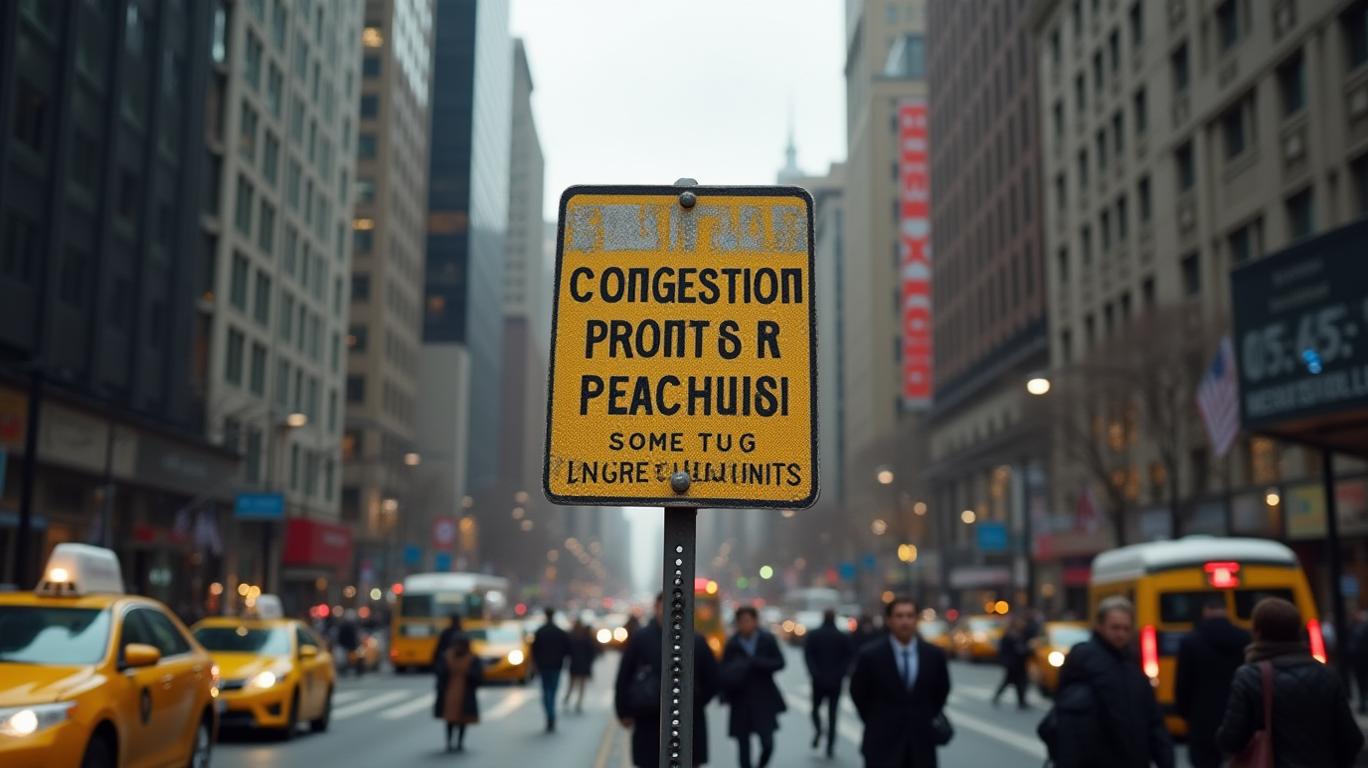
Governor Hochul has vowed to continue charging the tolls, stating, "We’re not going back." This stance is supported by data showing that since the program took effect, traffic is down 11 percent in the Central Business District (CBD), and traffic is moving up to 30 percent faster on bridge and tunnel crossings. Commuters are saving up to 21 minutes per trip into the CBD, and bus service is faster throughout the CBD, with up to 23 percent fewer customer trips on express buses delayed by 10 minutes or more. Additionally, complaints about excessive car horn honking within the CBD were down by more than 70 percent in January and February compared to the same time last year. These improvements have led to increased business activity, with Broadway show attendance up 19 percent, restaurant reservations in the CBD rising 5 percent, and retail sales on track to be $900 million higher in 2025 compared to last year. Workers coming to the office in the CBD on an average weekday increased 6.6 percent in February compared to the same time last year.
However, President Trump's intervention has created a sense of uncertainty. The administration has given New York until Friday to end the tolling program, which could lead to a broader legal and political battle that could drag out for years. This uncertainty could negatively impact business confidence, as businesses may be hesitant to invest in the city if the future of the congestion pricing program is unclear. Furthermore, the potential loss of $15 billion in funding for the MTA could have severe consequences for the city's infrastructure and public transportation system, which are crucial for economic stability.
The revocation of the congestion pricing program would mean the loss of this substantial revenue stream. As noted, "The tolls began Jan. 5, and the early indicators have been positive: ManhattanMANH-- has experienced dramatically less traffic, fewer crashes, and faster trips for drivers, bus riders, and emergency service providers, with some trips taking 50 percent less time. Pedestrian traffic and mass transit ridership are up, while subway crime was down 36 percent in January year over year." This positive impact on traffic and public transit ridership would be jeopardized without the financial support from congestion pricing.
Furthermore, the MTA has already issued almost a billion dollars in debt supported by congestion pricing revenue, with another $500 million loan closing at the end of the month. This financial commitment underscores the reliance on the program's revenue. As stated, "In a development that will please readers of Robert Caro’s bridge-and-tunnel history The Power Broker, in which the master planner Robert Moses cleverly locks up toll money in bond contracts, the state’s lawyers note in their filing that they have already issued almost a billion dollars in debt supported by congestion pricing revenue—with another $500 million loan closing at the end of the month."
The loss of this revenue could lead to delays or cancellations of planned capital improvements, which are essential for maintaining and enhancing the transit system. This could result in continued deterioration of infrastructure, increased maintenance costs, and potential safety issues. Additionally, the MTA's ability to issue bonds and secure funding for future projects could be compromised, further exacerbating the financial strain.
In summary, the revocation of the congestion pricing program would have severe financial repercussions for the MTA, potentially derailing the planned $15 billion in capital improvements and jeopardizing the future of New York City's transit system. The ongoing legal and political battle between Governor Hochul and President Trump over New York City's congestion pricing program has the potential to disrupt the city's economic stability and business confidence. While the program has shown early signs of success, the uncertainty created by President Trump's intervention could have negative consequences for the city's economy and infrastructure.



Divulgación editorial y transparencia de la IA: Ainvest News utiliza tecnología avanzada de Modelos de Lenguaje Largo (LLM) para sintetizar y analizar datos de mercado en tiempo real. Para garantizar los más altos estándares de integridad, cada artículo se somete a un riguroso proceso de verificación con participación humana.
Mientras la IA asiste en el procesamiento de datos y la redacción inicial, un miembro editorial profesional de Ainvest revisa, verifica y aprueba de forma independiente todo el contenido para garantizar su precisión y cumplimiento con los estándares editoriales de Ainvest Fintech Inc. Esta supervisión humana está diseñada para mitigar las alucinaciones de la IA y garantizar el contexto financiero.
Advertencia sobre inversiones: Este contenido se proporciona únicamente con fines informativos y no constituye asesoramiento profesional de inversión, legal o financiero. Los mercados conllevan riesgos inherentes. Se recomienda a los usuarios que realicen una investigación independiente o consulten a un asesor financiero certificado antes de tomar cualquier decisión. Ainvest Fintech Inc. se exime de toda responsabilidad por las acciones tomadas con base en esta información. ¿Encontró un error? Reportar un problema


SOBRE NOSOTROS
Nuestra historiaAutores de noticiasBase de conocimientosPolítica de privacidadTérmino de usoDescargo de responsabilidad de corretaje de tercerosTérminos de uso de AIMEDivulgaciones de riesgos de AInvest AICarrerasCONTÁCTENOS
Email: support@ainvest.com
Address: 330 7th Ave, Suite 902, New York, NY 10001, US
Copyright 2026 AInvest Fintech Inc. All rights reserved.


Comentarios
Aún no hay comentarios