
HMS Networks' Strategic Growth Path and Investment Potential in 2025
HMS Networks, a leader in industrial ICT solutions, has positioned itself at the intersection of technological innovation and strategic capital allocation. Following its Capital Markets Day on September 9, 2025, the company outlined an ambitious growth trajectory, emphasizing profitability, sustainability, and efficient capital deployment. For investors, the question now is whether HMS's strategic priorities and financial discipline justify its investment potential in a competitive industrial technology landscape.
Strategic Priorities and Financial Targets
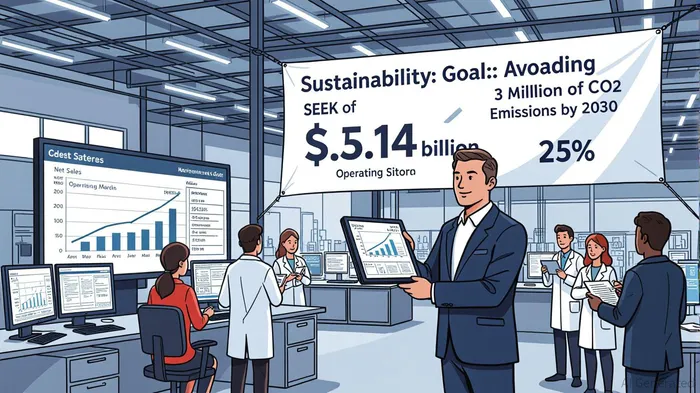
HMS Networks has raised its 2025 financial targets, reflecting accelerated progress under its HMS2025 strategy. The company now aims to exceed SEK 3.14 billion in net sales—a figure previously set as its 2025 goal—and achieve an operating margin of 25%, up from the earlier 20% target[2]. This upward revision underscores confidence in its market positioning and operational efficiency. Additionally, HMS has committed to tripling its “handprint” in reducing CO2 emissions for customers, targeting the avoidance of 3 million tons of annual emissions by 2030[2]. These sustainability goals align with global decarbonization trends, potentially enhancing long-term value for stakeholders.
The company's strategic focus on profitable growth is supported by its global footprint, with over 20 sales offices and a distributor network spanning key markets[2]. In 2024, HMS reported sales of SEK 3,059 million, demonstrating resilience amid supply chain challenges. Recent improvements in lead times and component availability—though some delays persist—have further strengthened its ability to meet demand[2].
Capital Allocation Efficiency
HMS's capital allocation strategy centers on reinvesting profits, optimizing debt, and returning value to shareholders. As of 2025, the company reported a free cash flow of 720.64 million SEK over the past 12 months, driven by operating cash flow of 770.02 million SEK and capital expenditures of -49.38 million SEK[2]. This efficiency is complemented by a Return on Invested Capital (ROIC) of 6.74%, indicating moderate returns relative to its invested capital[2].
The company has also prioritized debt reduction, with a leverage ratio target of 2.5x by year-end[1]. This aligns with its broader financial strategy to balance reinvestment with shareholder returns, including share repurchase authorizations and performance-based remuneration plans[2]. Such measures signal a disciplined approach to capital allocation, which is critical for sustaining growth in capital-intensive industrial sectors.
Market Positioning and Competitive Dynamics
HMS's leadership in industrial ICT is underpinned by its role in enabling communication between industrial machines and software systems—a critical enabler of productivity and energy efficiency[2]. Its product portfolio, which includes industrial routers, IoT gateways, and cloud connectivity solutions, positions it to benefit from the ongoing digitalization of manufacturing and energy sectors.
However, competition remains intense. Broader industry trends, such as Siemens Energy's record Q3 order intake of €16.6 billion[1], highlight the scale of capital flows in industrial technology. HMS's ability to differentiate itself through innovation and localized operations will be key. Its focus on sustainability—particularly in reducing customers' carbon footprints—could serve as a competitive edge, aligning with regulatory and investor demands for ESG-compliant solutions.
Investment Potential and Outlook
While HMS's Q3 2025 financial results are not yet available (scheduled for release on October 21, 2025[2]), historical performance suggests a trajectory of growth. For instance, EBITDA and net income have shown year-over-year improvements in most quarters[3]. The company's updated guidance, including price increases to offset U.S. tariffs and the delivery of previously postponed orders from its U.S. factory, hints at near-term revenue tailwinds[1].
Investors should also monitor HMS's progress toward its 2030 targets, including growing Annual Recurring Revenue (ARR) to 10% of net sales and achieving a gross margin above 65%[1]. These metrics will provide insight into the scalability of its business model.
Conclusion
HMS Networks' strategic clarity, financial discipline, and sustainability focus position it as a compelling long-term investment. While its ROIC and free cash flow metrics suggest room for improvement in capital returns, its updated financial targets and global market positioning reflect a company in growth mode. As it prepares to release Q3 2025 results and navigates the transition to its 2030 strategy, investors will need to balance optimism about its innovation-driven growth with scrutiny of its capital allocation efficiency.







Comentarios
Aún no hay comentarios