
Hilco Real Estate Sales: Evaluating the Victoria Tower Chapter 11 Bankruptcy Sale Opportunity
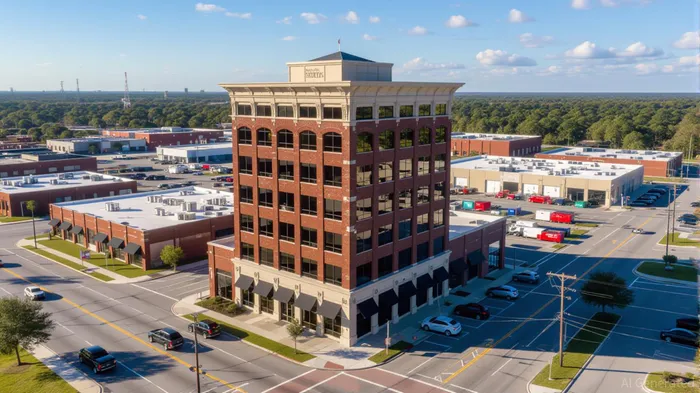
The recent Chapter 11 bankruptcy sale of Victoria Tower, a 104,694± rentable square foot office building in Victoria, Texas, presents a compelling case study in strategic asset acquisition within distressed real estate markets. With a bid deadline set for October 30, 2025, the property's 57% current occupancy and proximity to key economic drivers position it as a high-potential value-add opportunity[1]. This analysis explores the interplay of local market dynamics, broader Texas economic resilience, and macroeconomic headwinds to assess the viability of acquiring Victoria Tower.
Strategic Location and Value-Add Potential
Victoria Tower's appeal lies in its location within Victoria, a secondary Texas market experiencing sustained economic momentum. The property sits on a 12.6± acre parcel, offering flexibility for redevelopment or expansion[1]. Its proximity to major employers, transportation corridors, and government tenants enhances its attractiveness for investors seeking to capitalize on Texas' low office supply and growing demand[1]. For instance, the building's current tenant mix—comprising government, professional, and service organizations—aligns with Victoria's economic base, which includes healthcare, education, and logistics sectors[1].
The property's 57% occupancy rate also highlights untapped potential. In a market where Texas' office sector has demonstrated resilience despite national slowdowns[2], proactive leasing strategies could significantly enhance returns. According to a report by the Texas Real Estate Research Center, secondary markets like Victoria have outperformed primary markets in terms of absorption rates and rent growth, driven by lower costs and proximity to primary hubs[2].
Broader Market Resilience and Economic Drivers
Texas' economic performance in 2025 provides a robust backdrop for real estate investment. Despite a statewide employment decline in June 2025, the state maintained a stable unemployment rate of 4.1% for four consecutive months[1]. This stability is underpinned by the service sector, which, though showing signs of stalling activity, remains a critical driver of office demand[1]. For example, Victoria's local economy benefits from its role as a regional hub for healthcare and education, sectors less susceptible to cyclical downturns[1].
Moreover, the NAIOP Market Monitor noted a resurgence in office sales activity in 2025, driven by stabilization in demand and investor confidence in value-add opportunities[3]. While national labor market strains—such as concerns over long-term unemployment and trade war volatility—introduce uncertainty[2], Texas' pro-business environment and low interest rates relative to other states mitigate these risks[2].
Challenges and Macro Risks
Investors must also weigh macroeconomic headwinds. The service sector's slowdown, coupled with inflation and tariff uncertainty, has dampened business activity[1]. Additionally, the Federal Reserve's delayed interest rate cuts, influenced by trade war volatility, could prolong market uncertainty[2]. For Victoria Tower, these factors necessitate a cautious approach to underwriting, particularly in projecting occupancy growth and rental rate increases.
However, the property's inclusion in a Chapter 11 bankruptcy sale offers a unique advantage: discounted pricing and streamlined due diligence under court supervision[1]. This structure reduces acquisition risks compared to traditional markets, where competition and appraisal challenges often inflate costs.
Conclusion: A Strategic Acquisition in a Resilient Market
Victoria Tower's sale represents a rare opportunity to acquire a high-potential asset in a market with strong fundamentals. Its strategic location, combined with Texas' economic resilience and low office supply, positions it for value creation through leasing and redevelopment. While macroeconomic risks persist, the property's distressed pricing and the broader trend of office market stabilization[3] justify a strategic acquisition approach.
For investors, the key lies in balancing short-term risks with long-term gains. Proactive engagement with local tenants, leveraging Victoria's economic drivers, and executing a phased redevelopment plan could unlock significant value. As the October 30 bid deadline approaches, the property's fate will hinge on the alignment of market conditions, investor appetite, and the ability to navigate a complex macroeconomic landscape.







Comentarios
Aún no hay comentarios