
Hikma Pharmaceuticals' $1 Billion US Expansion: A Strategic Play in Generics and the Rise of AI-Driven Private Markets
In a pharmaceutical landscape rife with consolidation and regulatory upheaval, Hikma Pharmaceuticals ($HIK) has positioned itself as a linchpin of the U.S. generic drug market with its $1 billion expansion announced in June 2025. The initiative, dubbed America Leans on Hikma: Quality Medicines Manufactured in the USA, is more than a capital allocation move—it's a masterstroke leveraging bipartisan policy tailwinds, semi-liquid fund scalability, and the growing role of AI-driven private markets. Let's dissect how this strategy could cement Hikma's leadership in generics while navigating industry headwinds.
Strategic Positioning in Generics: Ohio as the New Pharma Hub
Hikma's expansion centers on Ohio, where its 1 million sq. ft. Columbus facility and newly acquired Bedford site form a manufacturing powerhouse for complex generics. These include sterile injectables (e.g., oncology and pain-management drugs), which command 20–30% margins versus standard generics. The state's central location and tax incentives reduce logistics costs, while bipartisan policies like the Preserve Access Act (banning “pay-for-delay” deals) and Stop STALLING Act (expediting FDA approvals) clear regulatory hurdles.
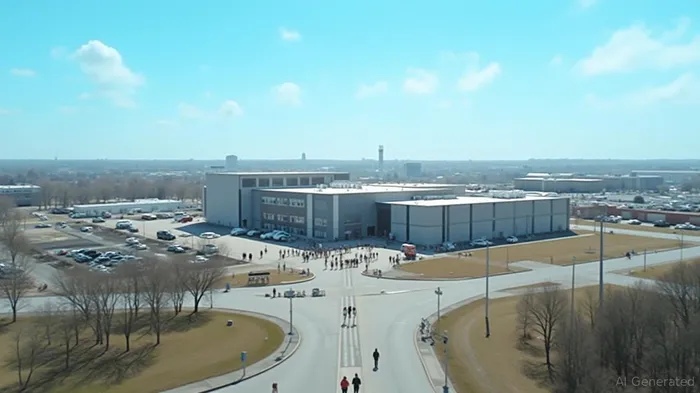
By 2030, Hikma aims to produce over 12 billion doses annually, solidifying its top-three U.S. position in sterile injectables. This focus aligns with a structural shift: as Baby Boomers age, demand for oncology and chronic-care drugs surges. Meanwhile, the Executive Order 14273 (2025) streamlines FDA approvals and permits Canadian drug imports, creating urgency for U.S.-made generics to avoid geopolitical supply chain risks (e.g., 40% of U.S. APIs come from India/China).
Leveraging Semi-Liquid Funds for Scalability
Hikma's expansion occurs amid a $344 billion semi-liquid fund boom (by end-2024), which offers investors liquidity while accessing private markets. These funds—structured as interval funds or business development companies (BDCs)—are ideal for long-term projects like pharmaceutical infrastructure. While Hikma's financing specifics remain undisclosed, the trend suggests it could tap into this growing capital pool. Semi-liquid funds' ability to provide continuous capital deployment aligns with Hikma's multi-year buildout, avoiding the episodic nature of traditional private equity.
The private credit market, now at $1.7 trillion, further fuels this scalability. Hikma's Ohio-centric model reduces reliance on foreign suppliers, a priority for U.S. policymakers. With tax incentives and bipartisan support, the company's net debt/EBITDA ratio (1.5x as of 2023) remains manageable, even at $1 billion in capital expenditures.
AI-Driven Private Markets: The Silent Catalyst
While Hikma's R&D doesn't explicitly mention AI adoption, the private markets funding its expansion are increasingly AI-powered. AI tools optimize fund allocation, predict regulatory outcomes, and streamline due diligence—critical for sectors like healthcare. For instance, AI platforms like Tact.ai (mentioned in a Hikma Ventures investment) enhance customer engagement for life sciences firms, indirectly supporting Hikma's sales strategy.
Moreover, semi-liquid funds use AI to manage liquidity gates and valuation fairness, ensuring Hikma's investors aren't penalized during redemptions. This tech-driven infrastructure reduces capital costs, making the $1B expansion financially feasible.
Risks and Mitigation: Navigating Regulatory and Market Headwinds
- MFN Pricing Order (Executive Order 14297): Threatens margin compression if generics must match international prices.
- FDA Delays: Despite policy tailwinds, approval timelines remain uncertain.
- Operational Costs: Sterile injectables require stringent sterility controls, raising expenses.
Hikma's mitigation strategy? Focus on high-margin complex generics, which insulate against price pressures, and maintain a 2.5% dividend yield (vs. 1.8% sector average). Its Ohio facilities also reduce geopolitical risks tied to foreign API imports.
Investment Thesis: Accumulate Below $15, Hedge with IHF
Hikma's valuation is compelling: at $15/share (June 2025 price), it trades at ~10x 2027E EBITDA, with a $5 billion revenue target by 2030. Investors should:
1. Buy the dip: Accumulate shares below $15, with a 6–8% CAGR catalyst in Q4 2025 (FDA approvals for key injectables).
2. Hedge with semi-liquid exposure: Pair with the iShares U.S. Healthcare Providers ETF (IHF) to mitigate sector volatility.
3. Monitor liquidity: Ensure semi-liquid fund trends don't tighten credit conditions for Hikma's ongoing capital needs.
Conclusion
Hikma's $1 billion expansion isn't just about bricks and mortar—it's a strategic bet on U.S. policy, private market innovation, and the shift toward complex generics. In an era of supply chain nationalism and aging populations, Hikma's Ohio-centric model and semi-liquid-backed scalability position it to outperform as generic markets consolidate. Investors who see this as more than a pharmaceutical play—a bet on the future of U.S. healthcare infrastructure—stand to profit.
Final Note: Monitor FDA approvals for Hikma's oncology injectables (Q4 2025) and semi-liquid fund liquidity trends for early indicators of success.







Comentarios
Aún no hay comentarios