
HII's Strategic Workforce Development as a Catalyst for Defense Industry Growth
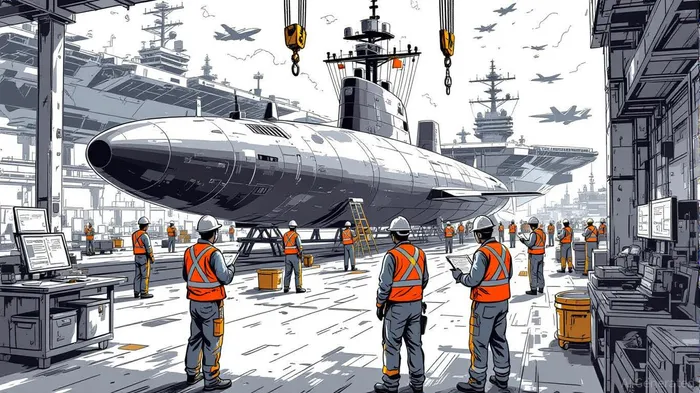
Huntington Ingalls Industries (HII) has emerged as a linchpin in the U.S. defense sector, leveraging strategic workforce development programs to align with the Navy's ambitious shipbuilding goals and secure long-term earnings growth. As global defense spending rises and geopolitical tensions escalate, HII's focus on cultivating a skilled labor pipeline has positioned it to capitalize on multi-decade contracts while addressing critical national security needs. This analysis evaluates how HII's workforce initiatives directly impact its financial performance and contract awards, underscoring their role as a catalyst for defense industry growth.
Workforce Development: Building a Skilled Labor Pipeline
HII's apprenticeship and training programs are foundational to its ability to meet the Navy's demand for advanced shipbuilding. The Newport News Shipbuilding Apprentice School, for instance, offers tuition-free training in 19 trades and seven optional programs, accepting over 200 apprentices annually[1]. These programs are complemented by initiatives like the Ingalls Shipbuilder Academy, which has graduated over 450 students since 2016 and secured full-time roles for 43 graduates in 2025 alone[3]. By partnering with regional workforce councils, community colleges, and high schools, HIIHII-- ensures a steady supply of skilled labor to support projects such as Virginia-class submarines and aircraft carriers[1].
The company's commitment extends beyond traditional apprenticeships. In 2025, HII hosted a two-week educator externship program involving 15 Mississippi educators, aligning curricula with industry needs[1]. Such efforts are critical as the Navy aims to expand its fleet to 381 battle force ships and integrate unmanned systems by 2054[5]. According to the Congressional Budget Office, achieving this goal will require an average annual investment of $35.8 billion in shipbuilding over 30 years[5], a scale that hinges on sustained workforce capacity.
Financial Performance and Earnings Growth
HII's workforce development initiatives directly correlate with its financial resilience. In Q2 2025, the company reported $3.1 billion in revenues and secured $11.9 billion in new contract awards, contributing to a record backlog of $56.9 billion[2]. Its revenue per employee—$270,364—reflects operational efficiency, outpacing many peers in the defense sector[2]. Strategic investments in training and retention, such as a financial wellness program that reduced 401(k) loan participation by 34% and increased retention by 30%, further stabilize labor costs and productivity[1].
The impact of these programs is evident in HII's contract performance. A $18.4 billion submarine contract modification with the Navy and a $950 million technical support deal with the Air Force highlight the company's ability to secure high-value awards[4]. These contracts are underpinned by HII's skilled workforce, which enables it to navigate complex projects like the CVN 80 carrier, despite supply chain challenges[2].
Strategic Partnerships and Innovation
HII's workforce strategy is amplified by partnerships that enhance technological capabilities. A 2025 collaboration with C3 AI to integrate digital and artificial intelligence tools into shipbuilding aims to boost throughput by 20%[2]. Similarly, its $74 million task order for space training simulations with the Air Force and Space Force underscores its diversification into advanced military technologies[1]. These initiatives not only strengthen HII's competitive edge but also align with the Navy's 2025 plan to incorporate distributed firepower and unmanned systems[5].
Challenges and Mitigation Strategies
Despite its strengths, HII faces headwinds, including a 50–60% attrition rate for first-year employees[6]. To mitigate this, the company has shifted toward hiring experienced workers, even at higher labor costs, and expanded collaborations with workforce development centers[6]. Additionally, HII aims to achieve $250 million in annual cost reductions through operational streamlining and outsourcing[2]. These measures are critical as the Department of Defense reduces its civilian workforce, creating opportunities for contractors to fill gaps[6].
Conclusion
Huntington Ingalls Industries' strategic workforce development programs are a cornerstone of its success in the defense sector. By investing in apprenticeships, educational partnerships, and technological innovation, HII ensures it can meet the Navy's long-term fleet expansion goals while maintaining financial stability. With a robust backlog, strong contract performance, and a focus on reducing attrition, HII is well-positioned to capitalize on industry tailwinds, including increased defense spending and policy support for domestic shipbuilding. For investors, the company's ability to align skilled labor pipelines with national security priorities presents a compelling case for sustained growth.





Comentarios
Aún no hay comentarios