
HII's Strategic Expansion and Workforce Optimization: A Catalyst for Defense Industrial Growth
Huntington Ingalls Industries (HII) has emerged as a linchpin in the U.S. defense manufacturing sector, leveraging strategic expansion and workforce optimization to address surging demand for naval assets. As global geopolitical tensions and modernization programs drive the need for advanced warships, HII's dual focus on industrial base resilience and operational efficiency positions it as a critical player in long-term shareholder value creation.
Strategic Expansion: Scaling Throughput via Distributed Shipbuilding
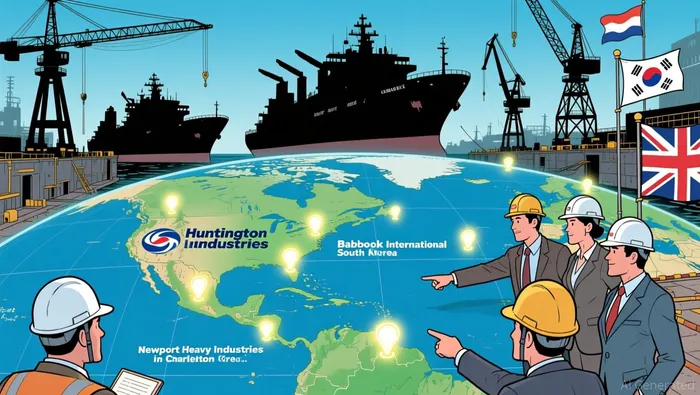
HII's distributed shipbuilding model, which partners with 23 external fabricators and shipyards across multiple states, has been pivotal in scaling production capacity. By outsourcing structural assemblies, the company has mitigated bottlenecks and accelerated delivery timelines for U.S. Navy vessels. A key example is the acquisition of the Charleston Operations facility in Goose Creek, South Carolina, which specializes in submarine modules and aircraft carrier units. This move not only diversifies HII's geographic footprint but also aligns with the Navy's goal of decentralizing shipbuilding to reduce reliance on single points of failure.
International collaborations further bolster HII's strategic reach. Partnerships with Hyundai Heavy Industries and Babcock International Group have facilitated technology transfer and production efficiency gains, enabling HIIHII-- to integrate cutting-edge design and manufacturing practices. These alliances are particularly significant as the U.S. seeks to counterbalance rising defense spending in adversarial nations.
Workforce Optimization: Talent Retention and Training as Competitive Advantages
HII's workforce initiatives have directly contributed to improved operational performance. By increasing wages and prioritizing experienced hires, the company has reduced attrition rates at its Newport News Shipbuilding yard, a critical factor in maintaining continuity for complex projects like aircraft carriers according to Defense One. Complementing this, HII has partnered with regional workforce development programs, sourcing 50% of its hires from apprenticeship and high school training pipelines. This approach not only ensures a steady talent supply but also aligns with broader national efforts to revitalize U.S. manufacturing.
Recent data underscores the efficacy of these measures. In 2025, HII hired 4,600 shipbuilders, with retention rates improving at both its major shipyards according to financial reports. These gains have translated into a 15% throughput increase compared to 2024, a metric the company explicitly ties to workforce and supply chain investments according to financial reports. While union negotiations at the Ingalls Shipbuilding yard in Mississippi remain ongoing, the broader labor strategy has already demonstrated its value in stabilizing operations during a period of high demand according to Defense One.
Financial Performance and Long-Term Value Creation
The tangible results of HII's initiatives are reflected in its financials. For the third quarter of 2025, revenue surged 16.1% year-over-year to $3.2 billion, driven by higher throughput and contract awards according to Naval Technology. Management has reiterated its target of a 15% throughput improvement for fiscal 2025, a goal now within reach given current momentum according to Investing.com. These figures suggest that HII's strategic and operational reforms are not only sustainable but also scalable.
From an investment perspective, HII's focus on throughput optimization and industrial base expansion aligns with enduring tailwinds in the defense sector. With the U.S. Navy's 30-year shipbuilding plan requiring over 200 new vessels and the modernization of legacy fleets, HII's ability to maintain cost discipline while scaling output will be critical. The company's emphasis on workforce stability and technological collaboration further insulates it from risks associated with labor shortages and geopolitical supply chain disruptions.
Conclusion
Huntington Ingalls Industries is demonstrating that strategic expansion and workforce optimization are not merely operational tactics but foundational elements of long-term value creation. By addressing throughput constraints and securing a skilled labor force, HII is well-positioned to capitalize on the defense sector's growth trajectory. For investors, the company's disciplined execution and alignment with national security priorities present a compelling case for sustained outperformance in an increasingly volatile global landscape.





Comentarios
Aún no hay comentarios