
High-Yield Opportunities in Investment-Grade Closed-End Funds: Evaluating Preferred Shares' Income Potential and Credit Quality
In 2025, investment-grade closed-end funds (CEFs) with preferred shares have emerged as compelling vehicles for income-focused investors. These instruments combine the structural safeguards of investment-grade credit ratings with the potential for elevated yields, often surpassing 9%, according to a Forbes analysis. However, their appeal is tempered by risks tied to interest rate sensitivity and leverage, necessitating a nuanced evaluation of both income potential and credit quality.
Income Potential: Yields and Strategic Leverage
Preferred shares of CEFs offer a unique blend of fixed-income characteristics and equity-like flexibility. For instance, the John Hancock Preferred Income Fund (HPI) distributes a robust 9.4% yield, leveraging a mix of preferred securities and corporate bonds. Similarly, the Nuveen Preferred & Income Opportunities Fund (JPC) delivers an 8.1% yield through a diversified portfolio of investment-grade and international preferred stocks. These yields are amplified by CEFs' ability to employ leverage, though this strategy introduces volatility. The Nuveen Municipal Credit Income Fund (NMF), for example, offers a 7.3% yield before tax savings, capitalizing on the tax-advantaged nature of municipal bonds, per Investing.com.
The Tortoise SustainableTEAF-- and Social Impact Term Fund (TEAF) further illustrates the potential of CEFs, with an 8.9% yield and a scheduled liquidation in 2031, which may drive discount closure and additional returns, according to Kiplinger. Meanwhile, the Nuveen Credit Strategies Income Fund (JQC) trades at a 2.5% discount to net asset value (NAV) while offering an 11.8% distribution rate, as noted by Kiplinger. These examples underscore how CEFs exploit active management and leverage to enhance income, though investors must weigh these benefits against the inherent risks.
Credit Quality: Structural Safeguards and Ratings
The credit quality of CEF preferred shares is bolstered by regulatory requirements mandating at least 200% asset coverage for preferred shares and 300% for combined debt and preferred stock, according to Innovative Income Investor. This structural cushion ensures that even in periods of market stress, preferred shareholders retain a degree of security. Fitch Ratings recently affirmed the 'AA' long-term credit ratings on 28 series of Remarketable Variable Rate MuniTerm Preferred Shares issued by 11 PIMCO CEFs, underscoring their strong credit profiles.
However, the perpetual nature of most CEF preferred shares introduces a critical vulnerability: their prices are inversely correlated with interest rates, a dynamic highlighted in a Forbes piece. For example, a 100-basis-point rise in rates could erode the value of these instruments, particularly those with no maturity date. This dynamic necessitates careful monitoring of macroeconomic trends, especially in a rising-rate environment.
Risks and Considerations
While the income potential of CEF preferred shares is enticing, investors must remain cognizant of two primary risks. First, the sensitivity to interest rates means that yields may decline as borrowing costs rise, impacting both income and capital preservation, as noted in the Forbes piece above. Second, the use of leverage—common among CEFs to amplify returns—can exacerbate losses during market downturns; the earlier Forbes analysis also highlighted this risk. For instance, the PIMCO Dynamic Income Fund (PDI) offers a 13.7% yield on common shares but relies on leverage that could heighten volatility, a point Fitch has also raised.
Conclusion: Balancing Opportunity and Caution
Investment-grade CEF preferred shares present a compelling case for income seekers, offering yields that rival or exceed traditional fixed-income instruments. Funds like HPIHPI--, JPC, and TEAF exemplify the potential for high returns, supported by robust credit ratings and active management. Yet, their perpetual structure and leverage strategies demand a disciplined approach to risk management. Investors should prioritize funds with strong asset coverage, diversified holdings, and a clear understanding of interest rate dynamics to optimize their exposure to this niche but high-yield segment.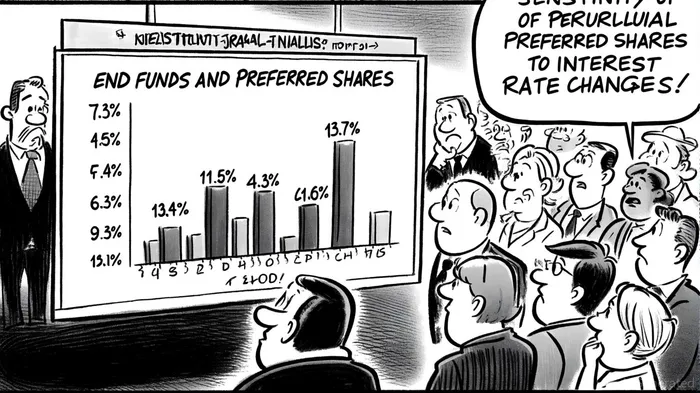







Comentarios
Aún no hay comentarios