
High Yield, High Risk: Evaluating HQH's Biotech Strategy in a Shifting Market
A Sector on a Knife's Edge
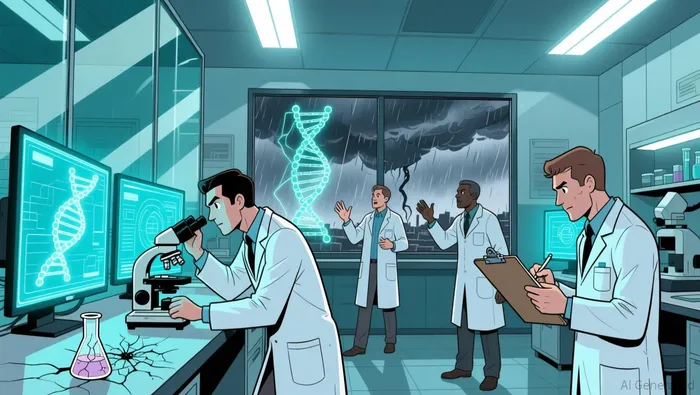
Biotechnology, which constitutes 64.6% of HQH's portfolio, according to MLQ, is navigating a treacherous landscape. The industry faces a patent cliff, with $300 billion in revenue at risk from 2023 to 2028 due to expiring exclusivity for biologics, as reported in a DCATVCI feature. M&A activity has surged as companies scramble to fill gaps, but deal values have plummeted-down to $77 billion in 2024 from $153.5 billion in 2023, according to EY's 2025 Biotech Beyond Borders Report. Meanwhile, venture capital has rebounded, with $3.1 billion in Q3 2025 deal value, as noted in a Yahoo Finance report, yet IPOs remain anemic, with most underperforming and firms opting for late-stage financing or royalty deals, as reported in the DCATVCI feature.
The sector's allure lies in its potential for breakthroughs, but its risks are magnified by clinical trial failures, regulatory hurdles, and geopolitical tensions. China's growing influence-accounting for a fifth of drugs in development-adds complexity, as policies like the BIOSECURE Act strain international collaborations, as noted in the Yahoo Finance report. For HQH, which leans heavily on biotech, these dynamics are both a blessing and a curse.
The Yield Model Under Scrutiny
HQH's dividend coverage ratio of 64.27%, according to MLQ, suggests the fund can sustain its payout, but sustainability hinges on more than just numbers. The fund's active management and share buybacks are touted as tools to narrow the NAV discount, according to MLQ, yet its 64.6% biotech concentration, according to MLQ, exposes it to sector-specific shocks. Clinical trial outcomes, FDA approvals, and macroeconomic shifts-such as pharmaceutical tariffs and interest rate changes-can swiftly erode value, as noted in EY's 2025 Biotech Beyond Borders Report.
Data from the EY 2025 Biotech Beyond Borders Report underscores this fragility: biotech firms are prioritizing cost savings and tax-efficient supply chains to preserve cash for M&A, as noted in EY's 2025 Biotech Beyond Borders Report. For HQH, which holds small- and mid-cap companies, according to a Seeking Alpha article, this means its portfolio may lack the scale to weather prolonged downturns. As one analyst notes, "The fund's high yield is a double-edged sword-it attracts income seekers but amplifies downside risk if the sector falters," according to a Seeking Alpha article.
Implications for Income Investors
For income-focused investors, HQH's strategy is a high-stakes proposition. The fund's 12.4% yield, according to a Seeking Alpha article, and current discount to NAV are enticing, but they come with caveats. The biotech sector's volatility-exacerbated by clinical-stage risks and regulatory uncertainty-means returns could be lumpy or negative. Moreover, the fund's underperformance relative to broader healthcare peers like the iShares U.S. Healthcare Providers ETF (BME), according to MLQ, suggests its niche focus may not always pay off.
Yet, there is a silver lining. The easing of Federal Reserve interest rates and AI-driven efficiencies in drug development, as noted in the DCATVCI feature, could catalyze a rebound. For investors with a long-term horizon and risk tolerance, HQH's active management and buybacks might eventually narrow the NAV discount, according to MLQ. However, this requires patience and a belief in the sector's resilience.
Conclusion: A Calculated Gamble
HQH's biotech-focused high-yield strategy is neither a sure thing nor a doomed venture. It offers a compelling yield in a low-interest-rate environment but demands a nuanced understanding of sector-specific risks. For income investors, the key is to balance the allure of high dividends with the realities of a volatile market. As the biotech landscape evolves, so too must the fund's strategy-whether through diversification, strategic M&A, or regulatory agility. In the end, HQH's success will depend on its ability to adapt, not just to market trends, but to the unpredictable nature of innovation itself.





Comentarios
Aún no hay comentarios