
High-Yield Dividend Stocks: Strategic Income Generation for Long-Term Wealth
High-Yield Dividend Stocks: Strategic Income Generation for Long-Term Wealth
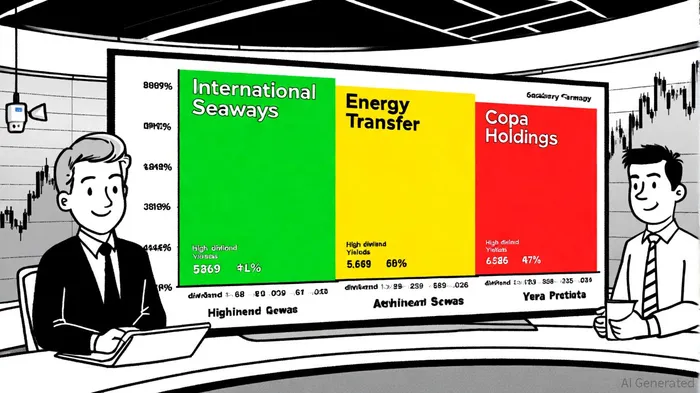
In an era of economic uncertainty and shifting market dynamics, income-focused investors are increasingly turning to high-yield dividend stocks as a cornerstone of long-term wealth generation. These equities offer not only regular cash flow but also the potential for capital appreciation, provided they are selected with a strategic lens. According to an Argyde report, the landscape of 2025 presents compelling opportunities in sectors ranging from energy to utilities, where companies balance robust cash flows with disciplined capital allocation.
Energy and Infrastructure: The Powerhouses of Dividend Growth
Energy Transfer (ET) and International SeawaysINSW-- (INSW) exemplify the resilience of energy-sector dividends. ET, a midstream energy player, offers a 7.6% yield and a 34.52% potential upside, despite a 9.8% year-to-date decline noted in the Argyde report. Its infrastructure model-anchored by long-term contracts and stable demand-positions it as a "strong buy" for income portfolios. Similarly, INSW's 7.09% yield and 38% year-to-date gain reflect its dominance in maritime transportation, a sector benefiting from global trade normalization, as the Argyde report also observes.
For infrastructure, Brookfield InfrastructureBIPC-- (BIPC) stands out with a 3.93% yield and 9% annualized dividend growth; this is highlighted in a Motley Fool article. Its diversified portfolio of toll roads, utilities, and renewable assets ensures steady cash flows, insulated from single-sector volatility. Analysts highlight BIPC's ability to leverage long-term contracts and inflation-linked pricing to sustain payouts, as discussed in the Motley Fool article.
Consumer Staples and Utilities: Stability in a Volatile World
Altria Group (MO) and Duke EnergyDUK-- (DUK) underscore the appeal of defensive sectors. MO, with a 2.77% yield, has increased dividends for 58 consecutive years, supported by a conservative payout ratio of 55%, according to a Forbes piece. Its dominance in nicotine markets-despite regulatory headwinds-ensures predictable cash flows. DUK, a utility with a 3.4% yield, complements this stability. With 99 years of uninterrupted dividends and 5% to 7% projected earnings growth noted in the Forbes piece, it embodies the "bond-like" reliability sought by income investors.
High-Yield Risks and Strategic Mitigation
While high yields are enticing, they often correlate with elevated risks. Copa Holdings (CPA), for instance, offers a 5.37% yield and 43.8% year-to-date gain cited in the Argyde report, but its exposure to air travel-a cyclical sector-demands careful monitoring. Similarly, Energy Transfer's recent decline highlights the importance of evaluating balance sheets and free cash flow coverage.
To mitigate these risks, investors should prioritize companies with strong credit ratings, low debt-to-EBITDA ratios, and a history of dividend resilience during downturns. For example, Verizon (VZ)'s 6.21% yield is supported by 18 years of consecutive dividend increases and a payout ratio of 65%, ensuring sustainability, as noted in the Forbes piece.
The Role of Diversification and Rebalancing
A strategic income portfolio must balance high-yield equities with defensive assets. Realty Income (O), with its 5.31% yield and monthly dividends referenced in the Motley Fool article, provides liquidity and diversification, while Enbridge (ENB)'s 5.34% yield taps into the energy transition's long-term tailwinds discussed in the Motley Fool article. Regular rebalancing ensures alignment with macroeconomic shifts, such as interest rate cycles or sector-specific disruptions.
Conclusion: Building a Legacy of Income
High-yield dividend stocks are not a one-size-fits-all solution but a mosaic of opportunities requiring due diligence. By focusing on companies with durable competitive advantages, strong balance sheets, and aligned management incentives, investors can transform dividends into a compounding engine for long-term wealth. As markets evolve, the key lies in marrying income generation with strategic foresight-a principle that transcends fleeting trends.





Comentarios
Aún no hay comentarios