
High-Yield Debt Restructurings: Navigating Creditor Power and Asset Recovery in a Shifting Landscape
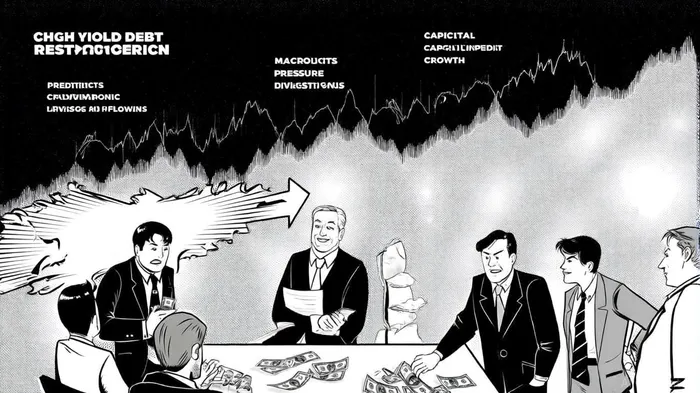
The high-yield debt restructuring market in 2025 is defined by a delicate balance between creditor influence and asset recovery potential. With $84 billion in defaults recorded in 2024 and a 3.1% default rate—consistent with the previous year but elevated by historical standards—the pressure on distressed companies and their creditors has intensified[1]. Out-of-court restructurings now dominate the landscape, accounting for 70% of all restructurings in 2024, surpassing traditional in-court processes like Chapter 11 filings[3]. This shift reflects a strategic pivot toward speed, flexibility, and cost efficiency, but it also underscores the growing role of creditors in shaping recovery outcomes.
Strategic Creditor Influence: From LMEs to Cooperation Agreements
Creditors are no longer passive participants in restructurings. Instead, they are leveraging tools like liability management exercises (LMEs), consent solicitations, and credit agreement amendments to negotiate favorable terms[1]. For instance, the use of cooperation agreements—where creditor groups align to present unified restructuring proposals—has surged in 2024, reducing fragmentation and litigation risks[3]. These agreements often involve complex financial mechanisms, such as distressed debt exchanges or drop-down transactions, which allow companies to preserve key assets while renegotiating debt.
Bond covenants have also emerged as a critical battleground. Affirmative, negative, and financial covenants can either constrain or enable restructuring outcomes. Covenant-lite structures, while offering borrowers flexibility, often necessitate strategic interventions by creditors to mitigate risks[3]. For example, breaches of financial covenants can trigger forced equity injections or asset sales, as seen in the 2024 restructuring of India's Videocon Group, where stakeholder communication and asset divestitures were pivotal to success[4].
Private Credit and Distressed M&A: A New Era of Capital Solutions
Private credit has become a linchpin in the restructuring ecosystem. With assets under management exceeding $1.5 trillion, private credit managers are offering tailored financing solutions, including double-dip structures and up-tier exchanges, to companies facing refinancing challenges[3]. These strategies are particularly effective in sectors like healthcare and industrials, where traditional banks have retreated due to rising interest rates and inflationary pressures[2].
Meanwhile, private equity firms are increasingly acquiring distressed assets as bolt-ons to existing portfolios or standalone investments. Their operational expertise and capital flexibility position them to revitalize struggling businesses, as demonstrated by the 2024 turnaround of Accordion's portfolio companies[1]. Distressed M&A is also gaining traction, with private equity firms leveraging their balance sheets to outbid traditional lenders in asset sales.
Macroeconomic Pressures and Market Bifurcation
Despite the Federal Reserve's rate cuts in late 2024, macroeconomic headwinds persist. Deloitte's 2025 Restructuring Outlook warns that slowing U.S. GDP growth and inflation above 2% will continue to strain corporate balance sheets, particularly in leveraged loan markets where single-B-rated debt dominates[2]. The bifurcation between leveraged loans and high-yield bonds—where the latter has seen an influx of BB-rated paper—highlights divergent credit quality trends[3]. This divergence is expected to widen as older loans, issued at lower interest rates, face refinancing hurdles.
Risks and Opportunities for Investors
For investors, the current environment presents both risks and opportunities. On the risk side, contentious LMEs and legal challenges over creditor inclusion could delay restructurings and erode recovery values[3]. Additionally, regulatory shifts under the new U.S. administration may reduce scrutiny of out-of-court deals, potentially favoring creditors at the expense of borrowers[2].
Conversely, the rise of private credit and distressed M&A offers opportunities for value creation. Creditors employing early financial disclosure, standstill agreements, and independent oversight—such as those highlighted in the 2025 PRC creditor strategies—can maximize recovery outcomes[5]. Moreover, technology-driven approaches, including AI and data analytics, are enabling creditors to optimize decision-making and identify undervalued assets[5].
Conclusion
The high-yield debt restructuring market in 2025 is a theater of strategic maneuvering, where creditors wield significant influence over asset recovery outcomes. While macroeconomic pressures and regulatory uncertainties pose challenges, the proliferation of out-of-court restructurings, private credit innovation, and distressed M&A present compelling opportunities. For investors, the key lies in balancing proactive creditor strategies with a nuanced understanding of market dynamics—a task that demands both agility and foresight.







Comentarios
Aún no hay comentarios