
High Insider Ownership Growth Stocks in August 2025: A Strategic Guide to Leveraging Insider Confidence for Resilient Portfolios
In the ever-shifting landscape of global markets, investors are increasingly seeking signals that cut through the noise of volatility. By August 2025, one such signal—insider ownership—has emerged as a compelling lens through which to evaluate growth potential. When company insiders—executives, board members, and major shareholders—hold significant stakes in their own firms, it often reflects a deep conviction in the business's long-term trajectory. This article explores how insider confidence, as evidenced by high ownership percentages, can serve as a leading indicator of resilience and growth, even in turbulent markets.
Why Insider Ownership Matters
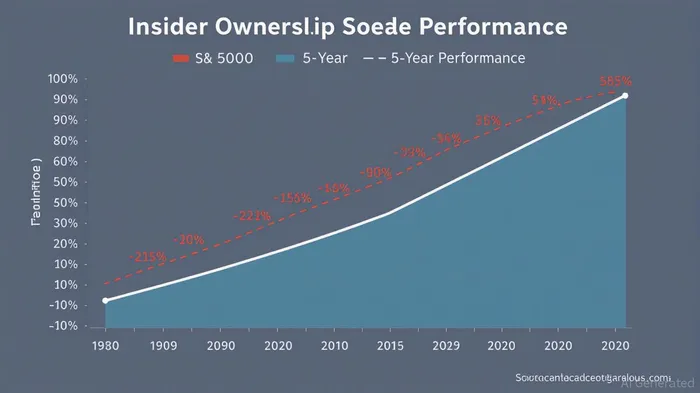
Insider ownership is more than a metric; it is a behavioral signal. When insiders retain or increase their equity stakes, it aligns their interests with shareholders and demonstrates a belief in the company's ability to navigate challenges. Historical data shows that firms with high insider ownership tend to outperform peers during market downturns, as insiders are often better positioned to execute strategic pivots and maintain operational discipline.
For example, Niu Technologies (NIU), with 37.2% insider ownership and a forecasted earnings growth of 88.1% annually, exemplifies this dynamic. Despite challenges like negative shareholder equity, insiders' commitment suggests they are betting on the company's ability to scale its smart devices and learning services segments. Similarly, Prairie Operating (PROP), with 34.4% insider ownership and 91.3% projected revenue growth, reflects a management team fully aligned with shareholder value creation.
Top Contenders: High Insider Ownership and Growth Synergy
The August 2025 data reveals a mix of high-growth sectors and resilient players. Here are key takeaways:
- Technology and Renewable Energy
- FTC Solar (FTCI), with 23.1% insider ownership and 73.1% earnings growth, is capitalizing on the renewable energy boom. Its solar technology aligns with global decarbonization trends.
Cloudflare (NET), despite a $70 billion market cap and recent Q2 losses, shows 10.6% insider ownership and 45.8% forecasted earnings growth. Its cloud infrastructure is critical for AI and cybersecurity, sectors poised for explosive demand.
Healthcare and Financial Services
- Hinge Health (HNGE), with 17.3% insider ownership, is leveraging AI to reduce healthcare costs, a sector where innovation is rewarded.
Dave Inc. (DAVE), a financial services platform, balances insider selling with a $125 million buyback plan, signaling management's confidence in its long-term model.
Emerging Markets and Commodity Plays
- United States Antimony (UAMY), with 12.2% insider ownership and over 100% projected earnings growth, is tapping into rising demand for antimony in green energy applications.
Risks and Red Flags
While insider ownership is a powerful indicator, it is not infallible. Companies like Niu Technologies and Hippo Holdings (HIPO) face liquidity risks, with insufficient operating cash flow to cover debt. Similarly, TeraWulf (WULF), a digital assetDAAQ-- firm, operates in a volatile sector where insider optimism may not offset macroeconomic headwinds. Investors must balance insider confidence with rigorous due diligence, particularly for firms with negative equity or unproven business models.
Investment Strategy: Balancing Confidence and Caution
To harness the power of insider ownership, consider the following approach:
1. Sector Diversification: Combine high-insider-ownership stocks across technology, healthcare, and renewables to mitigate sector-specific risks.
2. Growth vs. Value: Prioritize companies with both high insider ownership and strong revenue growth (e.g., PROP at 91.3% revenue growth).
3. Risk Management: Avoid overexposure to firms with liquidity issues or unproven scalability.
Conclusion
In August 2025, insider ownership remains a critical tool for identifying growth stocks with the potential to thrive in volatile markets. While no single metric guarantees success, the alignment of insider and shareholder interests—coupled with robust growth projections—creates a compelling case for strategic investment. By focusing on companies like NIU, PROP, and FTCI, investors can position themselves to capitalize on innovation and resilience, even as markets fluctuate. As always, a disciplined, diversified approach will remain the cornerstone of long-term success.





Comentarios
Aún no hay comentarios