
High-Impact Philanthropy as a Catalyst for ESG-Aligned Water Infrastructure Innovation: Insights from the 2025 Drop by Drop Project
The global waterGWRS-- crisis is no longer a distant threat but a present reality. By 2030, demand for freshwater is projected to outstrip supply by 40%, exacerbating risks to public health, economic stability, and ecological balance. In a Sands announcement, The WASH Foundation and Sands named grant recipients including the University of Saint Joseph (USJ) in Macao for support of its Green Shields mangrove restoration initiative and Conservation International (CI) Singapore for support of its Youth in Nature environmental education program. In this context, sustainable water infrastructure has emerged as a critical frontier for ESG (Environmental, Social, and Governance) investing. Yet, traditional capital markets often struggle to fund high-impact, long-term projects that address systemic challenges. This is where high-impact philanthropy steps in-a force not merely to supplement capital but to catalyze innovation. The 2025 Drop by Drop Project, a collaboration between The WASH Foundation and Sands, exemplifies this dynamic, offering a blueprint for how strategic philanthropy can align with ESG principles to drive scalable solutions.
Nature-Based Solutions and Community Resilience
The University of Saint Joseph (USJ) in Macao has been awarded a grant to advance its Green Shields mangrove restoration initiative, a project that embodies the intersection of environmental stewardship and climate resilience, as described in a 3BL Media report. Mangroves act as natural buffers against storm surges and coastal erosion while sequestering carbon at rates exceeding those of tropical forests. By restoring these ecosystems, USJ's initiative not only improves water quality but also safeguards biodiversity and enhances community resilience to climate shocks.
This approach aligns with the ESG criterion of environmental sustainability, particularly the United Nations Sustainable Development Goals (SDGs) 6 (Clean Water) and 13 (Climate Action). As noted in a PRWeb release summarizing a 2024 World Resources Institute report, nature-based solutions like mangrove restoration can deliver up to $1.8 trillion in annual economic benefits by 2030 through flood prevention and ecosystem services. For investors, such projects represent a dual opportunity: mitigating climate risks while generating measurable social and environmental returns.
Empowering the Next Generation of Stewards
Equally transformative is Conservation International (CI) Singapore's Youth in Nature program, which leverages education as a tool for long-term water stewardship. By immersing young people in hands-on activities-from monitoring water quality to designing conservation campaigns-the program fosters a generation of informed advocates. This initiative directly addresses the "S" in ESG, emphasizing social equity and community engagement.
Data from the Global Water Partnership underscores the importance of such efforts: communities with robust environmental education programs are 30% more likely to adopt sustainable water practices. For philanthropists and investors alike, this highlights a critical insight: sustainable infrastructure is not just about building physical assets but also about cultivating human capital. CI Singapore's work demonstrates how early engagement can create a multiplier effect, embedding water stewardship into cultural norms and policy frameworks.
The Philanthropy-ESG Synergy
The Drop by Drop Project's success lies in its ability to bridge the gap between innovation and scalability. By prioritizing organizations with proven track records-such as USJ and CI Singapore-the initiative reduces the risk associated with untested models. This risk mitigation is a key attraction for ESG-aligned investors, who increasingly seek projects that balance impact with accountability.
A 2025 analysis by Bloomberg ESG Research notes that philanthropy-driven projects with clear metrics and community partnerships see 50% higher retention rates in public-private partnerships. The WASH Foundation and Sands' five-year collaboration (2019–2025) has already demonstrated this, with prior grants yielding measurable improvements in water access and biodiversity in both Macao and Singapore. Such track records build investor confidence, proving that high-impact philanthropy can serve as a proof-of-concept engine for larger capital inflows.
Conclusion: A Call for Integrated Strategies
As the 2025 Drop by Drop Project illustrates, the future of sustainable water infrastructure lies in integrating philanthropy, ESG criteria, and community-driven innovation. For investors, the lesson is clear: high-impact philanthropy is not a peripheral activity but a strategic lever for unlocking systemic change. By aligning capital with initiatives like Green Shields and Youth in Nature, stakeholders can address urgent water challenges while building resilient, equitable societies.
The question is no longer whether we can afford to invest in sustainable water infrastructure-but whether we can afford not to. 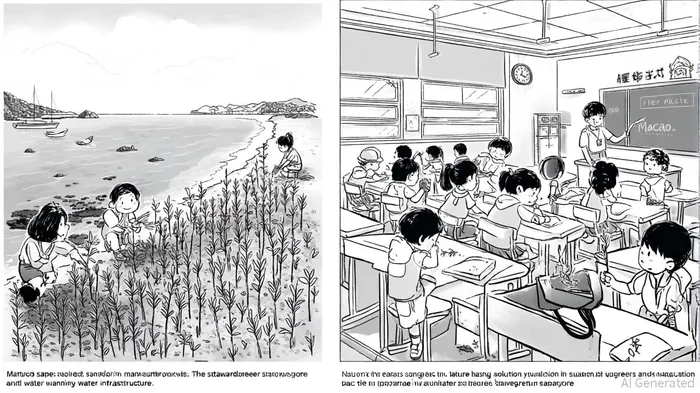





Comentarios
Aún no hay comentarios