
Why High-FDV L1 Projects Like Monad Pose Extreme Downside Risk to Retail Investors
Monad, with a speculative FDV, presents a volatile market scenario where early investors could dominate. 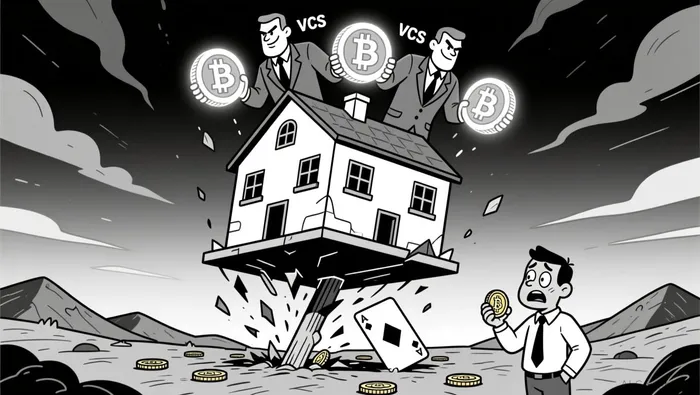 The current crypto cycle is dominated by VC influence and speculative narratives, which often misalign with long-term utility or adoption.
The core issue lies in the disconnect between FDV and real-world utility. A project with a $100 billion FDV but only 1% circulating supply is essentially a speculative asset with no tangible economic foundation. When early investors—often VCs or team members—unlock their tokens, the sudden influx of selling pressure can trigger cascading liquidations. This was evident in 2022, when projects like Internet ComputerICP-- (ICP) and Flow (FLOW) collapsed by over 95% after overvalued private rounds failed to justify their FDVs.
Moreover, token distribution models in high-FDV projects often prioritize insiders. Reports emphasize that projects allocating a significant portion of their supply to users and providing economic incentives (e.g., staking rewards) tend to perform better than those with heavy insider allocations. In contrast, projects like Monad, where retail investors are left with a small fraction of the float, face inevitable price instability.
The crypto market's current cycle is not driven by traditional factors like halving events or network upgrades but by VC-funded hype and global liquidity injections. VCs have become the primary architects of speculative bubbles, inflating private valuations long before tokens hit public markets. For instance, many 2024 projects, including Hyperliquid (HYPE) and EthenaENA-- (ENA), structured long-term vesting schedules to mitigate dumping risks, yet skepticism persists due to the inherent untrustworthiness of high-FDV models.
The problem is systemic. VCs often overpay for early-stage tokens, creating a valuation gap between private and public markets. A 2022 report highlighted how projects were reluctant to launch at lower public valuations than their private rounds, leading to artificial FDV inflation through mechanisms like liquidity pools or limited public sales. This creates a two-tiered system: VCs profit from early, discounted allocations, while retail investors are forced to buy at inflated prices during token generation events (TGEs).
The 2022 market collapse exposed the fragility of this model. Projects like ICP and FLOW, backed by top-tier VCs like a16z and Polychain Capital, imploded as their FDVs proved unsustainable without continuous private capital inflows. The lesson is clear: VC-driven hype cycles prioritize short-term exits over long-term value creation, leaving retail investors to absorb the fallout.
For investors, the takeaway is clear: prioritize projects with transparent token economics, real-world utility, and equitable distribution models. The crypto market's future belongs to protocols that align incentives between developers, VCs, and retail participants—not to those built on artificial FDVs and speculative narratives.






Comentarios
Aún no hay comentarios