
High-Beta Stocks: A Double-Edged Sword in Long-Term Portfolios
High-beta stocks, defined as those with a beta coefficient exceeding 1.0, have long captivated investors with their potential for outsized returns during bull markets. However, recent academic and industry research underscores a critical caveat: these volatile assets often underperform in terms of risk-adjusted returns over the long term, particularly when compared to high-quality or low-beta counterparts. This analysis explores the nuanced role of high-beta stocks in long-term portfolios, emphasizing their cyclical performance and the implications for risk management.
Market Cycle Volatility: Gains and Losses in Sharp Relief
High-beta stocks amplify market movements, delivering significant gains during bull markets but exacerbating losses in downturns. For instance, during positive market years, these stocks have historically captured 138% of the S&P 500's total returns, while in bear markets, they absorb 243% of the losses, according to Sure Dividend's list. This duality is rooted in their volatility: a stock with a beta of 2.0 swings twice as much as the market index. While this can fuel rapid wealth creation in favorable conditions, it also exposes portfolios to severe drawdowns during economic contractions or geopolitical shocks, as shown in an MDPI study.
The 2025 market environment, marked by strong corporate earnings and a resilient economy, has temporarily boosted high-beta stocks, with these assets driving U.S. market gains from April to September in an AllianceBernstein analysis. Yet, this performance is contingent on favorable macroeconomic conditions. Rising bond yields or renewed tariff pressures could swiftly reverse the trend, as seen in past bear markets where high-beta stocks lagged significantly, a pattern highlighted in the MDPI study.
Long-Term Underperformance: Quality Trumps Volatility
Over extended horizons, high-beta stocks struggle to justify their risk profiles. Data from AllianceBernstein reveals that over a 20-year period, the top quintile of high-beta stocks returned 10.9% less than their lowest quintile peers. This underperformance aligns with the "betting against beta" theory proposed by Frazzini and Pedersen (2014), which argues that investor behavioral biases and leverage constraints lead to lower required returns for high-beta stocks, challenging the traditional Capital Asset Pricing Model (CAPM) assumptions - a conclusion also discussed in the MDPI study.
Moreover, high-quality stocks-those with robust dividend growth and shareholder yield-have consistently outperformed high-beta counterparts. For example, low-beta stocks with strong fundamentals have demonstrated superior resilience during market downturns, making them more attractive for risk-adjusted returns, as noted by AllianceBernstein. This trend is further supported by empirical evidence showing that traditional market beta (symmetric) is a more reliable predictor of future returns than asymmetric down-beta, a relationship documented on the Sure Dividend site.
Machine Learning and Beta Estimation: A New Frontier
Recent advancements in machine learning have refined beta estimation, offering more accurate predictions of time-varying stock volatility. Studies show that nonlinear models outperform traditional linear regression in forecasting betas, reducing hedging errors and improving portfolio construction, a point emphasized by AllianceBernstein. These tools enable investors to better assess the directional risks of high-beta stocks, particularly their asymmetric behavior in bull and bear markets. For instance, an investment with an up-market beta of 1.4 and a down-market beta of 0.8 can outperform during rallies while mitigating losses in downturns, as explained in an iQuant article.
Strategic Implications for Long-Term Investors
For investors prioritizing risk-adjusted returns, the case for high-beta stocks is tenuous. While these assets can enhance returns in favorable cycles, their long-term underperformance and vulnerability to market crashes necessitate cautious allocation. Diversification with low-beta or quality stocks can balance portfolios, reducing downside risk without sacrificing growth potential. Additionally, leveraging machine learning-driven beta estimates allows for more precise hedging strategies, particularly in volatile environments, as AllianceBernstein discusses.
Conclusion
High-beta stocks remain a double-edged sword: they offer explosive growth in bull markets but pose significant risks in downturns and over extended periods. As academic research and empirical data converge on the limitations of beta as a standalone risk metric, investors must adopt a more nuanced approach. Prioritizing quality, leveraging advanced analytics, and maintaining a balanced portfolio are essential to navigating the cyclical nature of high-beta equities while optimizing risk-adjusted returns.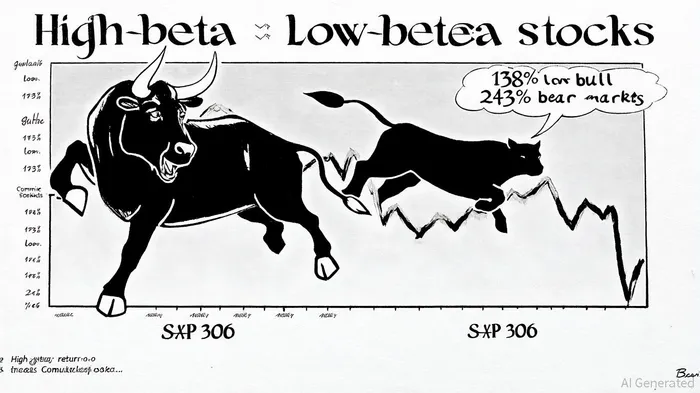







Comentarios
Aún no hay comentarios