
The Hidden Winners and Losers in Trump's Trade Chaos: Navigating the Tariff Tsunami
The U.S. trade landscape in 2025 is a battlefield of tariffs, regulatory uncertainty, and technological disruption. President Trump's aggressive 2025 tariff policies-ranging from 10% to 125% on goods from key trading partners-have created a "tariff tsunami" that is reshaping the customs brokerage and import/export sectors. While the chaos has exposed vulnerabilities in traditional trade models, it has also accelerated the rise of AI-driven solutions, creating stark divides between firms that adapt strategically and those left floundering.
The Tariff Tsunami: Winners and Losers in the New Normal
The Trump administration's 2025 tariff policies have pushed the U.S. average applied tariff to 15.8%, the highest since 1943, while the effective tariff rate hit 11.2%. These measures, targeting sectors like agriculture, automotive, and timber, have imposed a $205 billion revenue windfall for the federal government but come at a steep cost for businesses. For customs brokers, the complexity of overlapping tariff codes-such as the stacked duties on softwood lumber and the 25% tariff on Indian-origin products-has created a compliance nightmare. According to a report by PwC, brokers now spend 30–50% more time processing shipments due to the need to interpret rapidly shifting rules.
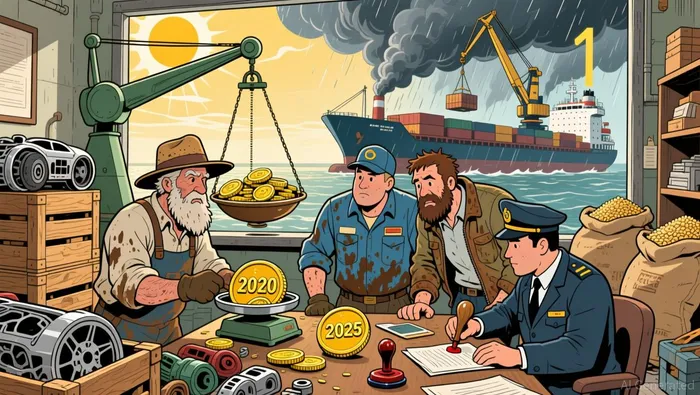 However, this chaos has also created opportunities. Firms that have invested in AI-driven compliance tools are emerging as clear winners. For example, Gaia Dynamics' AI platform reduces compliance processing time by 80%, enabling firms to navigate the labyrinth of tariff classifications with precision. Similarly, Mayple Global's AI-powered logistics system automates customs documentation, cutting manual errors and achieving 20% cost savings. These firms are leveraging technology to turn compliance burdens into competitive advantages.
Strategic AI Adoption: The New Frontier
The strategic use of AI extends beyond compliance. Import/export firms are deploying AI to model trade scenarios based on real-time policy shifts, including speculative adjustments tied to political statements. For instance, AI procurement platforms optimize supplier selection by factoring in dynamic tariff changes, delivering double-digit cost savings. This capability is critical in an environment where tariffs on U.S.-Mexico-Canada Agreement (USMCA)-qualified goods may differ from standard rates, requiring firms to pivot supply chains rapidly.
The Trump administration's push for the "American AI stack" through initiatives like the American AI Exports Program further amplifies the strategic value of AI. By promoting U.S.-developed AI hardware and software, the administration aims to secure a technological edge while restricting adversarial access. For import/export firms, this means aligning with AI tools that comply with federal export controls, ensuring they remain competitive without violating regulatory frameworks.
Challenges in the AI Transition
Despite the promise of AI, significant hurdles persist. Fragmented data from multiple ERP systems and broker platforms complicates normalization, inflating integration costs. Additionally, opaque AI models face rejection in high-stakes audits, where traceable logic is mandatory. Regulatory fragmentation-spanning federal inaction and state-level AI laws focused on bias and privacy-adds another layer of complexity.
A particularly thorny issue is the rise of generative AI (Gen AI) in tariff evasion. Fraudsters are using Gen AI to create falsified documents, forcing customs teams to adopt advanced AI validation tools to detect anomalies. This cat-and-mouse game underscores the need for continuous innovation in AI security, a niche where early adopters stand to dominate.
The Road Ahead: Positioning for Resilience
For import/export firms, the path to resilience lies in three strategic pillars:
1. AI Integration: Prioritize platforms that automate compliance, optimize supply chains, and model policy scenarios.
2. Regulatory Agility: Invest in legal and compliance teams to navigate evolving laws, including the U.S. Court of International Trade's recent rulings on IEEPA.
3. Data Governance: Build robust data infrastructure to unify fragmented systems and ensure AI models meet audit requirements according to industry analysis.
Firms that fail to act risk being outpaced by competitors. The Trump administration's trade policies, while disruptive, have accelerated a technological inflection point. As one industry analyst notes, "The winners in this environment will be those who treat AI not as a cost center but as a strategic lever to unlock value in a fractured trade ecosystem."
Conclusion
The 2025 tariff tsunami has redefined the rules of global trade. While the Trump administration's policies have imposed unprecedented challenges, they have also catalyzed a technological renaissance in customs brokerage and import/export. Firms that embrace AI strategically-while navigating regulatory and operational hurdles-will emerge as the hidden winners in this new era. For investors, the key lies in identifying companies that are not just surviving the chaos but transforming it into a foundation for long-term growth.







Comentarios
Aún no hay comentarios