
The Hidden Risk of Political and Religious Displays to Residential Real Estate Values: Assessing Neighborhood Sentiment and Its Impact on Property Liquidity and Sale Price
The residential real estate market is often viewed through the lens of economic fundamentals-interest rates, housing supply, and employment trends. Yet, a growing body of research underscores a subtler but equally potent force: neighborhood sentiment shaped by political and religious displays. These factors, while intangible, can significantly influence property liquidity and sale prices, creating hidden risks for investors.
Political Displays: Polarization and Investor Behavior
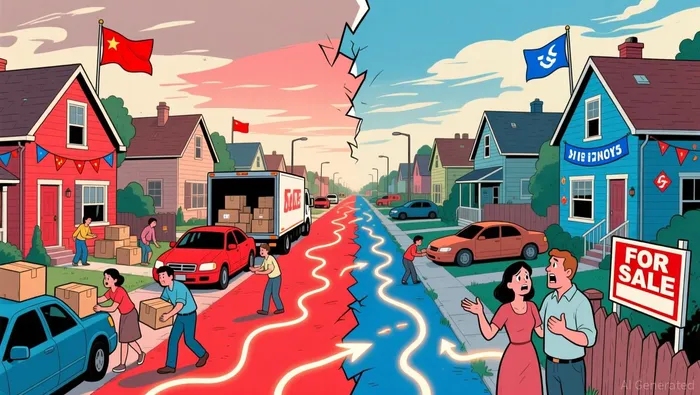
Political polarization has emerged as a critical driver of real estate dynamics. A 2023 study revealed that households in politically polarized neighborhoods experience higher turnover rates, as residents are more likely to sell their homes when neighbors with opposing political affiliations move in. This sentiment-driven churn reduces liquidity, making it harder for sellers to find buyers quickly.
 Governmental actions further amplify these effects. During the COVID-19 pandemic, the political affiliation of state governors influenced investor risk perception in commercial real estate, particularly in regional shopping centers. While this study focused on commercial properties, its implications extend to residential markets: political instability or restrictive policies can deter investment, lowering property values. Conversely, politically stable regions attract capital, as investors prioritize predictability.
However, the interplay of political connections and credit risk complicates the picture. In China, private real estate firms with strong political ties have accumulated excessive debt, increasing sector-wide financial instability. This suggests that while political alignment may offer short-term advantages, it can also introduce systemic risks that depress long-term property values.
Religious Displays: Community Identity and Market Perception
Religious institutions, particularly churches, occupy a nuanced role in shaping neighborhood sentiment. Historically, proximity to churches has been associated with higher property values, as these institutions foster community cohesion and perceived safety. However, recent research highlights context-dependent outcomes. For instance, large churches in certain areas have been shown to negatively impact nearby home prices, a trend that can be offset by stronger positive externalities like quality schools or parks.
The cultural significance of religious institutions cannot be overstated. A 2025 study (though inaccessible for full review) and earlier analyses from 2011 and 2013 suggest that churches continue to enhance property pricing by reinforcing neighborhood identity. Yet, this benefit is contingent on broader social dynamics. In polarized or economically disadvantaged areas, religious displays may fail to counteract negative perceptions, leaving property values vulnerable.
Sentiment as a Predictive Force
Neighborhood sentiment is not merely a byproduct of political or religious displays-it can also predict market trends. In Canadian real estate, media sentiment has been shown to forecast house price movements, reflecting broader economic and social narratives. This underscores the importance of monitoring public discourse and cultural shifts, which can signal emerging risks or opportunities.
Strategic Implications for Investors
For investors, the key lies in balancing tangible metrics with intangible sentiment factors. Properties in politically polarized or religiously homogeneous neighborhoods may face liquidity challenges, even if traditional indicators suggest otherwise. Conversely, areas with stable governance and community-centric institutions could offer resilience during market downturns.
- Diversify Exposure: Avoid overconcentration in neighborhoods with high political polarization or reliance on a single type of religious institution.
- Monitor Sentiment Indicators: Track media narratives, local policy changes, and demographic shifts to anticipate market movements.
- Assess Externalities Holistically: Evaluate how political and religious factors interact with other amenities (e.g., schools, infrastructure) to determine net impact on property values.
Conclusion
While political and religious displays are not the sole determinants of real estate value, their influence on neighborhood sentiment cannot be ignored. As markets grow increasingly interconnected with social and political dynamics, investors must adopt a multidimensional approach to risk assessment. By integrating sentiment analysis into their strategies, they can better navigate the hidden risks-and opportunities-shaped by the intangible forces of community identity and political climate.







Comentarios
Aún no hay comentarios