
The Hidden Link Between Relationship Red Flags and Consumer Spending: How Self-Esteem Drives Financial Decisions
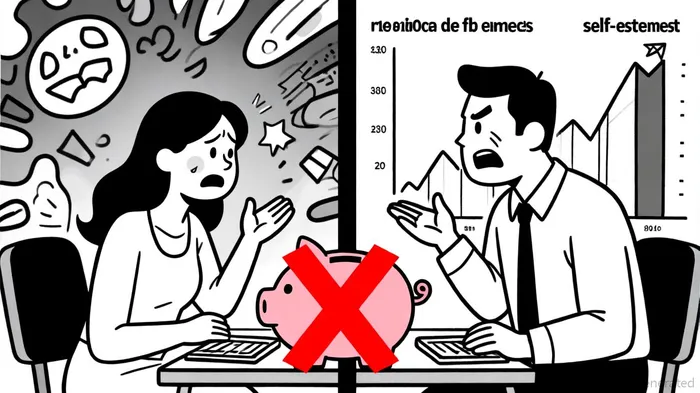
In the world of consumer behavior, the line between emotional well-being and financial decision-making is thinner than it appears. Recent research reveals a startling correlation between psychological red flags in relationships—such as clinginess, secrecy, and controlling behavior—and self-esteem-driven financial outcomes like impulsive spending and debt accumulation. For investors, understanding this dynamic could unlock new insights into market trends and consumer resilience.
The Psychological Red Flags: A Recipe for Financial Instability
Relationships marked by toxic dynamics often erode self-esteem, which in turn distorts financial judgment. . Clinginess, often rooted in low self-worth, , as partners overspend to seek validation or distract from relational stress [2]. Controlling behaviors, meanwhile, create a cycle of financial dependency, where one partner's lack of autonomy leads to poor budgeting and long-term fiscal strain [3].
These behaviors are not isolated. . For every 10% increase in perceived relationship instability, , directly correlating with higher debt levels [4].
The Self-Esteem Factor: A Double-Edged Sword
Self-esteem acts as both a cause and a consequence in this equation. High self-esteem fosters financial responsibility: individuals with robust self-worth are more likely to save, invest in risky assets, and avoid debt [5]. Conversely, low self-esteem amplifies cognitive biases like present bias (prioritizing immediate gratification over long-term goals) and loss aversion (fear-driven spending to avoid perceived losses) [6].
Consider the case of financial secrecy. When partners hide purchases or debts, it often stems from shame or insecurity. This secrecy undermines trust, leading to emotional distress that triggers impulsive spending—a temporary fix that exacerbates financial problems [7]. A 2021 study further noted that materialism, often linked to low self-esteem, , .
Implications for Investors: Beyond the Numbers
For investors, the takeaway is clear: psychological red flags in relationships are not just personal issues—they're macroeconomic indicators. Sectors like credit cards, payday loans, and luxury retail may see spikes in demand during periods of relationship instability. Conversely, financial literacy programs and mental health services could emerge as growth areas as consumers seek solutions to these interconnected crises.
Automated savings tools and behavioral nudges (e.g., apps that track spending patterns linked to emotional triggers) are already gaining traction. . Such innovations could redefine consumer finance, turning emotional vulnerabilities into market opportunities.
Conclusion: A Call for Holistic Financial Planning
The link between relationship health and financial behavior underscores the need for a holistic approach to personal finance. Investors should not overlook the psychological underpinnings of spending habits. By addressing the root causes—low self-esteem, toxic relational dynamics—policymakers and financial institutionsFISI-- can foster resilience in an increasingly volatile economic landscape.
As the data shows, the next frontier in consumer finance lies at the intersection of psychology and economics. Those who recognize this connection will be best positioned to navigate the challenges—and opportunities—of the future.







Comentarios
Aún no hay comentarios