
The Hidden Dangers of High-Risk, Unregulated Investments and Their Implications for Retail Investors
In the ever-evolving landscape of retail investing, the allure of high returns often blinds investors to the lurking dangers of unregulated schemes. The Financial Conduct Authority (FCA) has sounded the alarm repeatedly, yet the tide of fraud continues to rise. According to a report by UK Finance, investment scams accounted for £97.7 million in losses in the first half of 2025 alone, with victims losing an average of £15,000 each. These figures are not just numbers-they represent real people, real money, and real emotional tolls. The FCA's recent crackdown on Concept Capital Group, which allegedly defrauded investors of £23 million through a static home investment scam, underscores the systemic risks posed by unregulated schemes.
The Modus Operandi of Unregulated Schemes
Unregulated investment fraudsters have mastered the art of deception. They exploit digital platforms, leveraging AI-powered impersonation and cloned phone numbers to mimic legitimacy. Social media, once a tool for democratizing finance, has become a breeding ground for scams. For instance, finfluencers-unregulated promoters-often tout high-risk products like Contracts for Differences (CFDs) or mini-bonds, masking their lack of oversight with slick branding and fabricated dashboards. The FCA has warned that these schemes frequently operate outside regulatory frameworks, leaving investors with no recourse when things go wrong.
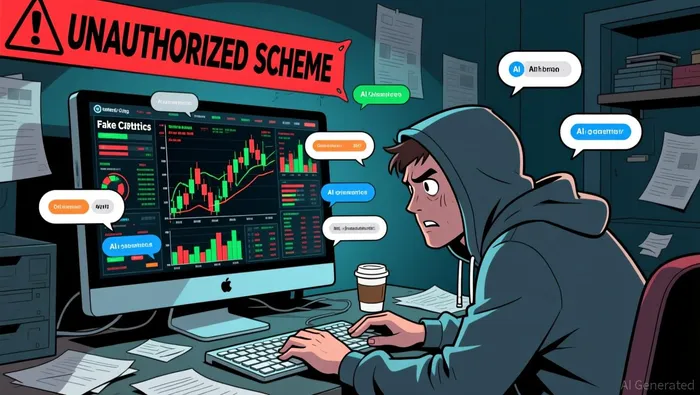
The stakes are particularly high for CFDs, which the FCA has labeled as "complex and high-risk" instruments. Retail investors who opt to forgo protections by claiming professional client status expose themselves to leverage limits and client loss safeguards being removed. This is not hypothetical: in 2025, the FCA reported that some firms used high-pressure tactics to push investors into this category, effectively stripping them of critical safeguards.
The Due Diligence Imperative
For retail investors, due diligence is not optional-it's a lifeline. The FCA has outlined clear steps to verify the legitimacy of financial products. First, investors must check if a firm is authorized by the FCA using the official register according to the FCA's guidance. Second, they should scrutinize marketing materials for red flags: promises of guaranteed returns, pressure to invest quickly, or unverified testimonials. Third, investors should avoid platforms that operate offshore or refuse to disclose regulatory affiliations as per FCA guidance.
The FCA's 2025-2030 Strategy emphasizes simplifying regulatory communication to empower retail investors according to FCA statements. However, the onus remains on individuals to act. For example, the CCG case revealed how fraudsters misled investors by falsely claiming government backing. A simple check of the FCA register would have exposed the firm's lack of authorization.
The Human and Financial Cost
The consequences of falling victim to these schemes extend beyond financial loss. Surveys indicate that 86% of victims felt anger, 73% reported stress, and 63% experienced anxiety. These emotional scars are compounded by the difficulty of recovering funds. Unregulated firms often operate in jurisdictions with weak legal recourse, leaving victims with little hope of restitution.
Banks have made strides in fraud prevention, blocking £870 million in unauthorized transactions in 2025. Yet, fraudsters adapt rapidly, exploiting gaps in oversight. The FCA's recent focus on finfluencers and offshore promoters is a step forward, but retail investors must remain vigilant.
Conclusion: A Call for Vigilance
The FCA's warnings are clear: high-risk, unregulated investments are a minefield for retail investors. While regulatory bodies work to close loopholes, individual due diligence remains the first line of defense. Investors must treat unsolicited offers with skepticism, verify regulatory status rigorously, and avoid platforms that prioritize hype over transparency. As the FCA's 2025-2030 Strategy emphasizes, the goal is to create a financial ecosystem where retail investors are informed, protected, and empowered. Until then, the mantra must be: if it sounds too good to be true, it almost certainly is.







Comentarios
Aún no hay comentarios