
The Hidden Costs of Physical Crime in the Crypto Ecosystem: Assessing Security Risks and Their Impact on Digital Asset Valuations
The cryptocurrency industry, once celebrated for its decentralized ethos and technological innovation, now faces a dual threat: digital vulnerabilities and escalating physical crimes. While cyberattacks on exchanges and wallets dominate headlines, a more insidious trend-physical coercion, or "wrench attacks"-has emerged as a critical hidden cost, reshaping investor behavior, insurance markets, and infrastructure spending. This analysis examines how these threats, particularly in 2025, have influenced digital asset valuations and exposed systemic weaknesses in the crypto ecosystem.
The Rise of Physical Crime: Wrench Attacks and Market Volatility
Physical attacks on crypto holders, where perpetrators use violence or intimidation to extract private keys or seed phrases, have surged in recent years. According to a report by Chainalysis, 2025 saw potentially twice as many wrench attacks as 2024, with incidents concentrated in Western Europe, North America, and the Asia-Pacific. These attacks are not random; they often coincide with BitcoinBTC-- price peaks, as attackers exploit high-liquidity windows to maximize stolen value.
The financial toll is staggering. In 2025 alone, $3.4 billion was stolen from crypto services, with the February Bybit hack-orchestrated by North Korean actors- accounting for $1.5 billion of that total. Meanwhile, wrench attacks contributed to a 5% drop in Bitcoin's price within 24 hours of a high-profile incident in mid-2025, underscoring their direct impact on market sentiment. 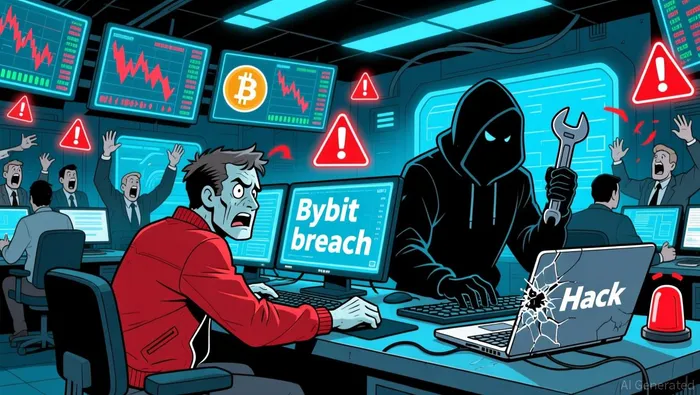 . The correlation between physical crime and price volatility mirrors traditional financial markets' sensitivity to geopolitical risks, but with a unique twist: the personalization of threats.
Hidden Costs: Insurance, Infrastructure, and Investor Confidence
The economic consequences of wrench attacks extend beyond immediate theft. Insurers are now grappling with a new category of risk. Specialized kidnap-and-ransom policies tailored to crypto holders have emerged, with premiums starting at 0.55% of the Bitcoin value insured. For example, the 2025 Vancouver wrench attack-where a family was subjected to waterboarding and sexual assault to steal $1.5 million in Bitcoin- spurred a 17% increase in average ransomware claim costs in early 2025, as insurers adjusted to cover physical threats.
Infrastructure spending has also risen sharply. High-net-worth crypto investors now allocate significant resources to personal security, including private guards and encrypted communication tools. Meanwhile, exchanges and custodians are investing in multi-signature wallets, cold storage solutions, and AI-driven threat detection systems to mitigate both digital and physical risks. These measures, while necessary, add operational costs that indirectly affect asset valuations by reducing profit margins and increasing overhead.
Regulatory Responses and Market Implications
Regulators have begun to address these challenges. The EU's Markets in Crypto-Assets (MiCA) regulation and the U.S. GENIUS Act, enacted in 2025, mandate stricter compliance frameworks for crypto firms, including enhanced physical security protocols. However, enforcement remains uneven. For instance, 63% of breached organizations in 2025 lacked AI governance policies, highlighting regulatory gaps in addressing advanced threats.
Investor confidence, meanwhile, has been tested. A 2025 Chainalysis report noted that 55% of DeFi security breaches led to a 14% average decline in cryptocurrency prices. While centralized services remain the primary target, decentralized protocols are not immune. The September 2025 Venus Protocol breach, though detected early, still triggered a 7% price drop in EthereumETH--, illustrating the sector's fragility.
Conclusion: A Call for Holistic Risk Management
The crypto industry's evolution from a digital frontier to a high-stakes battleground for both cyber and physical threats demands a paradigm shift. Investors must now account for not only smart contract vulnerabilities but also the real-world risks of holding digital assets. As wrench attacks and large-scale hacks become more sophisticated, the hidden costs-insurance premiums, infrastructure spending, and market volatility-will continue to shape the industry's trajectory.
For institutional investors, the lesson is clear: diversification and risk mitigation must extend beyond digital security. The future of crypto depends on a coordinated effort between regulators, insurers, and technology providers to address the full spectrum of threats, both virtual and visceral.






Comentarios
Aún no hay comentarios