
The Hidden Costs of Personality: How Founder Traits Shape Early-Stage Venture Risks
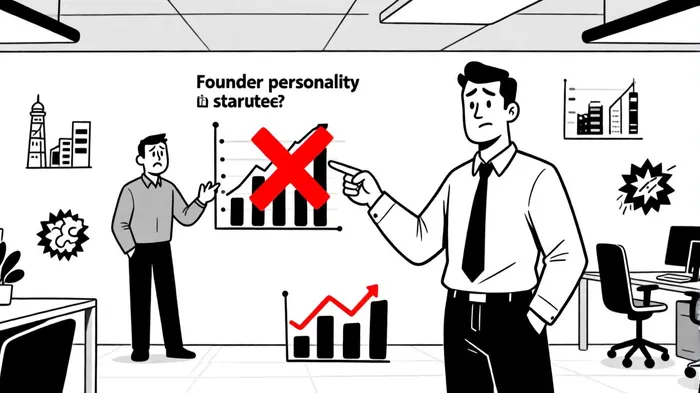
In the high-stakes arena of early-stage entrepreneurship, the founder's mindset often serves as both the engine and the Achilles' heel of a venture. While innovation and market potential dominate investor discussions, a growing body of research underscores the critical role of personality traits in determining startup success or failure. From overconfidence to risk tolerance and adaptability, these psychological factors can amplify or mitigate entrepreneurial risks, shaping outcomes in ways that defy conventional wisdom.
The Double-Edged Sword of Conscientiousness and Neuroticism
According to a report by Columbia Business School, conscientiousness—a trait marked by organization and discipline—can be a boon in the early stages of a venture, particularly in securing initial funding[3]. However, this same trait may hinder scalability when rigid adherence to processes clashes with the need for flexibility in later stages[3]. Conversely, neuroticism, characterized by emotional reactivity and stress susceptibility, consistently correlates with poorer outcomes. Founders high in neuroticism struggle with decision-making under pressure, a liability in the volatile startup ecosystem[3].
Data from SpringerOpen further highlights the perils of low openness to experience, a trait linked to inflexibility and an inability to innovate—a fatal flaw in markets demanding rapid adaptation[1]. These findings suggest that while certain traits may aid in launch, they can become liabilities as ventures evolve.
The Overconfidence Trap
A 2025 Forbes article exposes the pervasive issue of overconfidence among entrepreneurs, noting that 42% of startups fail due to a lack of market demand—a direct consequence of founders overestimating their product's appeal[1]. Overconfident entrepreneurs often bypass critical steps like market validation and financial planning, assuming their vision alone will guarantee success. This cognitive bias, as explored in a 2025 study, also leads to ignoring early warning signs and doubling down on flawed strategies[1].
Investors must recognize that overconfidence isn't just a personal failing—it's a systemic risk. As one academic analysis explains, overconfident investors exhibit higher risk tolerance, which can distort investment decisions and exacerbate venture instability[3].
Adaptability: The Unsung Hero
While adaptability isn't a standalone predictor of success, it plays a pivotal role in navigating uncertainty. A 2024 study emphasizes that traits like social competence and emotional stability are strongly correlated with higher startup performance[2]. Founders who can pivot strategies, embrace feedback, and adjust to market shifts are more likely to survive the “valley of death” in early-stage ventures.
Interestingly, research also reveals a gender dynamic: startups led by female founders demonstrate higher survival rates, potentially due to traits like collaborative decision-making and risk moderation[3]. This underscores the value of diverse leadership in mitigating personality-driven risks.
Risk Tolerance and the Survival Paradox
The majority of startups—over 90%—fail within five years, often due to poor financial planning or an inability to achieve product-market fit[2]. While risk tolerance is essential for innovation, excessive risk-taking without strategic safeguards can be catastrophic. A Harvard Business Review analysis notes that failed startups frequently lack dynamic capabilities—the ability to adapt and innovate in response to market changes[2]. This suggests that risk management must be paired with agility, not just boldness.
Investor Implications
For investors, the takeaway is clear: personality assessments should complement traditional due diligence. Founders with balanced traits—moderate confidence, emotional resilience, and openness to change—are better positioned to navigate the startup lifecycle. Mentorship programs and structured support systems can further mitigate risks by fostering adaptability and realistic risk evaluation[1].
In an era where 90% of startups fail, understanding the human element behind these statistics is no longer optional—it's a strategic imperative.







Comentarios
Aún no hay comentarios