
The Hidden Costs of Conflict Minerals: Why Tech Giants Are Underestimating ESG Risks in 2025
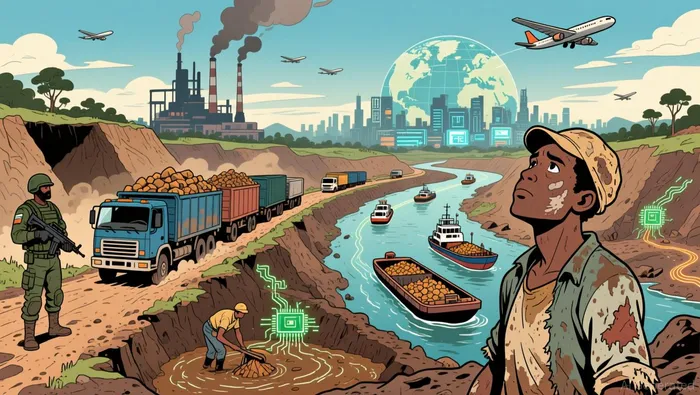
Let's start with the most explosive case of the year: the Democratic Republic of Congo (DRC) filing criminal complaints against Apple's European subsidiaries for allegedly sourcing conflict minerals. According to a Reuters report, the DRC accuses Apple of complicity in funding armed groups through minerals like tin, tantalum, and tungsten mined in conflict zones. Apple denies the allegations, claiming it has "suspended sourcing from the DRC and Rwanda". But here's the rub: even if true, this admission highlights a critical vulnerability-Apple's supply chain is still dependent on regions where governance is weak and smuggling is rampant.
This isn't an isolated incident. A 2025 analysis by S&P Global Sustainable1 reveals that while 55% of tech firms have conflict-free sourcing policies, only 22% have implemented robust mitigation measures. The gap between policy and action is where reputational damage festers. Take Nintendo, which has made no known efforts to audit its supply chain for conflict minerals. Or consider the broader industry: over 60% of cobalt, a key component in energy tech, still originates from high-risk regions. As demand for lithium and rare earth elements surges, so does the risk of entanglement in unstable geographies.
Regulatory tailwinds are tightening the screws. The EU's Corporate Sustainability Reporting Directive (CSRD) and the U.S. SEC's mandatory climate disclosures now demand granular ESG data from suppliers, even in tier-three factories. Non-compliance isn't just a PR hit, it's a financial one. In 2024, companies were penalized for underreporting carbon emissions in logistics or labor violations in manufacturing partners. The message is clear: ESG is no longer a checkbox; it's a liability.
But the real danger lies in strategic underestimation. Tech firms are investing heavily in AI and blockchain to trace supply chains, yet these tools struggle in regions with fragmented governance. Meanwhile, the DRC's legal action against Apple underscores a growing trend: governments are no longer content to let corporations off the hook for indirect complicity in human rights abuses.
Investors should also watch for sector-specific vulnerabilities. The semiconductor and hardware industries, which rely heavily on 3TG minerals, are under the most scrutiny. But the problem isn't confined to legacy materials. Cobalt and lithium, critical for batteries and green tech, are introducing new geopolitical risks as mining expands into ecologically sensitive areas.
So where does this leave the portfolio? Prioritize companies with proactive ESG strategies. Intel and HP, for instance, have invested in certified smelters and multi-stakeholder initiatives to trace minerals. Conversely, firms like Nintendo and those lagging in mitigation efforts face a higher risk of regulatory penalties, lawsuits, and reputational freefalls.
The bottom line? Conflict minerals aren't just a compliance issue-they're a strategic blind spot. As ESG regulations multiply and stakeholder expectations rise, the tech sector's ability to adapt will determine not just its ethical standing, but its bottom line.





Comentarios
Aún no hay comentarios