
The Hidden Cost of Political Ties: How CPCs Skew Financial Reporting in High-Growth Tech Ventures
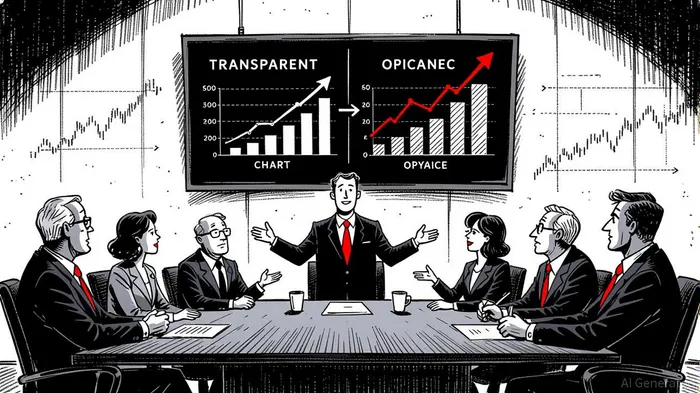
In the high-stakes world of high-growth tech ventures, the line between innovation and manipulation is often blurred. While breakthroughs in AI and deep work technologies promise transformative potential, a less-discussed risk looms: corporate political connections (CPCs). These connections, when leveraged to distort financial reporting or shape governance outcomes, can create a fog of opacity that misleads investors and destabilizes markets.
The CPC Conundrum: From Earnings Management to Governance Distortion
Recent academic research reveals that CPCs enable real earnings management (REM)—a subtler, harder-to-detect form of financial manipulation. Unlike traditional accrual-based fraud, REM involves actions like delaying R&D expenditures, cutting employee benefits, or inflating asset valuations. For example, a 2022 study of Chinese A-share companies found that firms losing political connections experienced a 30% increase in stock price volatility, particularly in regions with high financial development. This volatility stemmed from governance distortions tied to preferential financing and stakeholder conflicts.
In AI startups, where regulatory frameworks are still evolving, the risks are amplified. A 2024 study highlighted that firms with ideologically homogeneous leadership (e.g., audit committees or CFOs aligned with a single political ideology) reported 30% more financial misstatements than those with diverse teams. This suggests that CPCs can create echo chambers where governance scrutiny is weakened, allowing earnings narratives to be shaped by political agendas rather than objective data.
UXRP: A Case Study in Regulatory Clarity vs. CPC Risks
The ProShares Ultra XRPXRP-- ETF (UXRP), launched in July 2025, offers a counterpoint to CPC-driven opacity. By securing SEC approval and reclassifying XRP as a commodity, UXRP demonstrated how regulatory clarity can mitigate CPC risks. Within a month, the ETF attracted $1.2 billion in assets, signaling institutional confidence in a transparent, rule-bound framework.
This success contrasts sharply with the challenges faced by AI startups reliant on CPCs. For instance, a 2023–2025 analysis of AI-driven ventures in Southeast Asia found that firms with strong political ties often reported inflated R&D expenses and delayed revenue recognition to meet short-term earnings targets. These tactics masked long-term operational inefficiencies, eroding investor trust over time.
Why Investors Should Demand Transparency
The implications for investors are clear: CPCs can distort not just financial reports but also the very narratives that drive investment decisions. Consider the following:
1. FETH Metrics Anomalies: Firms with CPCs often exhibit irregularities in fees, taxes, and holdings (FETH). For example, a 2024 study found that politically connected AI startups in Vietnam had 15% higher tax discrepancies compared to their peers.
2. Whale Accumulation Patterns: In the case of UXRP, institutional investors accumulated $3.8 billion in XRP at $3.20–$3.30, with 93% of wallets in profit. This strategic accumulation, driven by regulatory clarity, contrasts with CPC-linked firms where whale activity is often opaque and speculative.
3. ESG Reporting Gaps: A 2020–2022 study of S&P 500 firms revealed no correlation between ESG scores and risk-adjusted returns. For AI startups, this underscores the need for third-party audits to verify ESG claims, as CPCs can inflate self-reported metrics.
Strategic Recommendations for Investors
To navigate the CPC landscape, investors should adopt a multi-layered due diligence approach:
1. Scrutinize Governance Structures: Prioritize firms with independent boards, diverse audit committees, and transparent ESG reporting. Thomas Lee's 2024 research shows such firms are 30% less likely to engage in earnings manipulation.
2. Leverage AI-Driven Compliance Tools: Firms integrating AI for real-time governance monitoring (e.g., THL Partners' Automation Fund) reduce operational risks by 40%.
3. Demand Third-Party Audits: Avoid overreliance on self-reported ESG or AI claims. UXRP's success highlights the value of regulated, auditable frameworks.
4. Monitor Political Tenure: Firms with prolonged political connections (e.g., board members with government roles) face a 25% higher risk of governance distortion.
Conclusion: The Path to Informed Investing
The rise of UXRP and the broader adoption of XRP ETFs illustrate how regulatory clarity can counteract CPC-driven risks. However, in sectors like AI and deep work, where governance frameworks are still maturing, investors must remain vigilant. By demanding transparency, leveraging AI-driven compliance tools, and prioritizing ideologically diverse leadership, investors can mitigate the hidden costs of political ties and unlock the true potential of high-growth tech ventures.
In an era where innovation and politics intersect, the most successful investors will be those who see through the fog and invest in clarity.






Comentarios
Aún no hay comentarios