
The Hidden Cost of 401(k) Rollover Mismanagement: Systemic Flaws and the Investor Education Gap Undermine Long-Term Wealth
Systemic Inefficiencies: A Fragmented Landscape
The root of the issue lies in the lack of standardization across retirement account providers. Each firm operates under its own rollover protocols, often relying on outdated methods. This fragmentation forces participants to navigate a labyrinth of fees, tax codes, and investment options, increasing the likelihood of costly errors. For instance, improper rollover strategies can result in thousands of dollars in annual losses due to unnecessary fees or tax miscalculations according to financial analysis.
The complexity is further amplified by the rise of alternative investments in retirement accounts. While self-directed IRAs (SDIRAs) offer broader investment flexibility, they also require participants to grapple with non-traditional assets like real estate or private equity-options that demand specialized knowledge about liquidity, valuation, and risk management. This mismatch between investor capability and product complexity creates a fertile ground for mismanagement.
Investor Education Gaps: The "Set It and Forget It" Trap
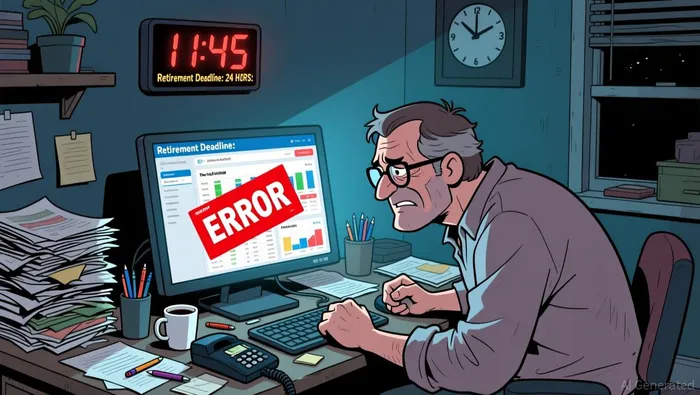
Recent studies reveal a glaring advice gap in retirement planning. According to The Cerulli Report-U.S. Retirement End-Investor 2025, 63% of active 401(k) participants lack a financial advisor, leaving them to manage complex decisions like rollovers with minimal guidance according to the report. This has fostered a "set it and forget it" mindset, where participants treat retirement accounts as static savings vehicles rather than dynamic tools requiring periodic review.
The consequences are dire. The average balance of a lost 401(k) account has risen from $56,616 in 2023 to $66,691 in 2025, reflecting both inflation and the compounding cost of inaction. Worse, participants who misplace their accounts could lose up to $500,000 in savings over time due to missed compounding opportunities and tax penalties according to research. These figures highlight a crisis of long-term wealth erosion, driven by a lack of understanding about rollover mechanics and their financial implications.
A Path Forward: Technology and Education as Solutions
Efforts to address these challenges are emerging. A 2025 partnership between Beagle and American Estate & Trust aims to streamline rollovers by integrating technology to locate forgotten accounts and facilitate transfers into SDIRAs according to the announcement. Such innovations could mitigate errors by simplifying the process and expanding access to alternative investments. However, technology alone is insufficient without parallel investments in investor education.
Recordkeepers must take a proactive role in bridging the advice gap. The Cerulli Report emphasizes the need for annual goal-setting and progress tracking to foster informed decision-making according to the report. This includes educating participants on tax-efficient rollover strategies, fee structures, and the long-term impact of account choices.
Conclusion
The 401(k) rollover crisis is a microcosm of broader systemic flaws in retirement savings infrastructure. Without addressing the twin challenges of fragmented processes and inadequate education, the $2.1 trillion in lost assets will only grow, eroding the financial security of millions. The path forward requires a dual focus: leveraging technology to reduce administrative friction and prioritizing financial literacy to empower investors to make decisions that align with their long-term goals.







Comentarios
Aún no hay comentarios