
HGLB's High Concentration Risk: Balancing Portfolio Resilience and Diversification in Volatile Markets
The Highland Global Allocation FundHGLB-- (HGLB) has long positioned itself as a multi-asset vehicle designed to navigate volatile markets through a blend of U.S. and international equities, fixed income, and alternative investments. However, a closer examination of its portfolio composition reveals significant concentration risks that could undermine its resilience during market downturns. As of August 31, 2023, HGLB's top holding, TerreStar Corp, accounted for 18.55% of the portfolio, while the Sensitive super sector represented 28.87% of assets, according to the Yahoo Finance listing. Such allocations raise critical questions about the fund's ability to weather systemic shocks, particularly in light of past valuation controversies and sector-specific vulnerabilities.
Portfolio Composition and Concentration Risk
HGLB's heavy exposure to individual holdings and sectors is a double-edged sword. While diversification across asset classes is a hallmark of its strategy, the fund's reliance on a single company-TerreStar Corp-exposes it to idiosyncratic risks. TerreStar, a non-operating entity with no revenue or cash flows, has historically been subject to subjective valuation practices. A 2020 restatement of $14.4 million due to misvaluation errors underscored Highland's internal control weaknesses, according to a Morningstar analysis. This raises concerns about how such assets might perform during liquidity crises, when market prices for illiquid holdings can plummet rapidly.
Sector-wise, the Sensitive super sector's 28.87% allocation further amplifies risk. Sensitive sectors typically include high-growth or cyclical industries that are prone to sharp corrections during downturns. For instance, during the 2020 market crash, sectors like energy and real estate-often overlapping with Sensitive categories-fared poorly compared to defensive sectors like healthcare and technology, per Motley Fool research. HGLB's lack of granularity in sector definitions complicates risk assessment, as the term "Sensitive" could encompass a range of volatile assets.
Historical Performance During Downturns: A Mixed Record
HGLB's resilience during past downturns is both a strength and a point of contention. In 2020, the fund's share price fell -17.96%, while its net asset value (NAV) declined only -6.66% (Yahoo Finance). This divergence suggests that while the fund's underlying assets held up relatively well, market sentiment drove a sharper drop in share price. By contrast, in 2022-marked by inflationary pressures and interest rate hikes-HGLB delivered a 23.77% total return, outperforming its Morningstar category's -21.64% loss, as reported on the CEFConnect profile. This outperformance was attributed to its flexible asset-allocation strategy, which allowed managers to pivot toward undervalued securities.
However, these results mask the fragility of its concentrated positions. During the 2020 crash, illiquid holdings like TerreStar likely faced valuation challenges, as liquidity dried up across markets (Morningstar). Similarly, the Sensitive sector's exposure to high-risk assets may have exacerbated losses in 2022, when rising rates punished long-duration and leveraged investments. While HGLB's overall returns were positive, the absence of granular data on sector-specific performance makes it difficult to quantify the exact impact of these concentrations (Yahoo Finance).
The Role of Diversification and Managerial Flexibility
HGLB's ability to balance concentration risks hinges on its global diversification and active management. Approximately 47.55% of its assets are allocated to U.S. equities, while 20.39% are in U.S. fixed income, with additional exposure to international markets (CEFConnect). This geographic spread helps mitigate regional downturns. Moreover, the fund's "level distribution policy," which aims to provide stable income through annual resets, has attracted income-focused investors, according to a FinancialContent article, despite the risk that 62% of distributions may be classified as return of capital.
Yet, diversification alone cannot fully offset the risks of concentrated holdings. The fund's 2019 conversion from an open-end to a closed-end structure-a move to address illiquidity in assets like TerreStar-highlights ongoing challenges in managing liquidity mismatches (Morningstar). In volatile markets, such structural issues could resurface, particularly if redemptions or forced sales pressure asset prices.
Conclusion: A Calculated Gamble for Risk-Tolerant Investors
HGLB's investment strategy offers a compelling mix of income generation and capital appreciation, supported by its historical resilience during downturns. However, its heavy reliance on concentrated positions-such as TerreStar Corp and the Sensitive sector-introduces vulnerabilities that could amplify losses in a severe market correction. For investors, the key lies in assessing whether the fund's diversification across geographies and asset classes sufficiently offsets these risks. While HGLB's 8.5% annualized distribution rate is attractive, the potential for return of capital and valuation uncertainties warrant caution. In an era of persistent macroeconomic volatility, HGLB's success will depend on its managers' ability to navigate concentration risks without compromising long-term stability. 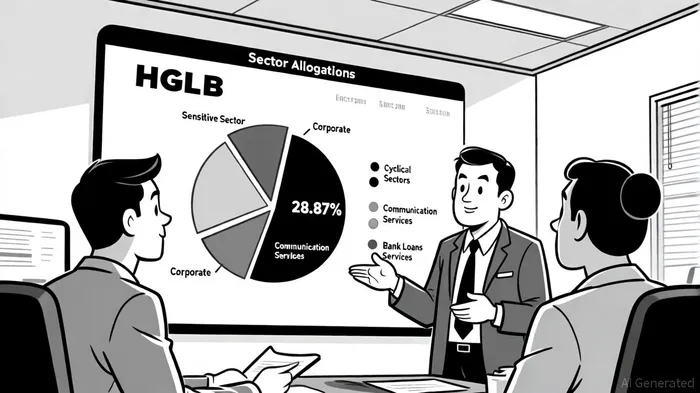





Comentarios
Aún no hay comentarios