
Hess Midstream LP's Bakken Throughput Dynamics: Infrastructure Value and Mitigating Growth Risks
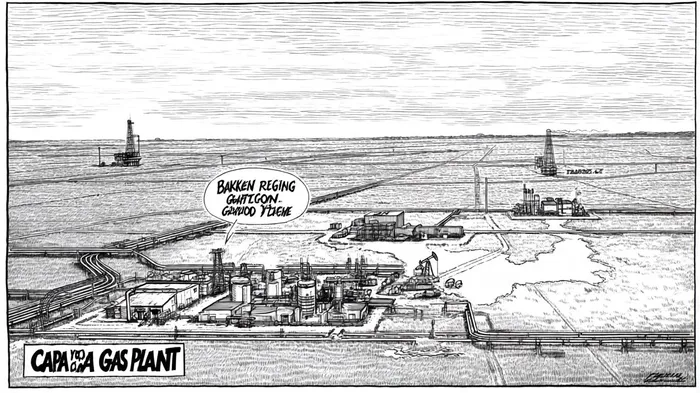
The Bakken shale play has long been a cornerstone of U.S. oil and gas production, and Hess Midstream LPHESM-- (HMLP) remains a pivotal player in its midstream infrastructure. Recent updates to the company's guidance and capital plans, however, reveal a nuanced shift in its growth trajectory. While throughput volumes face near-term headwinds, HMLP's strategic investments in gas processing and compression infrastructure are positioning it to mitigate long-term risks and solidify its value proposition.
Shifting Throughput Dynamics: Gas Growth Outpaces Oil
According to a report by Bloomberg, Hess MidstreamHESM-- anticipates gas throughput volumes in the Bakken to grow by approximately 10% in 2026 and 5% in 2027, factoring in planned maintenance at the Tioga Gas Plant [2]. Oil throughput, meanwhile, is projected to rise by 5% annually over the same period but will plateau by 2026 due to reduced drilling activity by partners like ChevronCVX--, which cut its rig count from four to three in late 2025 [1]. This divergence underscores a critical trend: gas infrastructure is becoming a more reliable growth driver than oil, as production shifts toward natural gas and operators prioritize cost efficiency.
The company's updated 2025 guidance reflects this reality. Gas gathering volumes are now expected to average 455–465 MMcf per day, down slightly from earlier forecasts due to adverse weather and maintenance in Q3 2025 [1]. Yet these volumes remain above minimum contractual commitments, providing a buffer against volatility. For investors, this signals a maturing asset base where infrastructure reliability—rather than production surges—will underpin cash flow stability.
Infrastructure Expansion: A Blueprint for Resilience
Hess Midstream's capital allocation strategy is increasingly focused on greenfield projects to future-proof its operations. A $300 million 2025 expenditure plan includes the construction of a new gas processing plant with 125 MMcf per day capacity, slated for completion in 2027 [2]. This facility, coupled with two new compressor stations adding 85 MMcf per day of compression capacity, will enhance the company's ability to handle rising gas volumes and reduce downtime during maintenance cycles [2].
These investments are not merely reactive. By expanding processing and compression capabilities, HMLPMMLP-- is addressing a key bottleneck in the Bakken's gas value chain. The Tioga Gas Plant's scheduled inspections, for instance, could disrupt flows without adequate backup capacity. The new plant, located north of the river, will diversify processing options and ensure throughput continuity [2]. Such infrastructure redundancy is becoming a competitive advantage in a region where weather-related disruptions are frequent.
Capital Efficiency and Declining Growth Risks
A notable shift in HMLP's strategy is its recalibration of capital spending. While 2025 expenditures remain robust at $300 million, forward-looking plans have been streamlined. The Capa Gas Plant project, initially a flagship initiative, has been paused due to revised cost-benefit analyses, redirecting funds to higher-impact projects [1]. This pruning of capital plans reduces exposure to overbuilding and aligns spending with a more conservative growth outlook.
The company's financial discipline is further evidenced by its commitment to a 5% annual distribution growth target for Class A shares through 2027 [2]. This pledge, supported by projected Adjusted Free Cash Flow growth, suggests confidence in the durability of its asset base. With oil throughput stabilizing and gas infrastructure maturing, HMLP is transitioning from a high-growth developer to a cash-flow generator—a shift that lowers distribution coverage risks and enhances investor appeal.
Conclusion: A Maturing Midstream Play
Hess Midstream's Bakken operations are evolving from speculative growth bets to a resilient infrastructure platform. While near-term throughput revisions and Chevron's reduced drilling activity introduce some uncertainty, the company's capital discipline and strategic expansions are mitigating these risks. By prioritizing gas processing and compression projects, HMLP is aligning itself with the Bakken's long-term production profile, where gas will increasingly offset oil's plateauing volumes. For investors, this represents a compelling case of value creation through operational adaptability in a challenging market.





Comentarios
Aún no hay comentarios