
Henry Schein's Share Buyback Strategy and Its Implications for Value Creation
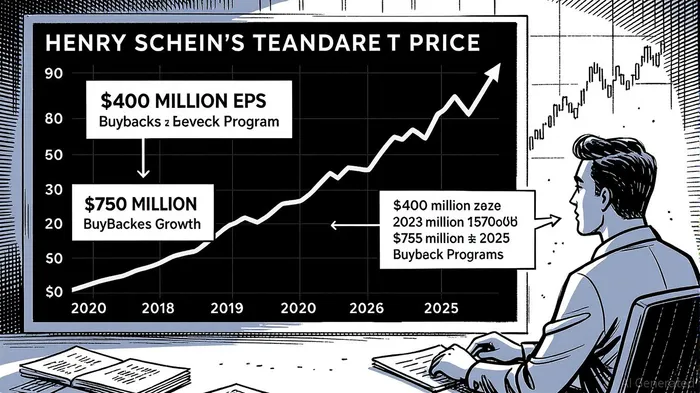
Henry Schein's recent announcement of a $750 million share repurchase plan has reignited investor interest in the healthcare distributor's capital allocation strategy. This move, unveiled in July 2025, reflects the company's confidence in its financial resilience and long-term growth trajectory. By returning value to shareholders through stock buybacks, Henry ScheinHSIC-- aims to optimize its capital structure while signaling stability amid evolving market dynamics. However, the strategic and financial rationale behind this decision warrants closer scrutiny, particularly in light of the company's debt profile and operational challenges.
Strategic Rationale: Shareholder Value and Capital Allocation
Henry Schein's share buyback program aligns with its broader commitment to enhancing shareholder returns. The company has historically prioritized capital efficiency, as evidenced by its 2023 $400 million repurchase initiative[1]. The 2025 plan builds on this precedent, leveraging the company's strong cash flow generation to reduce the number of outstanding shares and potentially boost earnings per share (EPS). According to a report by Henry Schein's corporate communications team, the buyback underscores confidence in the firm's ability to sustain growth in high-margin sectors such as dental and medical technology[2].
This strategy also complements Henry Schein's focus on operational efficiency. The company has partnered with KKRKKR-- Capstone and global consulting firms to drive cost savings exceeding $100 million annually[1]. By pairing cost-cutting measures with share repurchases, Henry Schein aims to amplify returns without compromising its investments in innovation or market expansion. Analyst Jonathan Block of Stifel Financial Corp.SF-- notes that such initiatives position the company to achieve mid-single-digit adjusted EBITDA growth in 2025[4].
Financial Health: Strengths and Risks
Henry Schein's financial position appears robust on the surface. Its cash flow from operations reached $848 million in 2025[3], and its interest coverage ratio of 6.7x indicates strong debt servicing capacity[2]. However, the company's debt-to-equity ratio of 61.5%—a significant increase from 28.8% in 2020—raises questions about leverage sustainability[4]. While the current ratio of 1.41 suggests short-term liquidity is manageable[3], the negative free cash flow of -$6 million in 2025 highlights potential constraints in funding both buybacks and growth projects[5].
The EPS accretion potential of the buyback remains a key focus. By reducing share count, Henry Schein could enhance earnings per share, assuming revenue and profit trends remain stable. The company's 2025 guidance for non-GAAP diluted EPS of $4.80 to $4.94 already incorporates this strategy[1]. However, the pace of repurchases and stock price volatility will determine the magnitude of this impact.
Expert Perspectives and Market Reactions
Market analysts have largely endorsed the buyback as a value-creation tool. Stifel's Jonathan Block emphasizes that the program, combined with operational efficiencies, could drive EPS growth in the “high single-digit or low double-digit” range[4]. Pre-market analyst actions also reflect optimism, with some firms revising their price targets upward[2]. Yet, skeptics caution that the high debt load could limit flexibility during economic downturns. For instance, the U.S. division's lower margins in Q3 2025—attributed to discounted glove pricing and short-term sales initiatives—highlight vulnerabilities in pricing power[1].
Conclusion: Balancing Ambition and Prudence
Henry Schein's $750 million share repurchase plan is a calculated move to reward shareholders while reinforcing its capital structure. The company's operational strengths, including $848 million in operating cash flow[3], provide a solid foundation for this strategy. However, the rising debt burden and negative free cash flow necessitate careful monitoring. For the buyback to deliver lasting value, Henry Schein must balance its aggressive repurchase pace with prudent debt management and continued innovation in high-margin markets. Investors will likely watch closely as the company executes its 2025 guidance and navigates the delicate interplay between growth and financial discipline.





Comentarios
Aún no hay comentarios