
Henkel's Strategic Reinvention and Profitability Momentum: A Blueprint for Outperformance in a Volatile Market
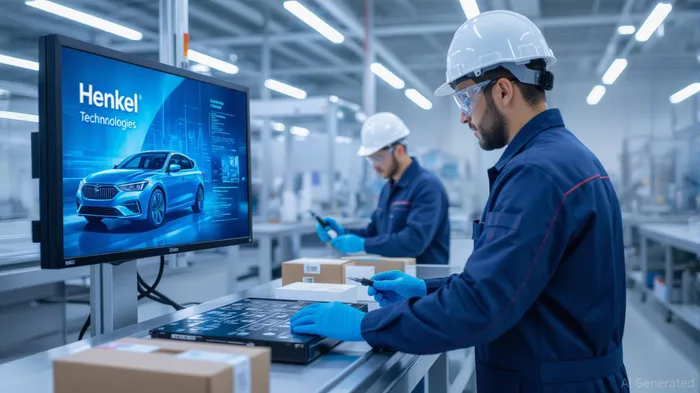
Henkel AG (HEN3.DE) has emerged as a compelling case study in strategic reinvention, leveraging disciplined portfolio optimization to navigate macroeconomic turbulence and position itself as a high-margin, low-volatility player in both consumer and industrial markets. Over the past three years, the German multinational has executed a transformative agenda that includes divesting non-core assets, accelerating innovation, and doubling down on sustainability and digitalization. This analysis evaluates Henkel's post-portfolio optimization performance, its competitive positioning, and its potential to outperform in a fragmented global economy.
Portfolio Optimization: A Catalyst for Margin Expansion
Henkel's strategic overhaul began in earnest in 2022 with the divestiture of its North American Retailer Brands business for €500 million and its Russian operations for €600 million. These exits freed up capital to reinvest in high-growth segments, such as Adhesive Technologies and premium consumer brands. By 2025, the company had streamlined its portfolio by over €1 billion in sales, focusing on businesses with superior margins and resilience to cyclical downturns.
The results speak for themselves. Henkel's EBIT margin expanded by 240 basis points to 14.3% in 2024, with Adhesive Technologies achieving a 16.6% margin—a 190-basis-point improvement. This unit, now restructured into three business areas—Mobility & Electronics, Packaging & Consumer Goods, and Craftsmen, Construction & Professional—has become a growth engine. For example, its low-temperature adhesives and sustainable packaging solutions have driven double-digit organic sales growth in the Electronics and Industrial segments, even as the Automotive business faced headwinds.
Consumer Brands: Resilience Through Innovation and Portfolio Discipline
The Consumer Brands segment, while more volatile, has shown remarkable adaptability. After a soft start to 2025, the unit rebounded in Q2, driven by strong performance in Hair Colorants and Hair Styling categories. The launch of Creme Supreme, a premium hair repair technology, and the integration of Vidal Sassoon in China have bolstered brand equity in high-margin categories.
Despite a 1.6% organic sales decline in the first half of 2025, the unit's EBIT margin improved to 15.3%, reflecting cost discipline and a shift toward high-growth brands. The top 10 brands now account for 60% of sales, with the Hair business area delivering 0.9% organic growth in H1 2025. This focus on portfolio concentration has allowed Henkel to outperform peers in profitability, even amid weak consumer sentiment in North America and Europe.
Competitive Positioning: Outperforming in a Fragmented Market
Henkel's Adhesive Technologies unit has outpaced industry growth rates, which are projected at a 6% CAGR through 2033. The unit's 2.8% organic sales growth in Mobility & Electronics in H1 2025—driven by e-mobility and industrial automation—underscores its alignment with global megatrends. Innovations like low-temperature, low-foam can cleaner technology have tripled its business in the metal packaging segment, achieving energy savings and 25% less water usage.
In contrast, the Consumer Brands segment faces a more challenging landscape. While the unit's EBIT margin of 13.6% in 2024 outperformed the average 10–12% margin in the consumer goods sector, its organic sales growth of 3.0% in 2024 lags behind the 4–5% growth of premium-focused rivals like UnileverUL-- and Procter & Gamble. However, Henkel's focus on sustainability—such as its science-based net-zero roadmap—and digital transformation (e.g., AI-driven customer engagement) positions it to close this gap.
Financial Resilience and Shareholder Returns
Henkel's free cash flow of €485 million in H1 2025 highlights its financial discipline. The company has prioritized capital returns, proposing a double-digit dividend increase and a €1 billion share buyback program. These actions, combined with a robust balance sheet (debt-to-EBITDA of 1.5x), suggest a strong capacity to weather macroeconomic shocks.
Investment Thesis: A High-Margin, Low-Volatility Play
Henkel's strategic reinvention has created a business model that balances innovation, sustainability, and operational efficiency. Adhesive Technologies, with its 16.5–17.5% EBIT margin guidance for 2025, is a cash-flow generator in a sector with limited cyclicality. Meanwhile, Consumer Brands' pivot to premiumization and digitalization offers long-term growth potential, albeit with near-term volatility.
For investors, Henkel represents a compelling opportunity in a volatile market. Its disciplined capital allocation, margin expansion, and alignment with global trends (e.g., e-mobility, sustainability) position it to outperform peers. However, risks remain, particularly in the Consumer Brands segment, where consumer spending could remain subdued.
Conclusion
Henkel's post-portfolio optimization journey is a masterclass in strategic agility. By exiting non-core businesses, investing in high-margin growth areas, and embedding sustainability into its DNA, the company has built a resilient business capable of thriving in uncertainty. For long-term investors, Henkel offers a unique combination of margin strength, innovation, and shareholder-friendly policies—a rare trifecta in today's market.







Comentarios
Aún no hay comentarios