
HELLER's Exclusion from the S&P Global BMI Index: A Case Study in Market Sentiment and Re-Rating Potential
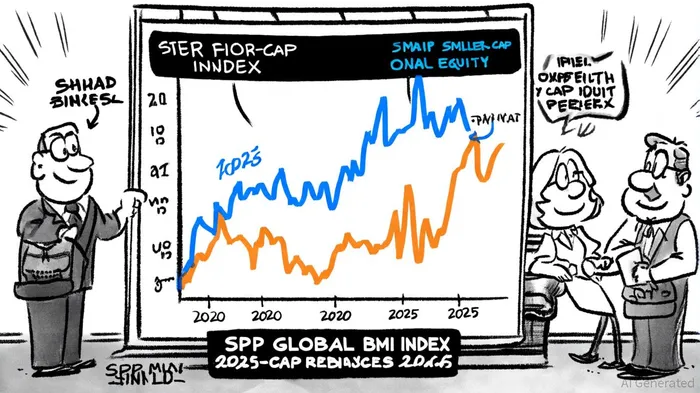
The recent exclusion of HELLER Industries from the S&P Global Broad Market Index (BMI) has sparked a nuanced debate about the interplay between index eligibility criteria and market sentiment. While the S&P Global BMI—a cap-weighted index encompassing 11,000 companies across 50 countries—serves as a barometer of global equity markets, its inclusion rules are notNOT-- merely technical hurdles but signals of broader investor confidence[1]. HELLER's absence, though not explicitly detailed in official communications, likely stems from its failure to meet the index's stringent thresholds: a float-adjusted market capitalization of at least $100 million and a 12-month median daily trading value of $50 million[1]. These benchmarks are not arbitrary; they reflect liquidity and size requirements that ensure the index remains representative of economically significant enterprises.
The implications of this exclusion extend beyond a mere listing. For HELLER, the omission may amplify perceptions of financial fragility. According to a report by UpGuard, the company's security posture—while not rated in detail—remains under continuous scrutiny, with no recent incidents reported[1]. However, the absence from a globally recognized index can exacerbate liquidity constraints, as institutional investors often align portfolios with benchmark indices to manage risk and return profiles[2]. This creates a self-reinforcing cycle: reduced visibility in major indices may deter passive investment flows, further depressing trading volumes and market capitalization.
Compounding this challenge is HELLER's classification as an issuer of fixed-dividend shares, a structure explicitly excluded from the S&P Global BMI[1]. Fixed-dividend preferred shares, while attractive to income-focused investors, are treated as hybrid securities with characteristics of both equity and debt. As noted by FasterCapital, these instruments prioritize dividend payments over common shareholders and often carry cumulative features, making them less aligned with the risk-return profiles of traditional equity benchmarks[3]. This structural distinction underscores a broader tension in capital markets: the growing demand for yield in a low-growth environment versus the need for indices to remain cohesive and representative.
Yet, HELLER's exclusion is not a terminal verdict. The company's 2025 financial metrics—annual revenue between $10 million and $100 million—suggest it operates in a niche but viable sector[1]. To re-enter the BMI, HELLER must address two critical levers: liquidity and scale. Increasing market capitalization could be achieved through strategic acquisitions, share buybacks, or revenue growth, while enhancing liquidity might require initiatives such as stock splits or partnerships with market makers. The March, June, and December review windows for the BMI offer opportunities for re-evaluation, provided HELLER demonstrates sustained improvement[1].
Market sentiment, however, remains a double-edged sword. While exclusion may deter some investors, it could also attract contrarian capital seeking undervalued opportunities. The key lies in HELLER's ability to communicate a clear path to re-rating. As iShares' 2025 investment outlook highlights, fixed-income strategies—including preferred shares—are gaining traction in diversified portfolios[2]. If HELLER can reframe its fixed-dividend structure as a competitive advantage in a yield-starved market, it may unlock new investor bases.
In conclusion, HELLER's exclusion from the S&P Global BMI Index is a microcosm of the challenges faced by smaller-cap companies in an increasingly benchmark-driven world. While the immediate impact may weigh on liquidity and investor sentiment, the path to re-rating is within reach—if the company can align its financial and operational metrics with the expectations of global capital markets.







Comentarios
Aún no hay comentarios