
Helios Technologies: Balancing Dividend Stability and Strategic Reinvestment for Long-Term Shareholder Value
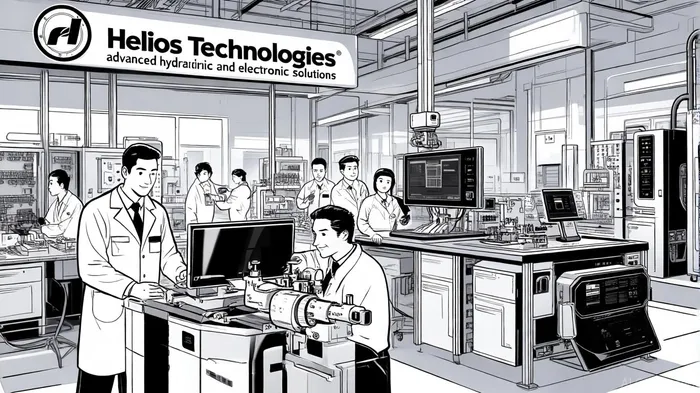
In the realm of industrial manufacturing, Helios TechnologiesHLIO-- (HLIO) stands out as a company that has mastered the delicate balance between rewarding shareholders through consistent dividends and reinvesting in growth initiatives. With a dividend history spanning over 28 years and a payout ratio of just 17.14% based on trailing earnings, the company's financial discipline and capital allocation strategy position it as a compelling case study for investors seeking long-term value creation[1].
Dividend Sustainability: A Foundation of Prudent Financial Management
Helios Technologies has maintained a quarterly dividend of $0.09 per share since at least 2022, resulting in an annual payout of $0.36 and a current yield of 0.66%[2]. While this yield trails the Industrials sector average, its sustainability is underpinned by robust cash flow generation. In Q2 2025, the company produced $37 million in operating cash flow—the highest since Q4 2019—and used this liquidity to reduce debt by $67 million year-over-year, while also repurchasing 200,000 shares at $32 apiece[3].
The operating free cash flow (OFCF) payout ratio of 13.4% further reinforces dividend safety, providing a buffer against potential earnings volatility[4]. This conservative approach is critical for a company with a low Dividend Growth Potential Score, as it prioritizes stability over aggressive increases[5]. Investors should note that Helios' liquidity position remains strong, with $53 million in cash and $355.7 million in undrawn credit facilities, ensuring flexibility to navigate economic uncertainties[4].
Historical backtesting of dividend announcements from 2022 to 2025 reveals that HLIO's shares have delivered an average 2.5% return over 30 days post-announcement, outperforming the benchmark's -0.7% return. While the positive effect is not statistically significant on any single day, the win rate remains above 70% through day 10, suggesting short-term momentum for investors employing a buy-and-hold strategy around these events[4].
Strategic Reinvestment: Fueling Growth Without Compromising Shareholder Returns
While Helios' dividend consistency is commendable, its reinvestment strategies are equally vital for long-term value creation. The company's Q2 2025 results highlighted a $5.4 million capital expenditure (2.5% of sales) directed toward operational efficiency and innovation[6]. These investments align with broader strategic priorities, including the refocusing of engineering resources on core brands and the development of next-generation products like Electro-Proportional Hydraulics Cartridge Valves and Clim8zone II Heat Pumps[7].
A pivotal example of Helios' capital allocation discipline is the $83 million AUD divestiture of its Custom Fluidpower business. This move not only streamlines operations but also channels proceeds toward debt reduction and innovation in high-growth markets[8]. CEO Sean Bagan emphasized that new product launches are accelerating without cannibalizing existing offerings, creating “incremental sales opportunities” that bolster organic growth[9].
Growth Prospects: Innovation and Market Expansion
Helios' 2025 outlook is anchored by its commitment to innovation and operational leverage. The company has expanded into advanced electronics and health & wellness sectors, with products such as the S35/P70 displays and SpaTouch4 interface[10]. These initiatives reflect a strategic pivot toward differentiated technology, enhancing Helios' competitive moat. Additionally, the company's focus on geographical expansion into high-demand regions positions it to capitalize on global industrial trends[11].
Despite the absence of explicit R&D expenditure figures in 2025 reports, the restructuring of the HeliosHLIO-- Center for Engineering Excellence and the amortization of intangible assets (up 5% year-over-year to $8.3 million in Q2) signal ongoing investment in innovation[12]. This aligns with management's stated priorities of “customer centricity” and “operational efficiencies,” which are critical for sustaining profitability in a competitive landscape[13].
Risks and Considerations
Investors should remain cognizant of Helios' low dividend growth potential and its exposure to macroeconomic headwinds, such as tariffs impacting its Q2 2025 results[14]. However, the company's debt reduction progress (net debt/EBITDA of 2.6x as of Q2 2025) and focus on high-margin innovations mitigate these risks[15]. The challenge lies in balancing reinvestment with dividend obligations, but Helios' current trajectory suggests this equilibrium is achievable.
Conclusion: A Model of Prudent Capital Allocation
Helios Technologies exemplifies how a mature industrial company can sustain dividends while strategically reinvesting in growth. Its disciplined approach to debt reduction, share buybacks, and innovation—coupled with a conservative payout ratio—creates a resilient framework for long-term shareholder value. For investors prioritizing stability with incremental growth, Helios offers a compelling blend of reliability and strategic foresight.





Comentarios
Aún no hay comentarios