
Helio’s Lunar Infrastructure Bet Hinges on Artemis IV’s Timeline and SLS Success
The Artemis program represents a clear technological S-curve paradigm shift. After a half-century gap, it is reigniting sustained human presence beyond low Earth orbit. This week, on April 1, 2026, the first crewed mission in over 50 years will launch, marking the critical first step. The Artemis II mission is a crewed lunar flyby designed to validate the Orion spacecraft and Space Launch System (SLS) for future landings. It is a flight test, not a landing mission, but its success is foundational for the entire build-out.
The real engineering challenge-and the next phase of the S-curve-arrives with Artemis IV, planned for 2028. This mission will be a complex undertaking involving lunar surface science and the assembly of the Gateway space station in lunar orbit. It will demand advanced power systems, robust engineering solutions, and a new level of operational maturity. This is where the infrastructure layer for a permanent lunar presence begins to take shape.
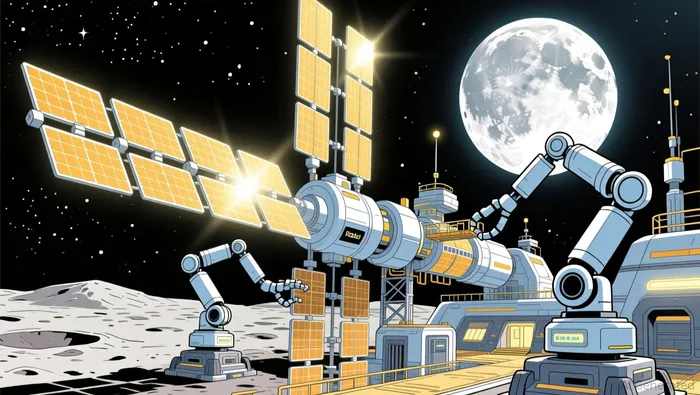
In this context, HelioHLIO-- Corporation's recent announcements suggest a strategic positioning. The company is focusing on securing contracts for advanced space engineering and technology development. This signals a deliberate move to build capabilities for future space-based solar power and other deep-space infrastructure. Helio is not a prime contractor for the current Artemis missions, but it is positioning itself as a niche player in the foundational engineering layer required for the next paradigm. Its direct financial impact from the near-term Artemis flybys and landings is minimal.
The bottom line is that Helio is betting on the exponential adoption curve that follows the initial crewed demonstration. It is investing in the technological rails-power systems, advanced materials, and specialized engineering-that will be essential when the lunar infrastructure build-out accelerates after 2028. For now, it is a supplier to the future, not a participant in the present.
Financial Impact: From Contract Pipeline to Revenue Realization
The disconnect between Helio's strategic positioning and its current financials is stark. The company has secured multiple new project awards in advanced space engineering, including contracts with a commercial aerospace firm, a major research lab, and a university. This builds a robust pipeline, but these are not immediate revenue drivers. They are long-duration, milestone-based projects where revenue will be recognized over years, not quarters.
More importantly, there is no evidence linking Helio directly to the core hardware of the Artemis IV mission. NASA's recent selection of two science instruments for that lunar surface mission-DUSTER and SPSS-are led by academic and JPL teams, not by Helio. This reinforces that Helio's role is likely in supporting infrastructure and specialized engineering, not in building flagship science payloads or the primary SLS/Orion systems. Its financial impact from this specific program is therefore indirect and contingent on future phases of the build-out.
The bottom line is that the financial impact of these contracts on near-term revenue and earnings is uncertain. It depends entirely on execution over a multi-year adoption curve. For now, the company is investing in the technological rails for a future lunar economy, but that investment does not yet translate into a visible cash flow stream. The payoff lies in the exponential growth phase that follows the initial Artemis demonstrations, not in the current flight test.
Valuation and Catalysts: Watching the Adoption Rate of Lunar Infrastructure
The valuation of Helio CorporationHLIO-- hinges entirely on the adoption rate of lunar infrastructure. For now, the company trades on potential, not proven demand. The primary catalyst for that demand is the successful execution of the Artemis program's timeline. Each mission milestone validates the need for advanced engineering and power solutions. The Artemis II flyby this week is a critical first step, but the real signal for Helio's infrastructure bets comes with Artemis IV. That mission, planned for September 2028, will be the first crewed lunar landing in over 50 years and the first flight of the more powerful SLS Block 1B rocket. Its success would confirm the viability of sustained lunar operations, directly boosting the market for the specialized engineering and power systems Helio is developing.
A key risk to this catalyst is execution risk on the SLS program itself. Delays to the Block 1B variant could push Artemis IV beyond 2028, compressing the timeline for infrastructure development. This would delay the entire adoption curve Helio is betting on, turning a multi-year build-out into a longer, more uncertain ramp. The company's financial payoff is therefore tied to a very specific engineering timeline.
For investors, the near-term watchpoints are clear. First, monitor Helio's ability to convert its new project awards into recurring revenue streams. This is the transition from pipeline to cash flow. Second, watch for the company's participation in follow-on missions beyond Artemis IV. The initial landings are just the beginning; the next phase is building a permanent presence, which will require a new wave of specialized engineering and power solutions. Helio's role in that subsequent build-out will determine whether its current bets are foundational or merely speculative. The exponential growth of lunar infrastructure is still on the early part of its S-curve. Helio is positioned to benefit when the adoption rate steepens, but only if the foundational missions succeed.







Comentarios
Aún no hay comentarios